
All articles
-
Astronomy
Two ways of measuring the universe's expansion rate are giving different answers. That's either a crisis or a discovery.
The Hubble constant — the rate at which the universe is expanding — yields 67.4 km/s/Mpc from cosmic microwave background measurements and 73 km/s/Mpc from supernova and Cepheid distances. The 5-sigma discrepancy has resisted every systematic error explanation for a decade.
-
Astronomy
A Harvard 'computer' cracked the mystery of stellar distances. It took the field 20 years to understand what she'd done.
Henrietta Swan Leavitt discovered in 1912 that Cepheid variable stars pulse with a period directly proportional to their luminosity. That relationship became the first rung of the cosmic distance ladder and remains in active use today, generating one of cosmology's biggest current controversies.
-
Astronomy
Dark matter is 27 percent of the universe, and we don't know what it is. Here's the current state of the hunt.
Dark matter outweighs all visible matter five to one, shapes every galaxy and cluster, and has never been directly detected. Decades of experiments have ruled out the most popular candidates. The search is narrowing — but it hasn't ended.
-
Astronomy
The world's largest radio telescope is in a Chinese valley. It has already found more pulsars than anyone expected.
FAST — the Five-hundred-meter Aperture Spherical Telescope — is the world's largest single-dish radio telescope. Since opening in 2016, it has discovered hundreds of pulsars, detected fast radio bursts, and searched for signals from extraterrestrial intelligence. It is rewriting radio astronomy.
-
Astronomy
The most important diagram in astronomy was drawn twice, independently, by two people who never collaborated
The Hertzsprung-Russell diagram plots stellar luminosity against temperature and organizes every type of star into a coherent pattern that reveals the physics of stellar evolution. Published independently around 1910 by Ejnar Hertzsprung and Henry Norris Russell, it remains the foundational tool of stellar astrophysics.
-
Astronomy
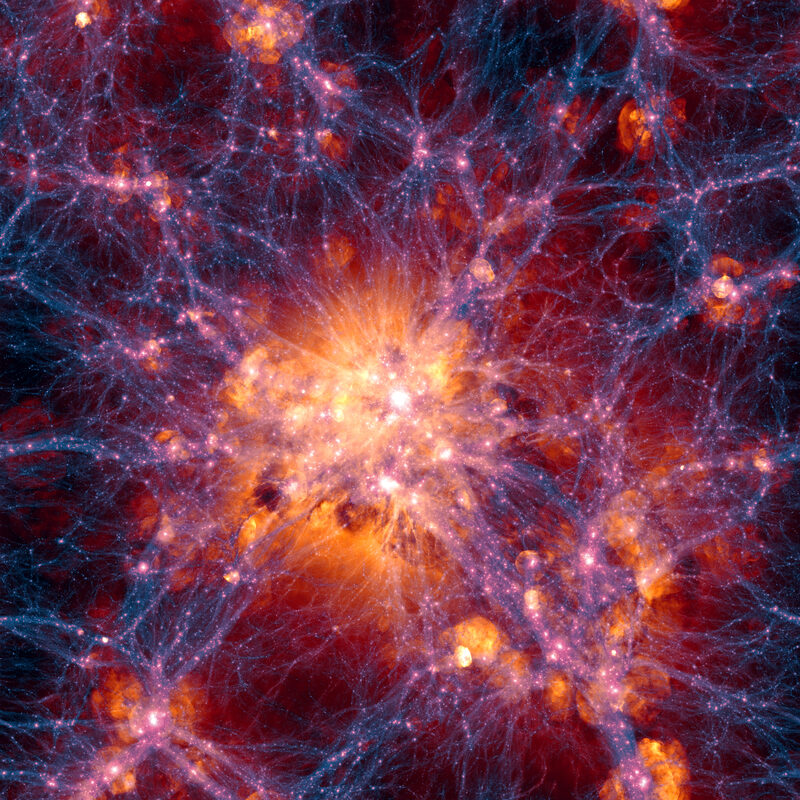
The universe has a skeleton. It is made of gas, dark matter, and time.
The largest structures in the universe are not galaxies or galaxy clusters — they are the filaments connecting them and the voids between them. This cosmic web, predicted by simulations, has been mapped across billions of light-years and continues to yield surprises.
-
Astronomy
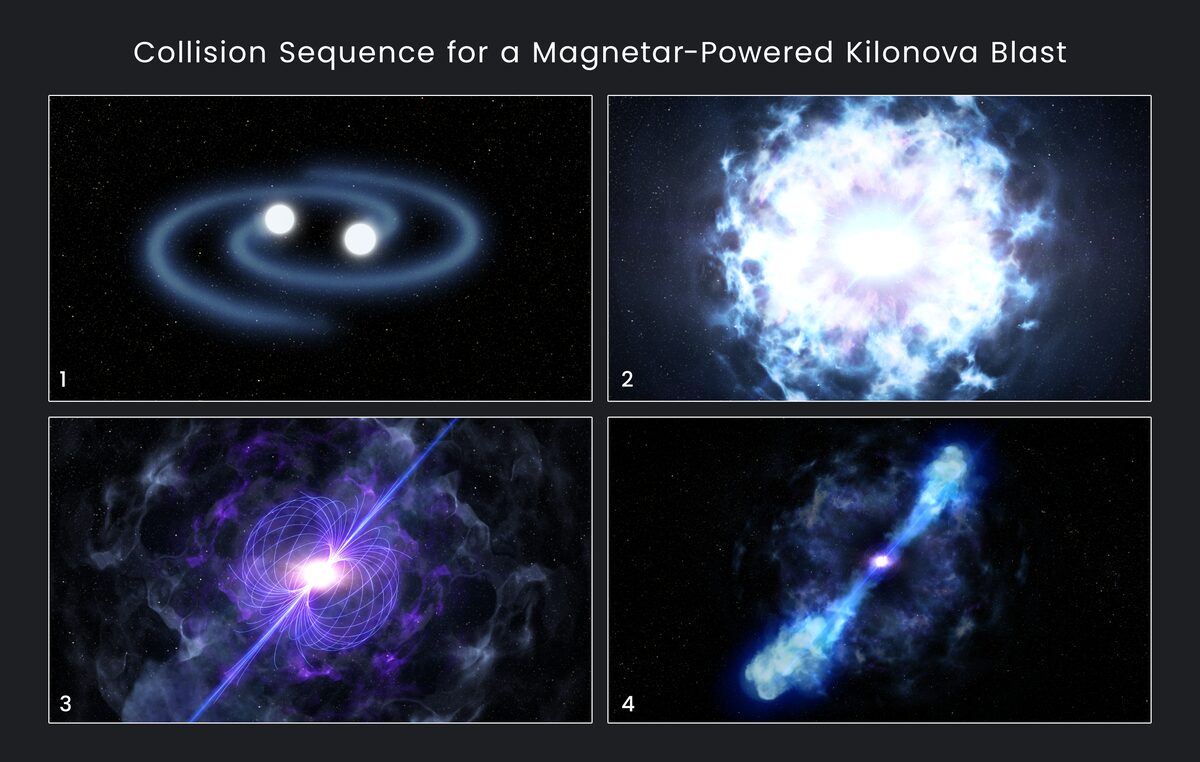
Gold and platinum were made in the collision of two neutron stars. We watched it happen.
On August 17, 2017, gravitational wave detectors caught two neutron stars merging. The electromagnetic flash that followed — a kilonova — was observed by dozens of telescopes worldwide and confirmed that collisions between neutron stars produce most of the heavy elements in the universe.
-
Science & Discovery
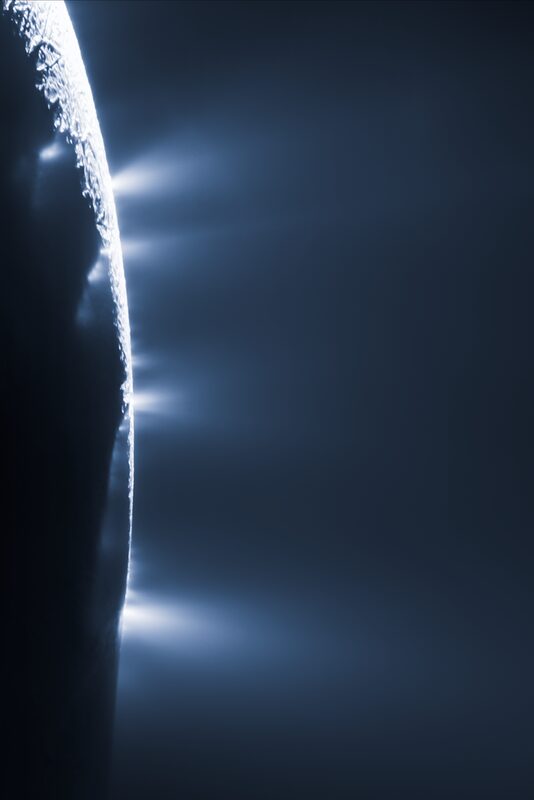
Three moons in the outer solar system have conditions that could support life. We've barely started looking.
Enceladus has a liquid ocean venting organics and hydrogen into space. Europa has a global ocean under an ice shell. Titan has lakes of liquid methane and a complex organic chemistry. All three are active targets for future astrobiology missions.
-
Science & Discovery
The Oort Cloud is the solar system's outer shell. We've never directly observed it.
The Oort Cloud — a spherical shell of icy bodies at distances up to 100,000 AU from the Sun — is inferred from the orbits of long-period comets. It may contain trillions of objects and is thought to be the source of most comets that visit the inner solar system.
-
Science & Discovery
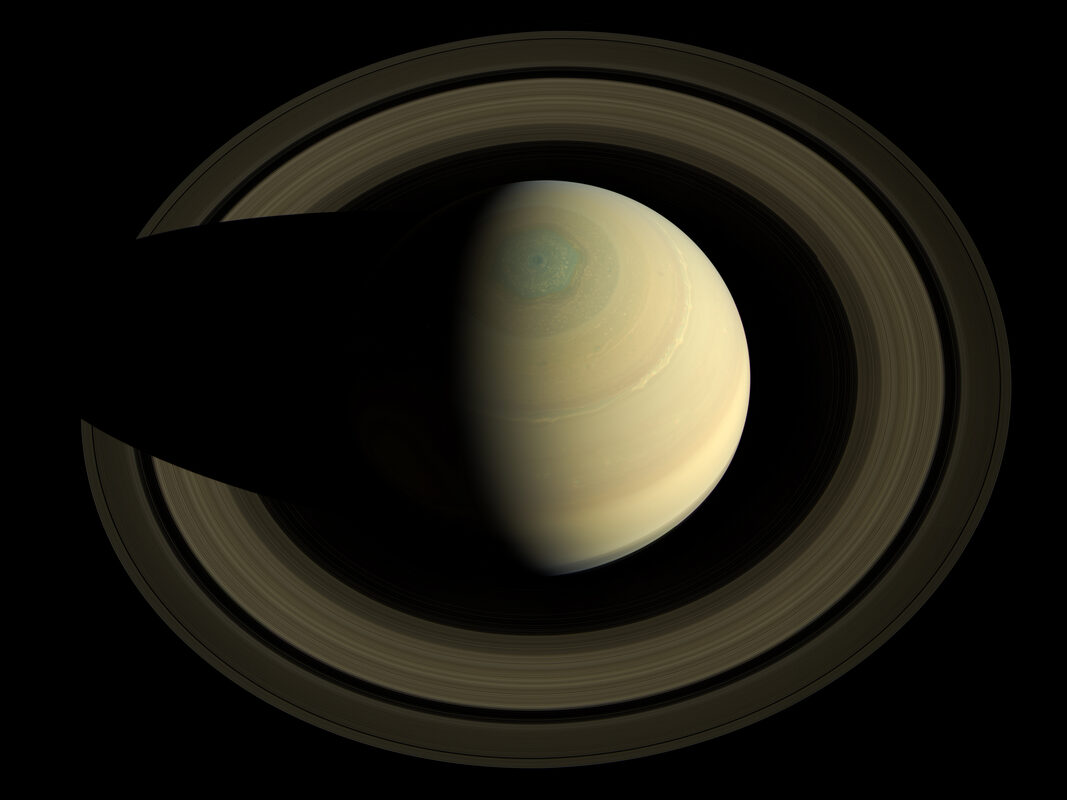
Saturn's rings exist because of a mathematical boundary. Anything inside it cannot hold itself together.
The Roche limit is the distance at which a planet's tidal forces overcome a satellite's self-gravity, preventing it from accreting or tearing it apart. Saturn's rings sit inside this boundary for water ice, which is why they exist as rings rather than as one large moon.
-
Science & Discovery
Every atom heavier than hydrogen was forged inside a star. Here is how that happened.
Stellar nucleosynthesis is the process by which stars manufacture every element from helium to iron in their cores, and supernovae and neutron star mergers produce everything heavier. The atoms in your body have a detailed provenance that astrophysicists have largely worked out.
-
Science & Discovery
In the first fraction of a second after the Big Bang, the universe grew by a factor of 10 to the 26th power. Here's what we know about that.
Cosmic inflation — a period of exponential expansion in the universe's first 10^-32 seconds — was proposed in 1980 to solve three problems with the standard Big Bang model. Evidence for it is strong; direct detection of its signature in gravitational waves remains the goal.



Page 58 of 68
