
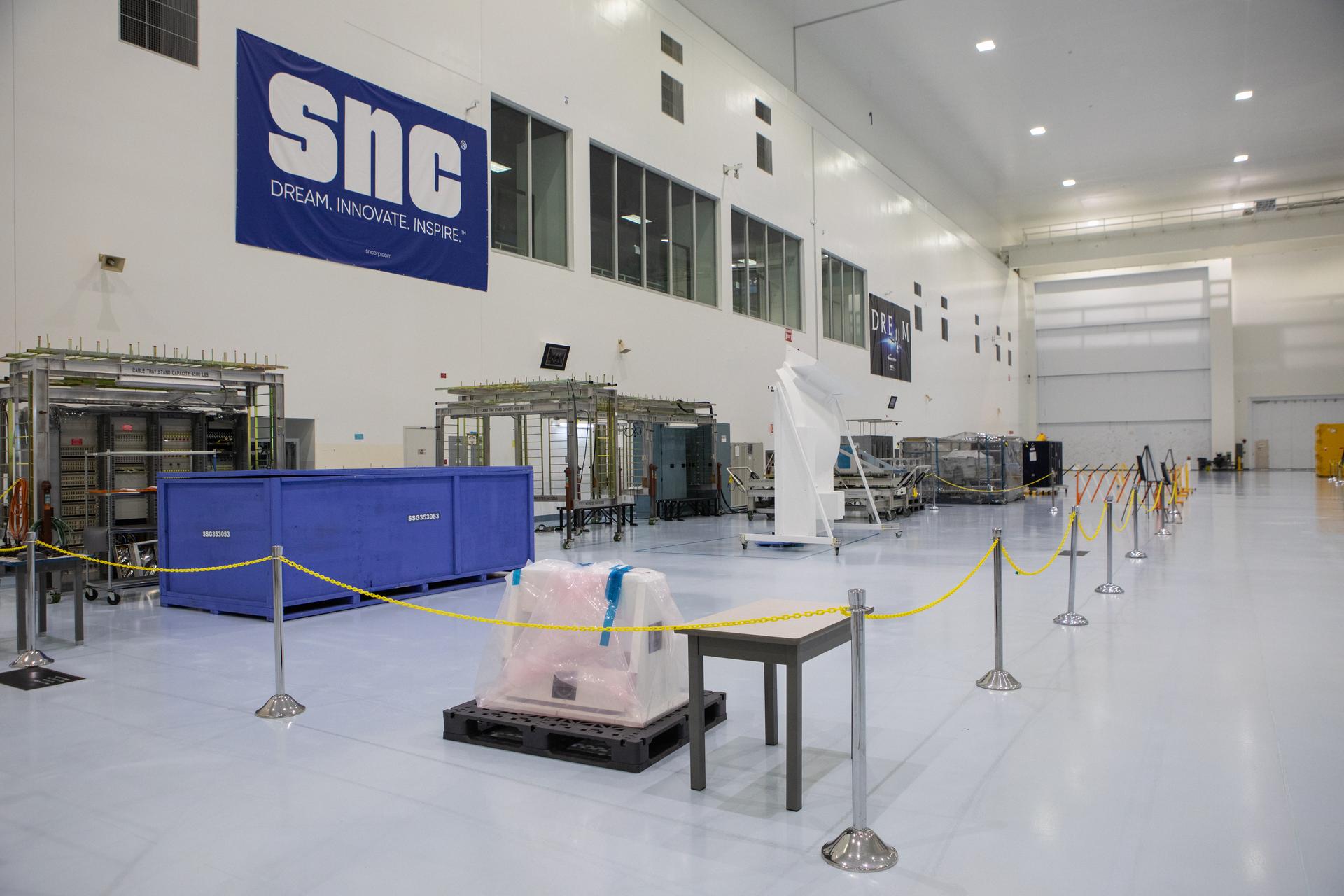
NASA doesn't just need rockets to get satellites into orbit — it needs somewhere to prep the spacecraft beforehand, a step that rarely makes headlines but has to happen correctly every single time. On August 17, 2026, the agency announced it has widened the pool of companies eligible to do that work, adding four firms to a contract vehicle that governs commercial payload processing services for NASA missions.
The newly on-ramped companies are All Points Logistics LLC, Blue Origin LLC, Firefly Aerospace, and L3Harris Technologies Inc. They join the Spacecraft Processing Operations Contract, or SPOC, an indefinite-delivery/indefinite-quantity (IDIQ) vehicle with a $100 million aggregate ceiling that now runs through February 1, 2033. The contract is managed by NASA's Launch Services Program (LSP) at Kennedy Space Center — the office responsible for procuring launch services and coordinating the ground work that gets a spacecraft from its shipping container to the top of a rocket.
What the Contract Actually Covers
SPOC is a multiple-award, firm-fixed-price IDIQ contract. In plain terms, that means NASA isn't handing any single company a lump sum — it's qualifying a roster of vendors who can then compete for individual task orders as specific missions need processing services. The "on-ramp" mechanism used here lets NASA periodically add new, qualified providers to that roster rather than reopening the entire contract from scratch.
The work itself covers prelaunch processing of spacecraft and rocket hardware — the unglamorous but essential handling, integration, and readiness operations that happen at a facility before hardware is delivered to the launch pad. According to NASA's announcement, the purpose of this particular on-ramp is to expand commercial processing capacity to additional launch site locations beyond what the original contract award covered, giving the Launch Services Program more geographic flexibility in where it can prep missions.
Who's In the Mix
The roster spans companies with very different day jobs. Blue Origin and Firefly Aerospace are both launch vehicle operators in their own right — Blue Origin with New Glenn, Firefly with Alpha — meaning they already run integration and processing infrastructure for their own missions and can now offer that same capability to NASA on a contract basis. L3Harris Technologies brings a background as a major aerospace and defense contractor with facilities and systems-integration experience across government programs. All Points Logistics specializes in logistics and processing services specifically for space hardware, a narrower but directly relevant lane.
Firefly Aerospace's addition to the contract was independently confirmed in a wire report published August 18 via The Manila Times, syndicating a GlobeNewswire release that echoed the NASA announcement. Trade outlet Aviation Week also covered the award, confirming both the four-company list and NASA's stated rationale of expanding processing capacity to locations not addressed under the initial SPOC award.
Why It Matters
Payload processing is one of those chokepoints in the launch pipeline that's easy to overlook until it isn't there. A rocket can be sitting on the pad ready to fly, but if there's no qualified facility nearby to receive, test, fuel, and integrate the payload beforehand, the mission doesn't happen — or it happens at a facility hundreds of miles away, adding cost and schedule risk. By on-ramping four more providers, NASA is explicitly buying itself more launch-site options, which matters as the agency and its commercial partners push to launch more frequently from more places.
It's also a signal about how NASA is choosing to scale. Rather than building or operating more of its own processing infrastructure, the agency is leaning further into a multiple-award, competitively-priced commercial model — the same instinct that has driven its approach to launch services more broadly over the past decade. A $100 million ceiling spread across a firm-fixed-price IDIQ running to 2033 isn't a huge single check to any one company, but it is a standing invitation: qualify once, then compete for individual task orders as missions come up.
For Blue Origin and Firefly specifically, being certified as NASA payload processors is a bit of a two-for-one. Both companies already sell launch services to NASA and other customers; now they can also bid to prep other companies' or agencies' hardware, turning existing ground infrastructure into an additional, separate revenue line. For L3Harris, it's another data point in a long pattern of large aerospace-defense primes picking up adjacent NASA service contracts. And for a smaller, more specialized operator like All Points Logistics, it's validation that space-specific logistics remains a viable niche business even as launch cadence — and the infrastructure needed to support it — keeps climbing.
