
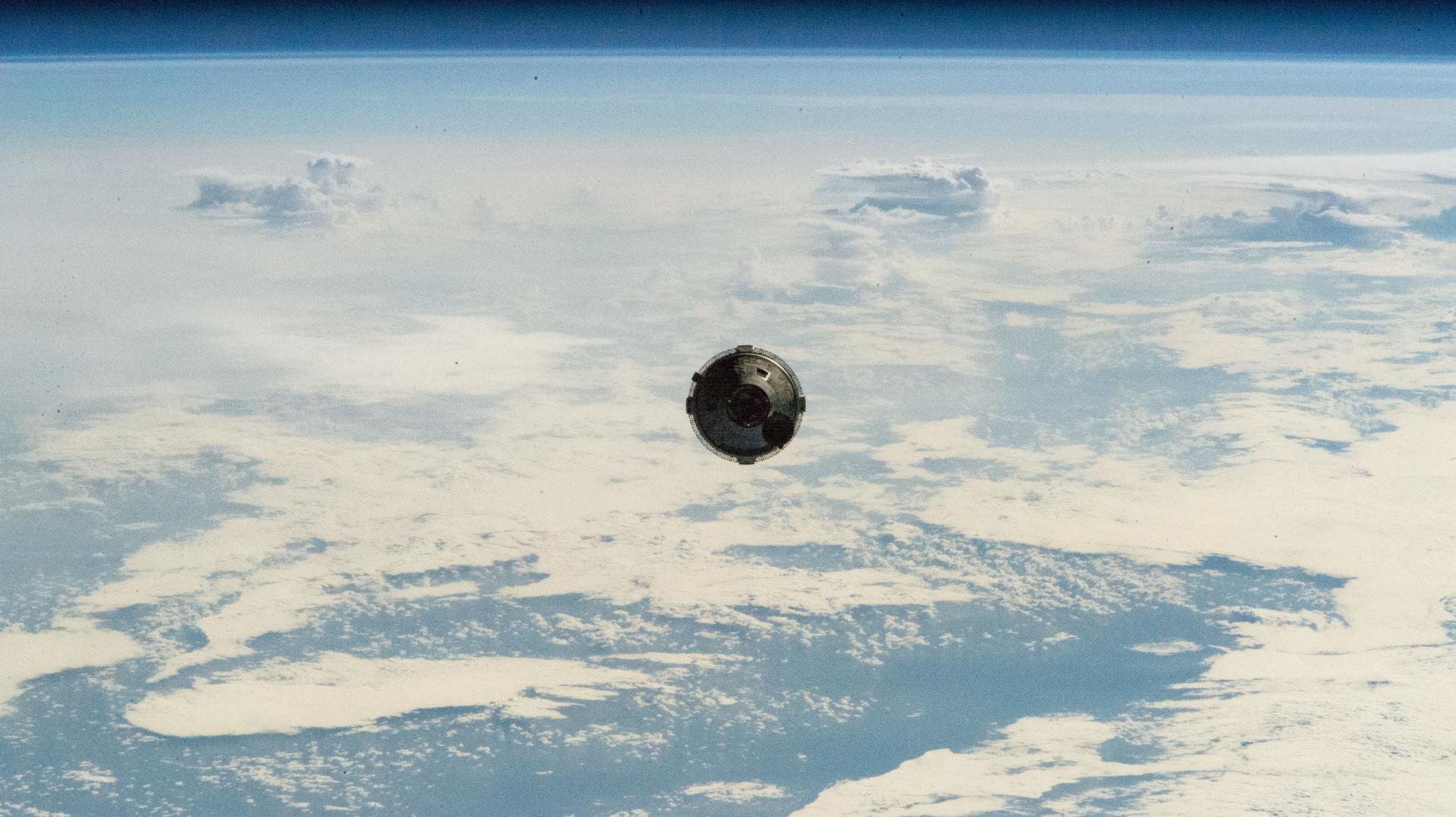
Boeing's Starliner capsule is getting another chance, but on a much longer leash. On Sept. 28, NASA and Boeing laid out a revised development plan that puts an uncrewed test flight as soon as this winter, pushes the next astronauts to no earlier than mid-2028, and adds Vulcan certification work for later flights, since the Atlas V is being retired.
According to NASA's release, an uncrewed Starliner-1 could fly in December 2026 or January 2027. The agency describes it as an engineering evaluation mission meant to verify improved thermal environments and gather performance data. Spaceflight Now reports the same December-to-January window, and CNN puts it as no earlier than December.
The new roadmap at a glance
- Starliner-1: uncrewed, an engineering evaluation flight, as soon as December 2026 or January 2027.
- Starliner-2: NASA's stated goal is to "return astronauts on Starliner-2 by 2028." CNN reports the earliest next crew mission as mid-2028, and Spaceflight Now says a piloted flight is hoped for that same period, with redesigned propulsion valves and more robust subsystems.
- Commander: Warren "Woody" Hoburg has been named commander of Starliner-2. The other crew members have yet to be named.
- More flights: NASA Administrator Jared Isaacman said the agency intends to exercise options for a fifth and sixth Starliner ISS flight.
- Rocket: NASA will work with Boeing and United Launch Alliance to certify Vulcan after the final Atlas V flight. Per Space.com, Starliner-1 through Starliner-4 are to launch on Atlas V, and Starliner-5 and Starliner-6 on Vulcan Centaur.
- Cost: CNN reports NASA expects to pay an additional $359 million for upgrades and Vulcan certification.
How the program got here
The list of past flights explains the caution. As Space.com recounts, the first Orbital Flight Test in December 2019 ended up in the wrong orbit. A second uncrewed attempt, OFT-2, flew in May 2022. The Crew Flight Test followed in June 2024, carrying Suni Williams and Butch Wilmore. That mission suffered helium leaks, and five of the spacecraft's 28 reaction control system thrusters failed.
Starliner came back uncrewed in September 2024, while the two astronauts returned on a Crew Dragon in March 2025. In February 2026, NASA declared the Crew Flight Test a Type A mishap. Space.com reports the helium leaks were traced to valve degradation after exposure to the nitrogen tetroxide oxidizer.
What is being fixed
NASA's release points to a Program Investigation Team report, issued in February 2026, that contained 61 recommendations. NASA says the service module thruster performance issues resulted from a combination of factors, including the thermal environment and features inherent in the thruster design, and describes the thrusters as operating outside of their engineering qualification. Space.com also reports that NASA's Dana Weigel attributed the crew module thruster anomaly to corrosion from residual hydrazine propellant combined with atmospheric exposure, specifically carbon dioxide.
Boeing has already made thermal modifications to the service module. A further thruster valve modification, which addresses extrusion of the valves' poppet seals, is to be completed after the uncrewed flight. That ordering matters. CNN notes that some thrusters need a design modification before crewed operations, so the winter flight is meant to gather data with the valve fix still to come. Other changes include new crew module thrusters, new batteries and minor parachute changes.
Dana Weigel, manager of NASA's Low Earth Orbit Program, is quoted in the release on the update.
Why swap the rocket?
Starliner has flown on Atlas V, which is on its way out. NASA's plan is to certify Vulcan for use after the final Atlas V flight. According to Space.com, Starliner-1 through Starliner-4 are to launch on Atlas V, while Starliner-5 and Starliner-6 move to ULA's Vulcan Centaur, which has not yet been certified for crewed missions. Certification is part of what the extra money covers, according to CNN.
Why It Matters
Right now, Crew Dragon is the only operational US crew vehicle, according to CNN. NASA bought three more SpaceX missions for $946 million earlier in September, which underlines how much the agency currently leans on one provider. A second certified capsule would restore the redundancy that the commercial crew program was created to provide.
The clock is also running. Spaceflight Now notes that the ISS is planned to retire in 2030. A Starliner crew mission in mid-2028 would leave a limited number of years of station operations in which to fly the additional missions NASA says it wants, including options for a fifth and sixth flight. Whether Starliner earns those flights depends heavily on how the uncrewed engineering mission goes, and on whether the valve redesign holds up before anyone climbs aboard again.
It is also notable that this is the first substantial Starliner update in months, per CNN. The new plan is more conservative than the original one: an uncrewed test first, an explanation of the thruster problems that centers on operation outside engineering qualification, and Vulcan certification work for later flights. Whether it is enough will be judged on hardware performance in the coming months, not on announcements.
Sources
- NASA, Boeing Share Update on Commercial Starliner Development Plans (NASA)
- NASA reveals new plan for Boeing's troubled Starliner spacecraft and commander of future mission (CNN)
- Boeing's Starliner won't launch astronauts until 2028 (and may need a new rocket), NASA says (Space.com)
- NASA plans unpiloted Starliner test flight at end of year (Spaceflight Now)
Correction, Sept. 29, 2026: An earlier version of this article said the 2028 crewed Starliner-2 flight depends on certifying the Vulcan rocket, and gave an incomplete account of the thruster cause. Space.com reports Starliner-1 through -4 will fly on Atlas V and only Starliner-5 and -6 move to Vulcan, and NASA attributes the thruster issues to operation outside engineering qualification, with thermal environment and design features as contributing factors.
