
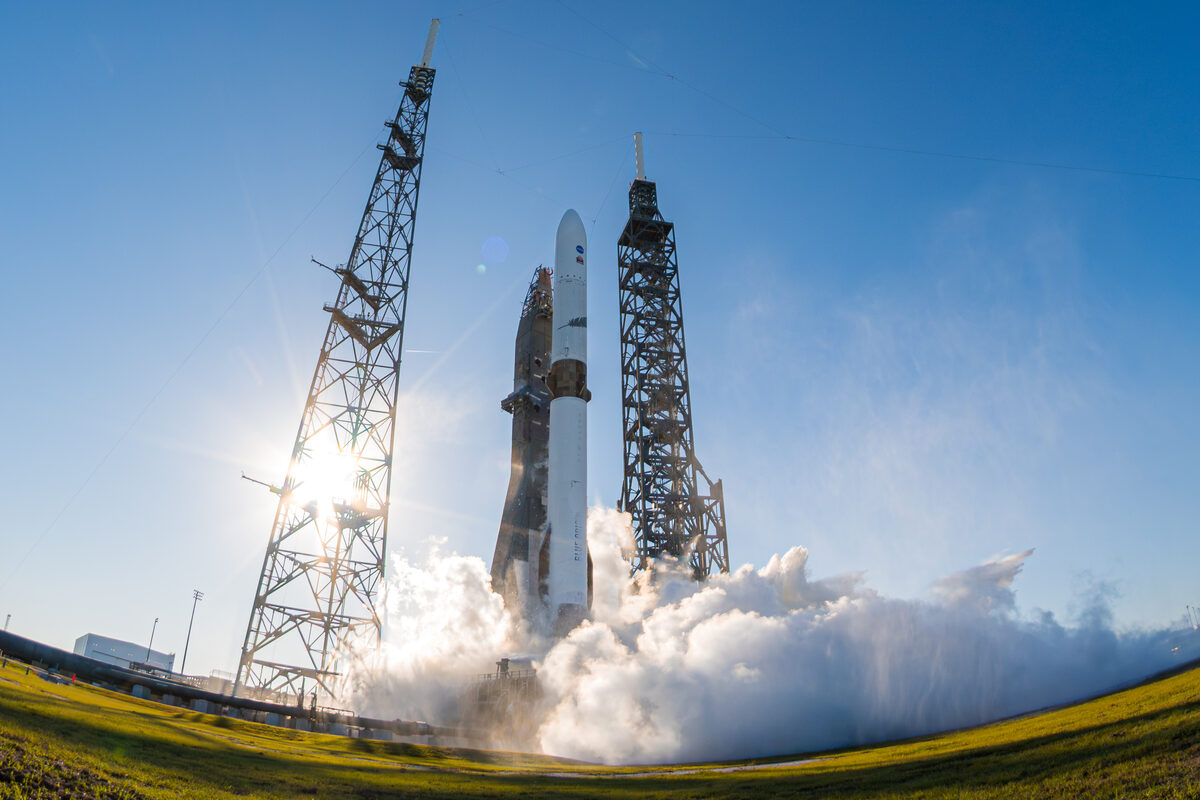
On Sept. 29, 2026, NASA announced it had added Blue Origin's New Glenn 9x4 to its NASA Launch Services II (NLS II) contract. The headline sounds like a win for the rocket. Read closely, it is something narrower and more bureaucratic: the vehicle can now be bid against NASA's future missions, but it has not been handed any of them.
That distinction matters, and it is easy to lose in the coverage. Here is what the announcement does and does not say.
What NASA actually did
According to NASA Contract Release C26-013, the agency added the New Glenn 9x4 under the contract's on-ramp clause. An on-ramp is a mechanism that lets a launch provider or a new vehicle configuration be brought onto an existing contract after the original awards, rather than requiring an entirely new procurement. NASA says the provision comes around annually, offering new providers a chance to compete and letting existing contractors introduce vehicles not yet on their contracts.
NLS II itself is a multiple-award indefinite-delivery/indefinite-quantity (IDIQ) contract. In practice, that means NASA pre-qualifies a pool of launch vehicles and then places individual orders for specific missions as they come up. NASA says the ordering period runs through June 2030, with performance continuing through December 2032.
The contract supports three NASA directorates: Human Spaceflight, Science, and Research and Technology. The agency's Launch Services Program at Kennedy Space Center manages it. NASA also notes the contract can serve other agencies, NOAA among them.
Not a mission award
Trade coverage is consistent on the limits. The Defense News reported that the addition makes the rocket eligible to compete for future NASA science, exploration and technology missions, and stressed that it is not a specific mission award. New Space Economy's analysis goes further: no specific mission, first-flight date or orbital demonstration for the 9x4 has been announced.
Put plainly, Blue Origin now holds a seat at the table. It does not yet have a payload, a launch slot or a price attached to this configuration.
Not Blue Origin's first time on NLS II
New Glenn is not new to this contract. According to New Space Economy, the rocket was first added to NLS II in December 2020. What changed this week is the configuration. Blue Origin announced the 9x4 in November 2025, and the same analysis describes it as having a larger fairing, supported by infrastructure at Launch Complex 36 (LC-36B).
The 9x4 is not replacing the existing vehicle. The Defense News reports that it joins the existing New Glenn 7x2 among the vehicles available to NASA, so the catalog now carries both. New Space Economy describes LC-36B as the intended home of the 9x4, with LC-36A continuing to support the 7x2, and says the LC-36B plan includes a new Vertical Integration Facility and a Payload Processing Facility. The Defense News adds that Blue Origin is adjusting operations at LC-36A.
We have not independently confirmed further details of either pad or the new facilities beyond what those reports state, and we are not offering any here. Performance figures for the two configurations appear in the cited coverage, but they are Blue Origin's own claims for a vehicle that has not flown, so we leave them out.
How to read the on-ramp
A few questions are worth asking of any announcement like this.
Does this mean the 9x4 will fly for NASA? No. Eligibility is not selection. Missions are ordered individually, and NASA weighs requirements, schedule, available vehicles and pricing before choosing a launch service.
Does it mean the 9x4 has flown? The reports we reviewed do not say so, and New Space Economy specifically notes that no first-flight date or orbital demonstration has been announced.
Why do it now, then? The sources do not explain NASA's or Blue Origin's timing, and we will not guess. What the contract structure does show is that the ordering window runs through June 2030, so being on the contract early means the vehicle can be considered for any orders placed in that period.
Why It Matters
For NASA, the practical value of NLS II is breadth. A multiple-award contract with more vehicles on it gives the Launch Services Program more options when a mission needs a particular size of fairing or class of rocket. Adding a larger-fairing configuration widens the catalog for the Human Spaceflight, Science and Research and Technology directorates, and for other agencies that use the contract.
For Blue Origin, the on-ramp is a prerequisite rather than a prize. Without a place on the contract, the 9x4 would not be available to NASA's Launch Services Program under NLS II. With it, the company can pursue orders, but still has to win them against the other options NASA has.
For everyone else watching, the useful signal will come later. The things to look for are a first-flight date, an orbital demonstration, and eventually a NASA task order that names the 9x4. None of those exists in the announcements reviewed here. Until one does, this is procurement paperwork, even if it is paperwork with a long horizon.
Sources
- NASA Adds Blue Origin New Glenn 9x4 to Launch Services Contract (NASA Contract Release C26-013, Sep 29, 2026)
- What Does NASA's Addition of New Glenn 9x4 to Its Launch Services Contract Mean? (New Space Economy, Sep 30, 2026)
- NASA Adds Blue Origin's Upgraded New Glenn 9x4 to Launch Services Contract (The Defense News)
