
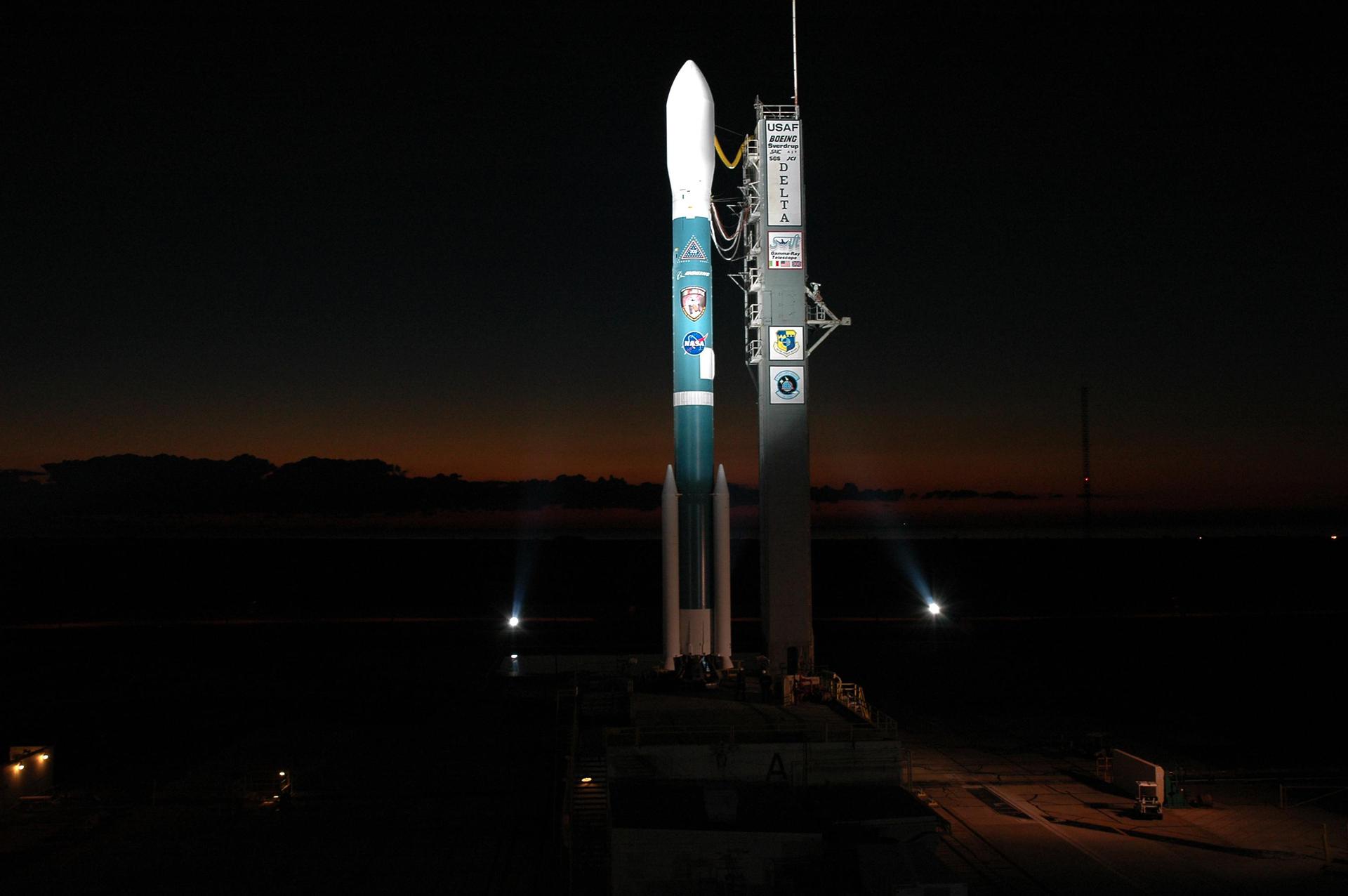
A robotic spacecraft built to grab hold of an aging NASA observatory and shove it back into a safer orbit is gone. Katalyst Space Technologies confirmed on Sept. 25, 2026, that its LINK servicer had deorbited and reentered Earth's atmosphere, closing out an 85-day on-orbit campaign that never managed the one maneuver it was built for: catching NASA's Neil Gehrels Swift Observatory.
The mission's headline number tells its own story. Katalyst was awarded a $30 million NASA contract on Sept. 25, 2025 — almost exactly one year before LINK's reentry — and got the spacecraft to orbit by July 3, 2026. Nine months from contract signature to launch is fast by any standard in the servicing business, let alone for a first-of-its-kind capture of a satellite never designed to be grabbed.
What LINK was supposed to do
Swift, a gamma-ray burst hunter named for its ability to swiftly repoint its instruments toward a burst, has been in orbit since its 2004 launch and has spent recent years losing altitude faster than expected because of rising atmospheric drag tied to solar activity. Rather than let it burn up years ahead of schedule, NASA turned to the young in-space servicing industry: dock with Swift, grab it, and push it into a higher, longer-lived orbit.
LINK never got that far. Katalyst's own account is blunt about it: "LINK's mission did not ultimately include the capture and boost of Swift." The company's Sept. 25 statement, issued from its Broomfield, Colorado headquarters, frames the 85 days on orbit and the rapid contract-to-launch timeline as the achievement instead — evidence, it argues, that a commercial servicer can be built, tested, and flown fast enough to matter for a spacecraft in genuine trouble, even if this particular rendezvous came up short.
A rushed contract, a rushed mission
Space policy reporter Marcia Smith, writing for SpacePolicyOnline.com, adds context that explains why "fast" was the point in the first place. NASA signed the Katalyst contract on Sept. 25, 2025, in the shadow of a looming government shutdown — the kind of deadline pressure that pushes agencies to get money out the door before it disappears into a funding lapse. Smith reports that Katalyst's Kieran Wilson addressed the National Academies' Committee on Astronomy and Astrophysics directly, and that NASA's John Von Eepoel, Goddard's deputy project manager for the effort, described a "fever pitch of activity" to get funding out the door before the shutdown hit — while Penn State's Jamie Kennea, then Swift's science operations lead, worked in parallel to reorient the observatory and reduce drag.
That rush shows up again in how LINK's final hours were tracked. Katalyst's own release puts the deorbit and reentry on Sept. 25. Astrophysicist Jonathan McDowell, who publishes Jonathan's Space Report and independently tracks spacecraft reentries, pegged LINK's atmospheric return to Sept. 24 at 1438 UTC, along a ground track running from Tonga toward French Polynesia — a reminder that even a company's own spacecraft can outrun its own press office by a day when reentry physics, not a press schedule, decides the exact moment.
Swift wakes back up — for now
While Katalyst was winding down LINK, NASA was powering Swift itself back on. In a mission blog post dated Sept. 25, NASA's Jeanette Kazmierczak detailed a staged recovery: Swift's Burst Alert Telescope — the third and final science instrument to come back online, and the one that made the observatory famous for catching gamma-ray bursts in the act — resumed detections on Sept. 18 after being deliberately shut down in April to conserve power and reposition Swift's solar panels to reduce drag ahead of the boost effort. Automated slewing — Swift's signature ability to snap its instruments toward a burst within seconds of detection — came back online Sept. 21, once the gamma-ray instrument was back in action, and NASA reported the observatory functioning as designed again.
That recovery comes with an expiration date, though. Swift is now orbiting roughly 200 miles (325 kilometers) up, well below its normal operating altitude, and NASA says it's expected to sink past the 185-mile threshold needed for continued operations sometime in early-to-mid October. LINK never delivered the altitude boost Swift needed — NASA's own account frames the return to science as following the scaling-back of the commercial mission, not a result of it. Turning Swift's own instruments back on bought weeks of renewed science, not a reprieve from the observatory's eventual reentry.
Why It Matters
Robotic servicing of spacecraft that weren't designed to be serviced is one of the harder problems in orbital mechanics and guidance, navigation, and control — there's no standard docking port, no cooperative target, and no do-over if the approach goes wrong. LINK's failure to complete a capture is a real data point on just how hard that problem remains, even for a well-funded, purpose-built mission.
But the mission's other number — nine months from a signed contract to a spacecraft in orbit, attempting a genuinely novel capture — is the one NASA and Katalyst are choosing to emphasize, and it's not nothing. Government satellite rescues have historically meant years of planning. A commercial vendor standing up a dedicated servicer on a nine-month clock, even one that comes up short on its primary objective, is a different kind of proof: that the industry can move at the speed a genuine emergency demands. Whether that's enough to justify the next contract — for LINK's successor, or for a rival's attempt at the next aging satellite in trouble — is the question NASA, Congress, and the commercial servicing industry will be arguing over long after Swift itself has burned up.
