
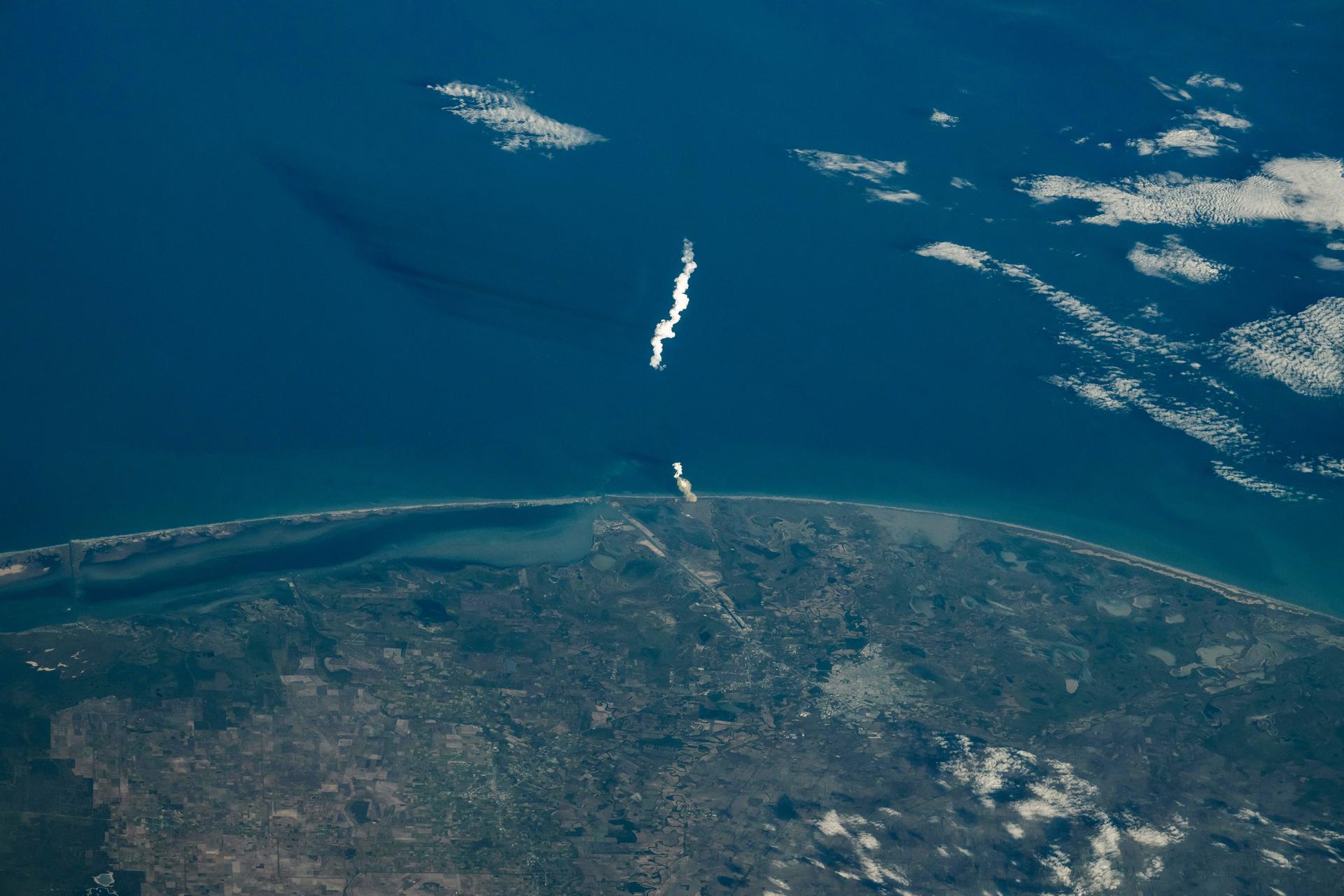
After 13 suborbital test flights, SpaceX's Starship has reached orbit. The 124-meter (407-foot) stack lifted off from Starbase, Texas, at 8:49 a.m. EDT on Sept. 28, and its upper stage climbed into an orbit of roughly 180 miles. There it released 26 third-generation Starlink satellites, the first time the vehicle has delivered a real payload to orbit. The flight did not go perfectly: engines on both stages shut down early, and the ship was brought down well before its planned mission ended. But the headline milestone was met.
The flight, start to finish
Flight 14 was the 14th integrated launch of Starship and its Super Heavy booster, flown under the mission name Starlink 31-1 with Booster 21 and Ship 41. Neither vehicle was slated for recovery, according to Spaceflight Now's launch preview. Super Heavy carries 33 Raptor engines and produces roughly 16 million pounds of thrust at liftoff.
The booster lost one engine early in its flight and apparently a second during the boostback burn. It still managed a vertical splashdown a few miles off the Texas coast. That is a visible improvement over the previous flight, when the booster hit the water hard after a landing burn that used only 8 of the 13 engines it was supposed to light.
The ship had its own problem. One of its six Raptors shut down early in the climb. A single Raptor then completed the burn that placed the ship in orbit. Having the vehicle finish the job on reduced engine power is useful data in itself, though the reports we reviewed do not say what caused either shutdown.
Twenty-six satellites, too big for Falcon 9
The payload was 26 Starlink V3 satellites. Spaceflight Now reports each has ten times the capacity of the previous generation. Space.com gives the design figures: 1 Tbps downlink and 160 Gbps uplink, which it puts at about 10 times the downlink and 22 times the uplink of V2. The beam count rises sharply too, to 2,048 downlink and uplink beams, against 192 downlink and 144 uplink on V2.
Those satellites are also physically too large to launch aboard Falcon 9. SpaceX says a single Starship launch delivers about 20 times the capacity of a Falcon 9 carrying V2 satellites. Future flights could carry up to 60 of them. Space.com notes that these satellites are the first step in a constellation that, according to SpaceX founder Elon Musk, will eventually reach about 100,000.
Three of the 26 satellites carried extra imaging equipment to film the ship's heat shield tiles, per the launch preview. Video of the tiles in flight is worth having for a ship meant to be reused.
A shorter trip than planned
SpaceX had planned about six orbits, ending with an 11-second deorbit burn nearly nine hours after liftoff. That is not what happened. Spaceflight Now reports that with the satellites away, mission managers opted to bring the ship down early, with splashdown at 11:57 a.m. EDT in the Pacific north of Hawaii, about three hours after launch. The sources we reviewed do not say why the ship was brought down early beyond that, and we will not guess here.
Why It Matters
Orbit is the gate to nearly everything SpaceX and NASA want Starship to do. Until Sept. 28, every Starship flight was a suborbital arc, so the vehicle could not deploy operational satellites into orbit. Now it has done the first part of that.
For SpaceX's business, the payoff is Starlink. A rocket that puts up far more capacity per launch than Falcon 9, carrying satellites too large for Falcon 9, changes the economics of the constellation if it can fly reliably and often.
For NASA, the stakes are the lunar lander. Spaceflight Now reports the agency is targeting a landing on Artemis IV in 2028, with Artemis III flying in low Earth orbit next year to dock with prototype landers. Space.com puts the crewed Artemis III in mid-2027. NASA also funds a competing lander from Blue Origin. NASA Administrator Jared Isaacman congratulated SpaceX on X after the flight.
The lunar plan leans on hurdles that orbit alone does not clear. Space.com lists them: catching the ship upper stage, transferring propellant between vehicles in orbit, and getting Starship ready for astronauts. Estimates for how many tanker flights a lunar-landing campaign needs range from 8 to 15-20, and Spaceflight Now cites up to about 15 tanker flights to refuel the lander. Reaching orbit makes those plans more plausible, but does not show any of them working.
What comes next
Elon Musk said at the Sept. 14 All-In Summit that SpaceX may try to catch the ship on Flight 15, and SpaceX has said the same depending on the outcome of this flight. Space.com reports provisional planning documents that put Oct. 19 as the earliest possible date for that flight. Those are provisional, and dates for this program have a habit of moving.
On the ground, Space.com says SpaceX is building three Starship pads on Florida's Space Coast and plans to break ground on a 12-pad complex in Louisiana in 2027. The FAA's Starship page notes the regulatory backdrop. SpaceX must obtain an FAA Office of Commercial Space Transportation experimental permit or vehicle operator license, and the agency's review covers public safety, national security and foreign policy concerns, insurance requirements and environmental impact. That page is general background rather than a statement about Flight 14.
The pattern of this flight is familiar from earlier Starship tests: a major goal achieved, with hardware that did not behave exactly as designed. Two stages each lost engines and both still finished their assigned jobs. Whether the ship can do it again, on a full-length mission, is the next question.
Sources
- Starship returns to Earth; rocket splashes down north of Hawaii after three-hour flight (Spaceflight Now)
- Launch preview: SpaceX to launch first Starlink V3 satellites to orbit on Starship (Spaceflight Now)
- Starship just reached orbit for the 1st time. What's next for the SpaceX megarocket? (Space.com)
- Wow! Watch SpaceX's Starship megarocket deploy satellites into orbit for 1st time ever (Space.com)
- SpaceX Starship Super Heavy Project at the Boca Chica Launch Site (FAA)
