
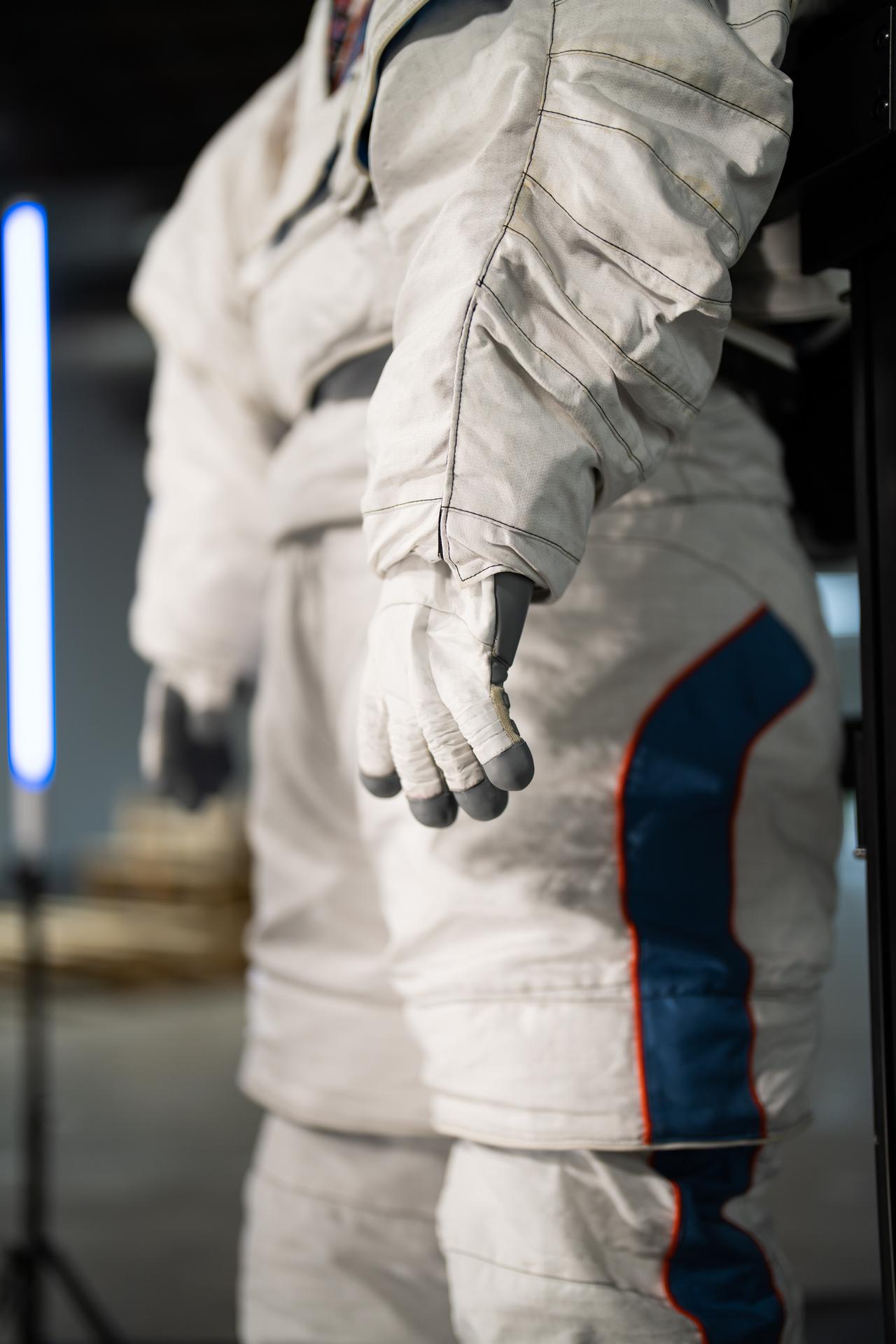
NASA's plan to put astronauts back on the Moon by 2028 has run into a stubbornly earthbound problem: the suit meant to keep them alive on the surface got too heavy for the timeline. Rather than let the spacesuit become the thing that delays Artemis, the agency has told its contractor to build a smaller, simpler version instead.
According to reporting first published Sept. 4, 2026, Artemis program manager Jeremy Parsons directed Axiom Space to develop a stripped-down variant of its AxEMU lunar spacesuit — internally called the "Sortie Suit" — that trades away some long-term capability in exchange for lower mass and simpler connections to the landers that will carry it to the surface. The goal, according to the reporting, is to keep a crewed landing achievable as early as 2028 using vehicles from SpaceX and/or Blue Origin.
It's a rare public acknowledgment from NASA that one of its most visible pieces of Artemis hardware needed to be redesigned mid-development to protect the schedule, rather than the other way around.
What exactly is the Sortie Suit?
The AxEMU — Axiom Extravehicular Mobility Unit — is the suit NASA selected Axiom Space to build for Artemis III, the mission intended to return astronauts to the lunar surface. Per NASA's own program page, Axiom is responsible for the "design, development, qualification, certification, and production" of the suit and its support equipment, while NASA retains authority for astronaut training, mission planning, and approval of the service systems. The suit is required to fit at least 90% of the U.S. male and female population, and NASA has since expanded Axiom's contract to also cover spacewalking capability in low Earth orbit.
The Sortie Suit appears to be a narrower-scope descendant of that same AxEMU program — not a replacement contractor or a new competition, but a lighter configuration built for a shorter set of tasks. Reporting sourced to Ars Technica's Eric Berger describes it as a decision reached in an internal NASA meeting to work with Axiom on a simpler, lighter suit for the first Moon landings than what was originally planned, with reduced mass and simplified interfaces to the SpaceX and Blue Origin landers named as the top priorities.
The word "sortie" is doing real work in that name. A sortie-class suit implies a suit built for a defined outing — get astronauts out onto the surface, let them do their tasks, get them back inside — rather than one engineered for the fuller range of capability a longer-duration lunar presence would eventually require.
Why the original spec became a schedule risk
The pressure behind this shift didn't come from Axiom or from mission planners looking to cut corners — it came from scrutiny of NASA's own program. According to the Sept. 4 reporting, the original AxEMU specification had driven the suit's design over its mass budget and left little schedule margin for Artemis IV. Separately, NASA's Office of Inspector General had already described the suit's original requirements — six spacewalks over 6.5 days, 210 days of dormancy, and two hours of operation in a permanently shadowed region — as "over-burdensome."
That combination — a design that had grown past its mass budget, and a set of requirements an independent NASA oversight office called excessive — points to the same underlying problem from two different angles: the suit as originally specified was becoming a liability to the schedule it was supposed to serve.
NASA's Aerospace Safety Advisory Panel (ASAP) has continued to track the situation closely. According to the Sept. 4 reporting, ASAP member Charlie Precourt said NASA leadership is now meeting with Axiom specialists six days a week, and that NASA is shortening certification-duration requirements in an effort to accelerate the suit's readiness. That's an unusually intensive cadence for a hardware program, and it signals how much urgency NASA is putting behind closing the gap before it threatens the 2028 target.
Why It Matters
A spacesuit sounds like a footnote next to a rocket or a lander, but for a crewed lunar landing it is the one piece of hardware every astronaut on the surface is physically inside of — its mass, its mobility, and how cleanly it interfaces with the lander's hatch and airlock ripple through the whole mission design. A suit that's too heavy doesn't just weigh down an astronaut; it eats into a lander's mass budget, complicates ingress and egress procedures, and adds risk exactly where NASA can least afford it, on the descent and surface-operations timeline.
That NASA's Office of Inspector General flagged the suit's original requirements as excessive, and that its Aerospace Safety Advisory Panel has since been tracking the redesign closely enough to detail near-daily meetings between NASA leadership and Axiom, points to a level of institutional scrutiny beyond a single office's judgment call — serious enough, it appears, to have contributed to NASA's Artemis program manager intervening directly and redirecting the contractor's priorities. Choosing to build a reduced-capability "sortie" suit is a trade-off: NASA is explicitly accepting less long-term functionality now in exchange for a better shot at landing astronauts on the Moon within the current decade. Whether that trade holds up — and whether the simplified suit still meets NASA's safety bar under a shortened certification timeline — will be one of the clearer signals of whether 2028 is a realistic date or another slipping one.
