
Since 1972, timekeepers have added 27 leap seconds to the world's clocks, according to Euronews. The last one came at the end of 2016. Under a decision taken last week in Versailles, there won't be any more.
On Thursday, Oct. 15, the 28th General Conference on Weights and Measures (CGPM) adopted a resolution that makes Coordinated Universal Time (UTC) continuous starting 20 May 2027. After that date, UTC will no longer be adjusted with leap seconds to keep it close to Earth's rotation. The conference also passed a second resolution on a question that would have sounded odd a decade ago: what time is it on the Moon?
Two clocks that drift apart
The leap second exists because the world uses two kinds of time. The NIST Time and Frequency Division describes UTC as an atomic time scale, steadier than UT1, the time scale based on Earth's irregular rotation. NIST says the two drift apart for two reasons. First, the atomic second was defined from the ephemeris second, which is slightly too short. Second, Earth's rotation varies and, over long periods, is slowing down.
Leap seconds were the patch. When UT1 and UTC drifted far enough apart, an extra second went into UTC to pull them back together. That worked well enough on paper, but in practice it meant occasionally inserting an irregular second into systems that assume time runs smoothly. EarthSky notes that leap seconds can cause software glitches in computers, satellite navigation, telecommunications and power grids.
The negative leap second problem
A complication that has appeared more recently pushed the decision along. Euronews reports that Earth has at times spun slightly faster in recent years. That raises the possibility of a negative leap second, where a second is removed from UTC instead of added.
Resolution 5 takes this seriously. It cites a workshop held in March 2025 by the Consultative Committee for Time and Frequency (CCTF) and the IERS, which put the chance of a negative leap second by 2035 at 30%. No negative leap second has ever been applied, and the resolution says one is considered to pose a high risk of anomalies and disruption to critical infrastructure that is largely unprepared. It also compares the investment such preparation would demand from industries that rely on time synchronization to their preparations for the millennium bug.
The resolution names transportation, energy distribution, telecommunication and space projects as users that require UTC to be continuous without any future adjustment.
What changes, and what doesn't
From 20 May 2027, UTC will simply keep running. The trade-off is that it will slowly drift away from Earth's rotation. Under Resolution 5, the maximum difference between UT1 and UTC will be 3,600 seconds, or one hour. EarthSky describes it the same way: the difference can grow to an hour before timekeepers would need to adjust again.
For almost everyone, nothing will be noticeable. Clocks won't jump, and the sun will still rise when you expect. What changes is how time is managed. The small, frequent corrections that could cause software glitches are gone. Reconciling atomic time with Earth's rotation now becomes a much rarer and much larger matter, and EarthSky says that adjustment would likely not be needed for centuries.
Meanwhile, on the Moon
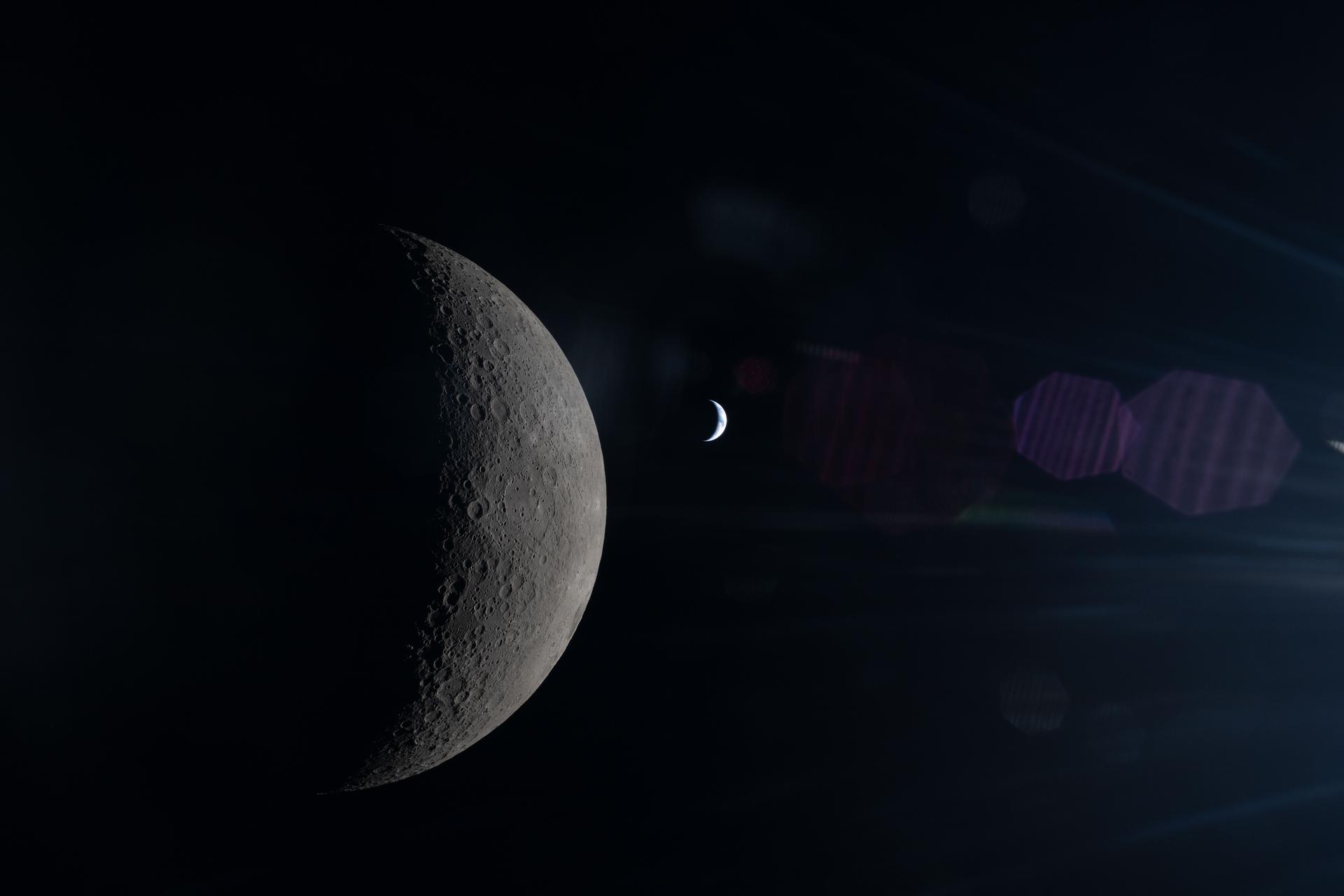
The second resolution reaches past Earth. Resolution 6 concerns an international lunar reference time scale and its traceability to UTC. It points to growing interest among space agencies in lunar infrastructure, including positioning, navigation and timing (PNT), meaning the services that would let landers, rovers and orbiters know where they are and synchronize with one another.
The groundwork came from astronomers. The resolution notes that the International Astronomical Union's 2024 General Assembly defined the Lunar Celestial Reference System, including a time coordinate called Lunar Coordinate Time, or TCL.
Why not just use UTC on the Moon? Relativity is the reason. Resolution 6 says high-accuracy lunar applications would be greatly complicated by the direct use of UTC because of the significant effects of general relativity. At the precision navigation requires, those effects matter.
The resolution also addresses an open technical question. It says a scaled version of TCL would require an additional set of astronomical parameters, and that thorough studies have shown TCL without any scaling would meet the scientific requirements for a lunar reference time scale. The conference did not hand down a full specification. It encouraged agencies operating pioneering lunar projects to share their practical experience with the scientific community and, when a lunar time scale is measured against UTC to obtain traceability, to describe the model used to determine the relativistic effects, the input ephemerides and the associated uncertainties.
That is a modest request with real consequences. The resolution warns that a proliferation of reference time scales risks ambiguity when exchanging time-tagged data and must be avoided. Documenting how each lunar clock ties back to UTC is one way a shared reference stays shared.
Why It Matters
Both resolutions deal with the same tension: humanity's clocks have become much more precise than the natural phenomena they were originally meant to track.
On Earth, the leap second was a compromise between atomic precision and the length of the day. Today, the industries named in Resolution 5 require time that is continuous, and the prospect of a first-ever negative leap second added a new risk to the old arrangement. Choosing continuity, and accepting that UTC may diverge from Earth's rotation by up to an hour, is a deliberate decision that the stability of synchronized systems is worth more than keeping civil time tied closely to the planet's spin.
On the Moon, the work comes earlier in the process. The choices made now will shape how lunar time is kept. By building on the IAU's TCL and asking for traceability to UTC, the CGPM is trying to give lunar navigation a common foundation before separate, ambiguous reference time scales multiply. For missions that will one day need to know their position and time on the lunar surface accurately, that foundation matters.
One resolution removes a source of irregularity from timekeeping on Earth, and the other aims to prevent new ambiguity from arising on the Moon.
Sources
- Resolution 5 (2026) of the 28th CGPM: On the technical actions needed to ensure the continuity of UTC (BIPM)
- Resolution 6 (2026) of the 28th CGPM: international lunar reference time scale and traceability to UTC (BIPM)
- No more leap seconds! Timekeeping is officially changing (EarthSky)
- Global timekeeping rules change: leap second scrapped from 2027 (Euronews)
- Leap Seconds FAQs (NIST Time and Frequency Division)
