
A spacecraft is only as capable as its power supply, and NASA's deep-space missions have long relied on solar power and radioisotope generators, which MIT Technology Review describes as closer to radioactive batteries than reactors. SR-1 Freedom is meant to break from that pattern. On Oct. 20, NASA announced that it and its partners had agreed on key contract actions for the spacecraft's nuclear power module. That module is the part that makes Freedom what NASA calls the first fission-powered spacecraft to travel beyond Earth orbit.
The announcement is mostly about contracts, but it marks a real change. The power module is no longer a concept. It now has named suppliers, a defined architecture and a launch target that NASA is publicly holding to.
What was actually decided
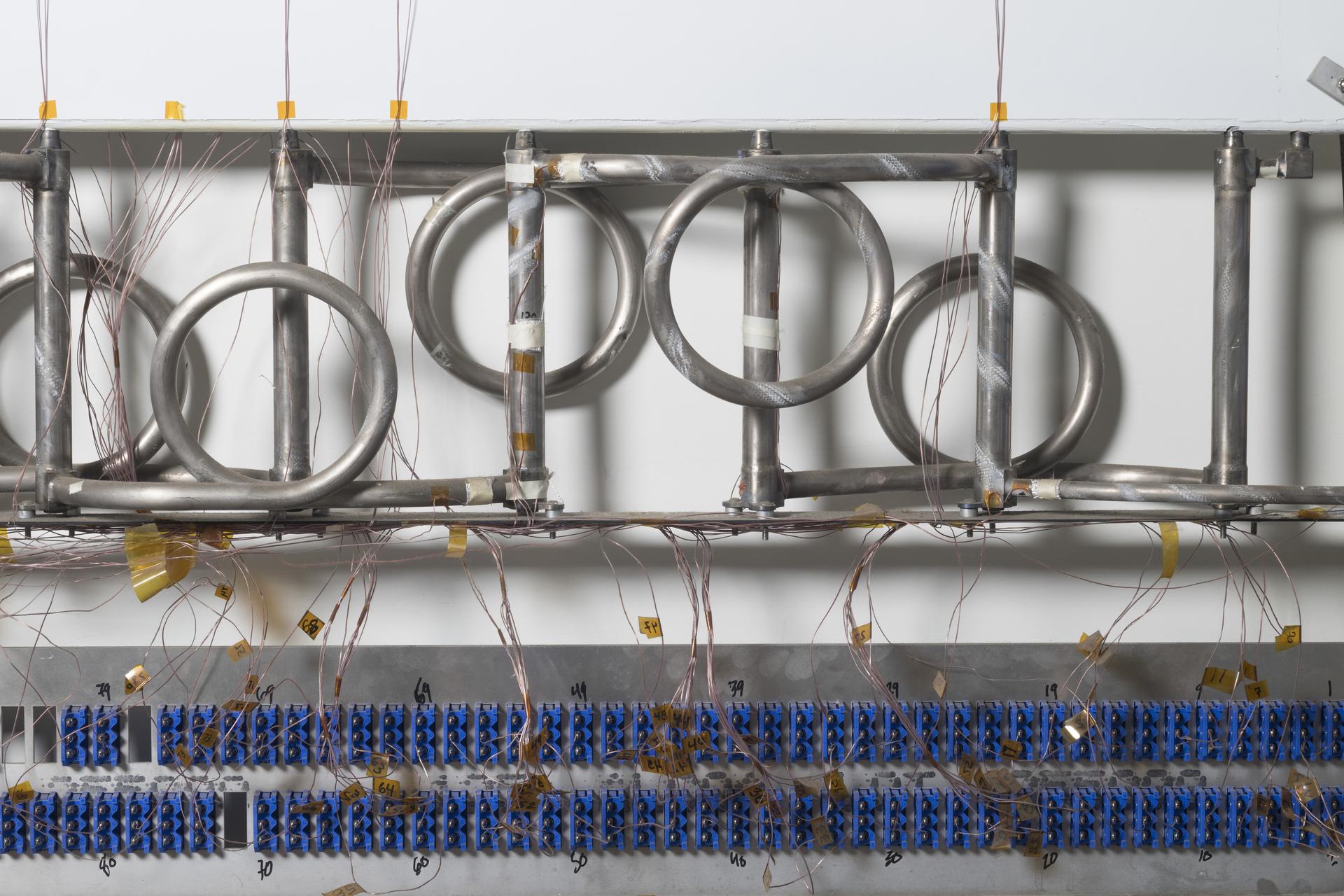
According to NASA's announcement from Glenn Research Center, Sierra Lobo Inc. will provide the spacecraft's closed Brayton cycle power conversion system. The work falls under the Space Flight Systems Development and Operations Contract III, which was awarded in 2024 to support spaceflight hardware design, development, testing and operations at NASA's Glenn Research Center in Cleveland.
The power conversion system turns the reactor's heat into usable electricity. The reactor comes from a separate source: it is being designed and developed by the Department of Energy's Idaho National Laboratory. The split reflects how the program is organized. As SpaceQ has reported, NASA serves as prime integrator and works alongside DOE.
Program director Steve Sinacore described the contract actions as a way to "reduce technical risk and help us maintain momentum toward our 2028 launch." Large development programs tend to slip when interfaces between major subsystems remain unsettled. Pinning down who builds the converter, and how it connects to the reactor, removes one of the bigger open questions.
How the spacecraft is put together
Freedom is not a clean-sheet vehicle. SpaceQ reports that the mission reuses NASA's nearly built Power and Propulsion Element bus and pairs it with a mature uranium fuel form and Brayton power conversion. The approach is conservative by design. Using hardware and fuel that are already well along shortens the path to the launch pad, which matters for a program on a fixed calendar.
NASA also notes a safety-relevant detail: the reactor stays inactive until the spacecraft has left Earth orbit. SpaceQ reports the system will start the reactor within 48 hours of escaping Earth's gravity.
The mission's goal is to demonstrate nuclear electric propulsion, which uses electricity from the reactor to drive the spacecraft. It also has scientific cargo. According to NASA, Freedom will deliver SkyFall, a payload of three Mars helicopters evolved from the Ingenuity design.
A timeline set from the top
The 2028 date did not come out of the engineering schedule alone. On April 14, 2026, the White House Office of Science and Technology Policy issued National Science and Technology Memorandum 3 (NSTM-3). The memo launched the National Initiative for American Space Nuclear Power, which aims to put reactors in orbit as early as 2028 and on the lunar surface by 2030, according to SpaceQ. Freedom is the in-space part of that push, and SpaceQ reports a December 2028 launch target. A companion mission, Lunar Reactor-1 (LR-1), covers the lunar part.
NASA Administrator Jared Isaacman announced the spacecraft just before Artemis II's lunar slingshot, according to MIT Technology Review. He said NASA would build Space Reactor-1 Freedom as the first nuclear reactor-powered interplanetary spacecraft and fly it to Mars by the end of 2028. He presented it as a break with past practice: "After decades of study, and billions spent on concepts that have never left Earth, America will finally get underway on nuclear power in space."
Isaacman's quote is a fair description of the history, and the history is also why skepticism is reasonable. Space nuclear power has a long record of studies and concepts that never flew. A launch a little over two years away leaves little margin. The October contract actions do not guarantee success, but they turn the reactor-and-converter work into contracted tasks with named suppliers.
Why It Matters
Freedom is a technology demonstration with a deadline. If it works, NASA will have flown a fission reactor beyond Earth orbit and used it for electric propulsion, which no spacecraft has done before. The program is also a test of how NASA, DOE and industry divide the work. NASA integrates the spacecraft, Idaho National Laboratory supplies the reactor design, and Sierra Lobo supplies the conversion system that makes the reactor's heat useful.
The mission also sets up what follows. NSTM-3 pairs Freedom with LR-1 and a goal of lunar surface reactors by 2030. Lessons from integrating, launching and operating Freedom's power module are likely to feed into that next step. The SkyFall helicopters give the mission a science return as well as an engineering one.
The main things to watch are whether the program can integrate the reactor and converter on schedule, and whether the late-2028 launch holds. The Oct. 20 announcement does not answer either question, but it does show the program has moved from announcements to signed contracts.
