NASA
Every Cosmic Herald story on NASA — missions, launches, discoveries, and the business of space, newest first.
-
Stargazing
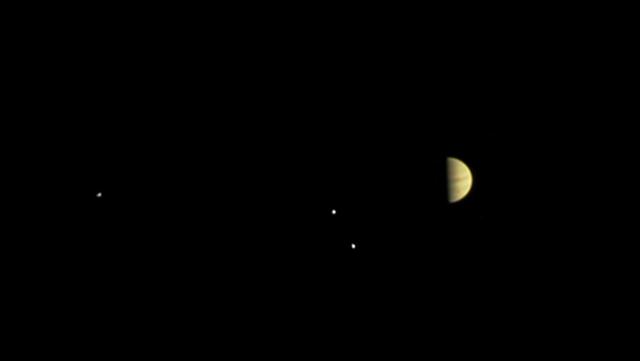
Jupiter is at its biggest and brightest of the year. How to make the most of it.
Every thirteen months, Earth laps Jupiter in their orbits around the Sun, bringing the giant planet to opposition — closest approach, fully illuminated, visible all night. Jupiter's 2026 opposition puts it in a favorable position for northern observers, and a modest telescope will show you cloud bands, the Great Red Spot, and four moons that.
-
Stargazing
Saturn's rings are nearly edge-on. Here's why that's worth watching.
Saturn's rings appear to open and close as the planet orbits the Sun, presenting a full face every fifteen years or so — and then nearly vanishing as they tilt edge-on. We are approaching one of those disappearing acts. Understanding the geometry, and how to watch it unfold, makes an ordinary telescope into a front-row seat for orbital mechanics.
-
Stargazing
The Night Sky for the Rest of June 2026: A Planet Parade, a Venus Occultation, and the Strawberry Moon
Mercury joins Venus and Jupiter in the evening twilight, the crescent Moon lines up with all three on June 16, then occults Venus on the 17th. Add the solstice, noctilucent clouds, and the low-riding Strawberry Moon on June 29 — your night-by-night guide to the rest of the month.
-
Stargazing
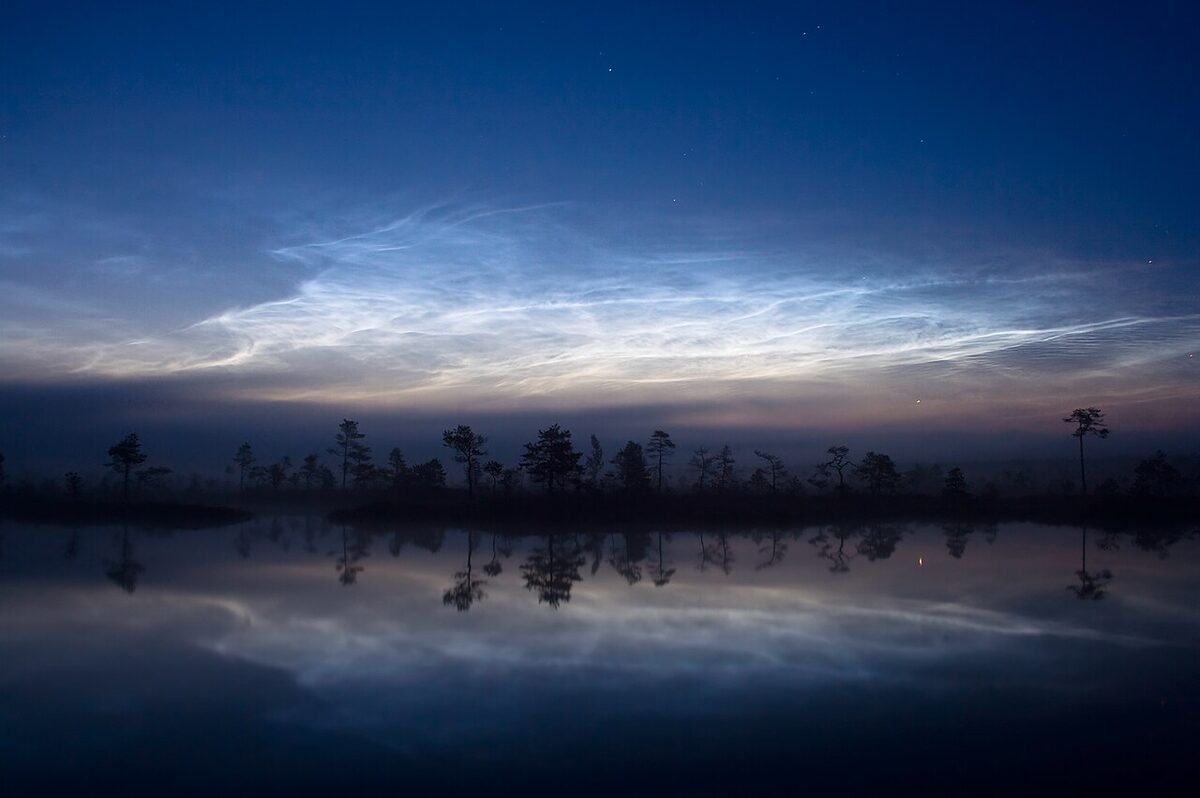
The highest clouds on Earth glow electric blue at midnight — and their season is starting
On summer nights, long after sunset, a rare kind of cloud can shine an eerie electric blue near the horizon. Noctilucent clouds form at the very edge of space, and June and July are prime time to catch them from northern latitudes.
-
Stargazing
What to watch in the June 2026 sky: a planet parade and a vanishing Venus
June brings the two brightest planets together at dusk, a Moon that briefly hides Venus, the summer solstice, and the long, deep-sky nights that follow. Here's what to look for and when.
-
Stargazing
A beginner's guide to the naked-eye sky
Naked-eye observing rewards technique far more than equipment. A practical guide to what's worth finding — including June 2026's Venus–Jupiter meeting — and the habits that separate a frustrating session from a memorable one.