
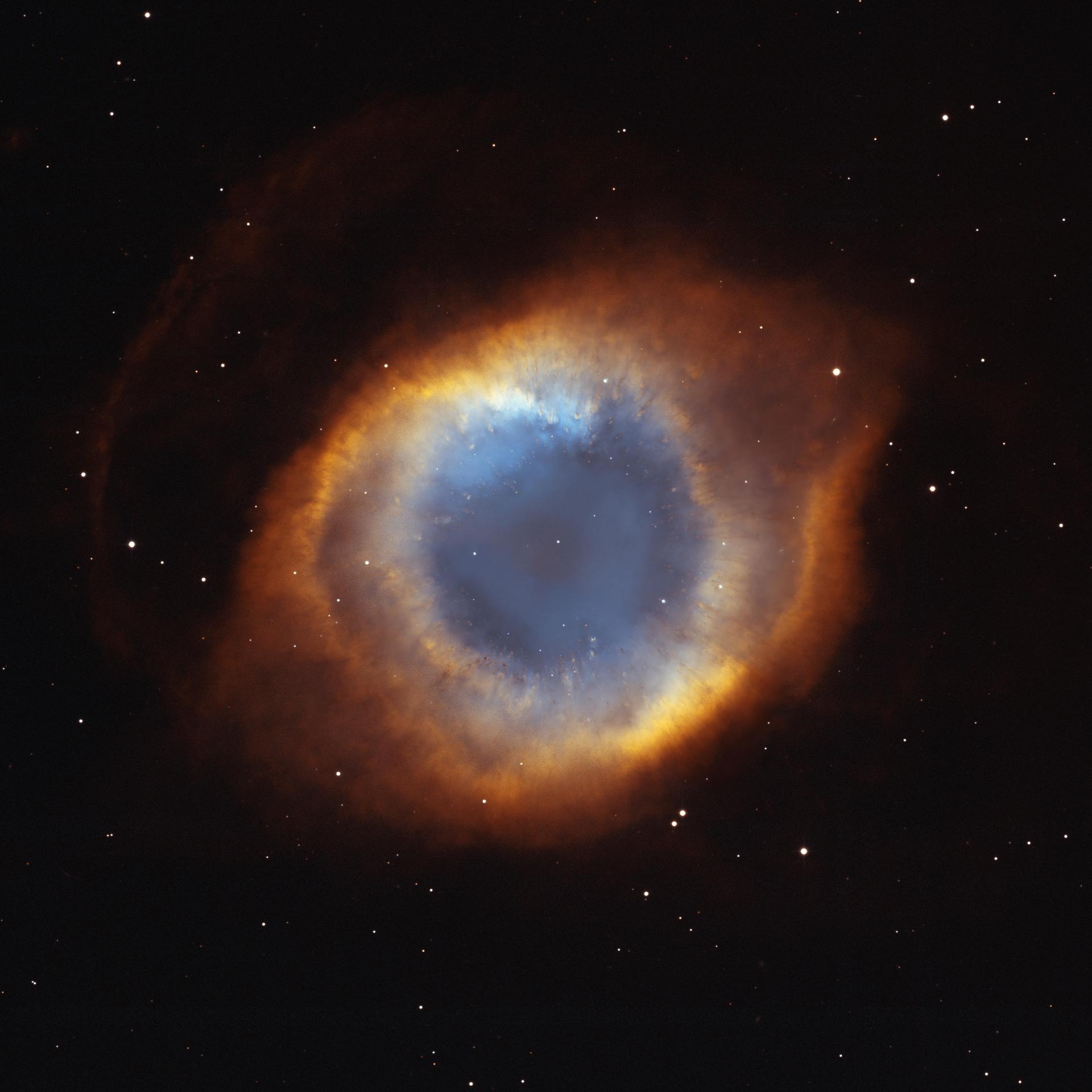
The name suggests a single colour. A new study suggests the name is only right on average.
Astronomers at the University of Warwick, led by Warwick Prize Fellow Dr Mark Hollands, have worked out what white dwarfs would actually look like to a human eye if one could get close enough to see the disc. Most would look roughly as the name says. A notable minority would not: the team's models show stars that would appear pink, purple, yellow, cyan or pale blue, and one, WD J1330+6435, that would look chartreuse green.
The paper, titled "Any colour you like: The diverse chromaticities of white dwarfs", was submitted to arXiv on 13 October 2026. It has been accepted in RAS Techniques and Instruments (RASTI) and runs to 32 pages with 20 figures. Hollands is joined by three co-authors.
How do you photograph a colour no one has seen?
You don't. As Space.com points out, no white dwarf is close enough for anyone to see its true colour directly. So the Warwick team took a different route. According to the university's press release, they started from existing spectra of white dwarfs and ran them through a model of human colour vision. That turns a curve of brightness against wavelength into the colour a person would perceive.
The arXiv abstract adds that the same spectral models can produce colour-accurate images of the stars' discs. Those images are a rendering of physics, not an observation, but they rest on measured spectra and not on artistic guesswork.
Hollands summed up the reason for the project in remarks reported by Space.com: nobody had looked at what else was possible for white dwarfs.
Where the colours come from
The answer lies in how dense these atmospheres are. The press release says the coolest white dwarf atmospheres reach about 1 gram per cubic centimetre, roughly the density of water, which is extraordinary for the outer layer of a star. At that density, elements such as carbon, calcium and sodium interact with the surrounding dense helium plasma. Those interactions broaden the absorption, so the atoms remove light over a much wider range of colours than they would in a thinner gas.
Take a big enough bite out of the visible spectrum and what's left no longer adds up to white. The study sorts the results into rough families:
- Carbon-rich white dwarfs come out pink or purple.
- Stars polluted by debris from shattered asteroids or comets look yellow.
- Cooler stars with mixed hydrogen and helium atmospheres appear cyan or pale blue.
The green one
The standout is WD J1330+6435. Space.com puts it about 326 light-years away and reports that it is accreting rocky material from a planetary companion. The press release describes a star of roughly 4,000 C, with an atmosphere enriched in calcium, lithium and sodium from that accreted rock. In the team's models, the combination makes the star look chartreuse green.
Space.com ran the story under the headline "the 1st ever green star." That framing needs a caveat. The green is a modelled colour, built from the star's spectrum and a model of human vision, and not something anyone has seen through an eyepiece. The underlying claim is still striking: if you could resolve this star's disc, the paper says, it would look green.
So are white dwarfs white or not?
Mostly, yes. The abstract states that most white dwarfs have colours similar to those of blackbodies, the smooth thermal emitters physicists use as a reference. For the volume-limited sample of white dwarfs within 20 parsecs of the Sun, the authors find a median correlated colour temperature of about 6,800 K, which they describe as white on average.
The colourful ones are real, but they are the exceptions. The paper's point is that a handful of known stars would appear yellow, green, cyan, pink or purple if resolved, and that the single word in the class name hides that range.
Why It Matters
Colour here is a side effect of chemistry and density, so it works as a readable summary of what is going on in a white dwarf's atmosphere. A pink or purple star points to carbon. A yellow one points to accreted asteroid or comet debris. The green of WD J1330+6435 traces back to rocky material accreted from its planetary system. Each colour links back to a physical process: dense helium plasma widening the absorption of a few elements until the visible light changes.
The study also shows that existing data can be reused. The team worked from data astronomers already collect routinely: they took spectra already in hand, added a model of human perception, and turned abstract absorption features into something a reader can picture. With the paper's colour-accurate disc renderings, the result is a more honest picture of these stars than the default white dot, even if, on average, the dot was right.
