
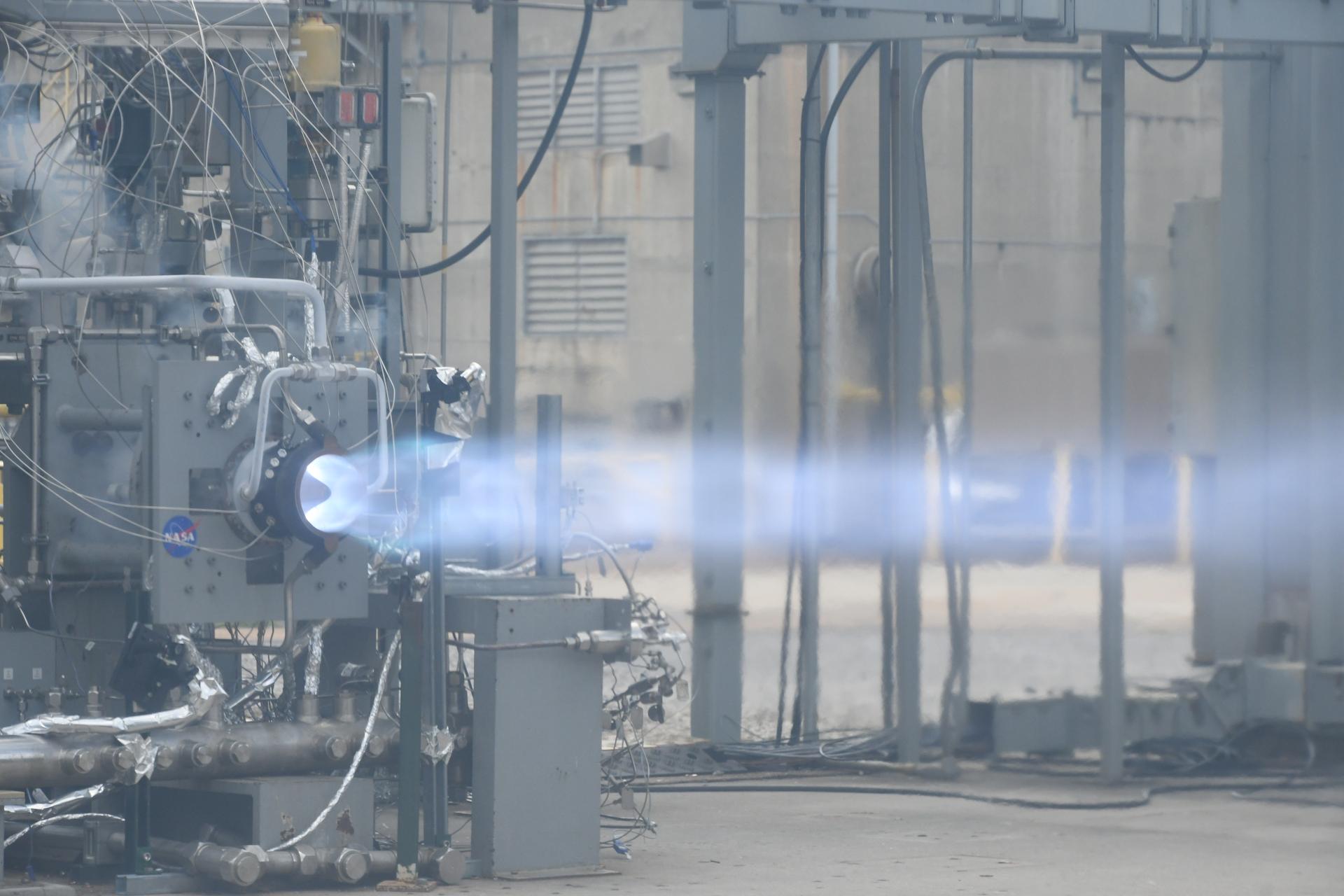
Most rocket engines burn propellant in a steady, controlled flame and rely on turbopumps — high-speed spinning machinery — to shove fuel and oxidizer into the combustion chamber fast enough to keep that flame fed. Venus Aerospace is betting on something stranger: an engine that burns propellant inside a continuously rotating detonation wave, a supersonic shockwave that chews through the mixture instead of a conventional flame front. On July 8, 2026, investors decided that bet is worth $91 million.
The Houston-based startup closed a Series B round of that size, anchored by local venture firm Mercury Fund with participation from Lockheed Martin Ventures, according to SpaceNews. The money is earmarked for a specific and unglamorous-sounding task: turning a working prototype into a scalable propulsion system that can actually be manufactured in volume, rather than proven once in a lab.
What Is a Rotating Detonation Rocket Engine?
Venus Aerospace's technology is a rotating detonation rocket engine, or RDRE — a form of "pressure-gain" propulsion. Instead of igniting propellant in a smooth, subsonic burn, an RDRE sustains a detonation wave that races around an annular combustion chamber over and over, consuming fresh propellant as it goes. Proponents argue the approach can extract more energy from the same propellant load and simplify the plumbing that feeds it, since the detonation itself does some of the work that turbopumps otherwise handle in conventional liquid rocket engines.
A Track Record, Not Just a Pitch Deck
Venus isn't starting from a blank slate. Payload Space reports that in May 2025, Venus became the first U.S. company to complete a successful flight test of an RDRE-powered rocket. SpaceNews adds detail on that milestone: the flight put a 2,000-pound-thrust rotating detonation rocket engine on a small rocket launched from Spaceport America in New Mexico. That flight is the milestone the new funding is meant to build on — the difference between demonstrating that a rotating detonation engine can fly at all and demonstrating that one can be built repeatably, at higher performance, and at a scale customers would actually buy.
The involvement of Lockheed Martin Ventures is notable for what it signals about where the interest is coming from. Pressure-gain propulsion has attention beyond traditional launch vehicles — SpaceNews notes the technology's potential to improve engine efficiency and performance for applications "ranging from hypersonic vehicles to space transportation," a category where the Pentagon and its contractors have been pouring money for years. SpaceNews' reporting frames the Series B specifically as scale-up capital, aimed at moving RDRE technology from prototype toward operational deployment for both aerospace and hypersonics customers.
Venus's federal research credentials predate this round. Its SBIR.gov portfolio page shows two Phase I and two Phase II Small Business Innovation Research awards totaling roughly $2.2 million, funded by NASA and the Air Force between 2021 and 2024 for work including rotating detonation nozzle development and leading-edge cooling for hypersonic vehicles — the kind of early, non-dilutive federal R&D funding that often underwrites exactly this sort of unconventional propulsion work before it's mature enough to attract venture capital at this scale.
The round also brought governance heft: SpaceNews reports that former NASA Deputy Administrator Pam Melroy has joined Venus's board, alongside a co-investor list that, beyond Lockheed Martin Ventures, includes MESH, PEAK6, Draper Associates, Starboard Star Venture Capital and Green Sands Equity.
Why It Matters
Rotating detonation engines have been a subject of academic and government research for decades, but turning the concept into flight hardware that survives repeated use has proven difficult — sustaining a stable detonation wave without destroying the chamber walls around it is a genuinely hard combustion engineering problem. A $91 million round doesn't resolve that difficulty on its own, but it does mean a company with an actual flight under its belt now has real money to attack the harder problem of scale: building engines that produce more thrust, run on a wider range of propellants, and can be manufactured consistently rather than hand-built one at a time.
The backing here is worth noting for who it comes from, not just how much it totals. Venus isn't relying solely on its own claims about the technology — a defense-industry investor in Lockheed Martin Ventures, a former NASA deputy administrator now on the board, and a track record of NASA- and Air Force-funded SBIR awards all point the same direction: pressure-gain propulsion is graduating from a promising research topic to a technology multiple serious, technically literate parties are willing to spend real money proving out. Whether RDREs ultimately end up powering orbital launch vehicles, hypersonic systems, or both remains an open question — but that question is now backed by considerably more capital than it was a week ago.
