
Japanese lunar transport company ispace has spent years building its own landers to get to the Moon. On July 8, 2026, it announced a different approach: buying a seat on someone else's rocket instead.
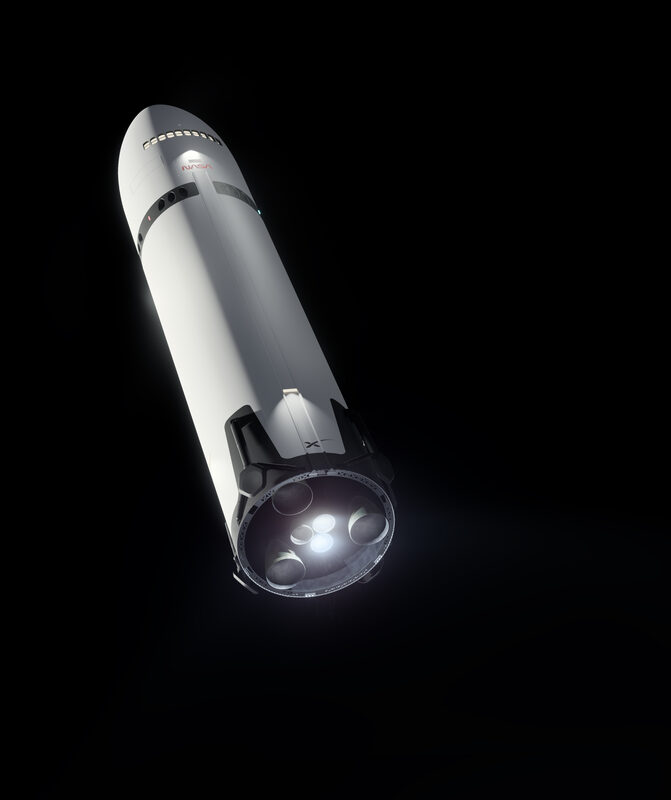
The company unveiled a new service line called "lunar access integrator," under which it has purchased 500 kilograms of cargo capacity for $50 million on a SpaceX Starship targeting a lunar landing as soon as 2030. Rather than building a dedicated spacecraft for every mission, ispace will act as a broker — packaging smaller payloads from customers who want their hardware on the Moon and slotting them into the cargo space it has already reserved on the SpaceX Starship mission. The arrangement was first reported by The Japan Times.
The pitch is straightforward: a ride-share to the lunar surface, priced and scheduled well in advance, for customers who don't need — or can't afford — a lander built specifically for their mission.
How This Fits Alongside ispace's Own Landers
The Starship deal doesn't replace ispace's existing lander business — it sits next to it. The company has been developing what it calls a "taxi" service through its own Ultra lander program, which it announced separately as a unification of two previously distinct designs: APEX 1.0, built by ispace's U.S. arm, and Series 3, built by ispace Japan. According to ispace's own announcement, the merger was driven partly by necessity — the company switched to a different, flight-proven engine after delays with its original VoidRunner engine, supplied by Agile Space Industries, disrupted its propulsion plans.
The Ultra roadmap lays out a sequence of missions stretching to the end of the decade. Mission 2.5, an orbital satellite, could fly as early as 2027. Mission 3, a Japan-funded lander mission backed by the country's METI SBIR program, is slated for 2028, and Mission 4, backed by Japan's Space Strategy Fund, follows in 2029. The mission carrying real stakes for NASA is Mission 5, targeted for 2030: it's the vehicle for NASA's Commercial Lunar Payload Services (CLPS) Task Order CP-12, awarded to Team Draper, which includes ispace's U.S. arm as the lander provider. ispace has also floated a "Lunar Connect Service" aiming to have five satellites in place by 2030, presumably to support communications or navigation for the growing traffic of landers and rovers headed to the Moon this decade.
Put together, ispace is now running two parallel lunar delivery tracks: a self-built lander line for missions that need dedicated design and NASA-grade schedule certainty, and a Starship-based ride-share line for customers who just need cargo space at a lower price point.
The NASA Mission Already in Motion
The CP-12 task order isn't hypothetical — it's an active NASA program with named science instruments and principal investigators. According to NASA's own CLPS documentation, Team Draper's ispace-U.S. APEX 1.0 lander is manifested to deliver payloads to Schrödinger Basin, a large impact structure on the Moon's far side, a location of particular interest to planetary scientists because far-side terrain is shielded from Earth's radio noise and preserves a different geological record than the near side.
The CP-12 payload set includes three instruments: the Farside Seismic Suite, led by Mark Panning at NASA's Jet Propulsion Laboratory, designed to detect moonquakes and probe the Moon's interior structure; LITMS, led by Robert Grimm at the Southwest Research Institute, which studies subsurface heat flow and electrical conductivity using a pneumatic drill and electrode instruments; and LuSEE-Lite, led by Stuart Bale at UC Berkeley, built to observe low-frequency electric and magnetic field emissions that are effectively impossible to study from Earth or the Moon's near side because of interference.
That NASA-backed mission is the anchor of ispace's credibility as a lander operator — a government contract with real deliverables and a real destination. The Starship cargo purchase is a bet that a second, cheaper channel can run in parallel.
Why the Math Might Work
$50 million for 500 kilograms works out to $100,000 per kilogram — not cheap by ordinary standards, but potentially competitive within the current small-payload lunar delivery market, where dedicated landers carry substantial fixed development and integration costs that get spread across whatever mass they can carry. By buying into a much larger vehicle's excess capacity rather than building a new lander from scratch, ispace is wagering that Starship's scale — a vehicle designed to eventually carry many tons to the lunar surface for NASA's Artemis program — will make shared rides for modest payloads more economical than fielding a bespoke small lander for every customer.
It's also a hedge against ispace's own hardware timeline. Lander development is difficult and slow, as the company's own engine-supplier switch on the Ultra program illustrates. A Starship seat, once purchased, doesn't depend on ispace's in-house engineering schedule slipping.
Why It Matters
This announcement is a signal about how the commercial lunar economy is starting to specialize. Rather than every company that wants to send something to the Moon needing to build or contract an entire lander, ispace is positioning itself as a middleman — an "integrator" that aggregates smaller payloads onto whichever transportation happens to be available and cost-effective, whether that's its own hardware or someone else's.
That only works if the underlying transportation — in this case, the Starship mission ispace has bought into — actually flies on schedule. SpaceX's Starship program is central to NASA's Artemis effort, but Starship's own development and testing cadence has repeatedly shifted target dates in the past. A 2030 landing target for this cargo mission is not guaranteed, and ispace's ride-share business is only as reliable as the rocket it's riding on.
Still, the strategy diversifies ispace's exposure. If its own Ultra lander program hits delays — as lunar landers frequently do — the company isn't solely dependent on in-house hardware to keep its lunar delivery revenue moving. And for smaller payload customers — universities, instrument makers, foreign space agencies without their own landers — a broker offering a fixed-price seat on a Starship program tied to NASA's Artemis effort is a meaningfully lower barrier to reaching the Moon than commissioning a custom spacecraft.
