
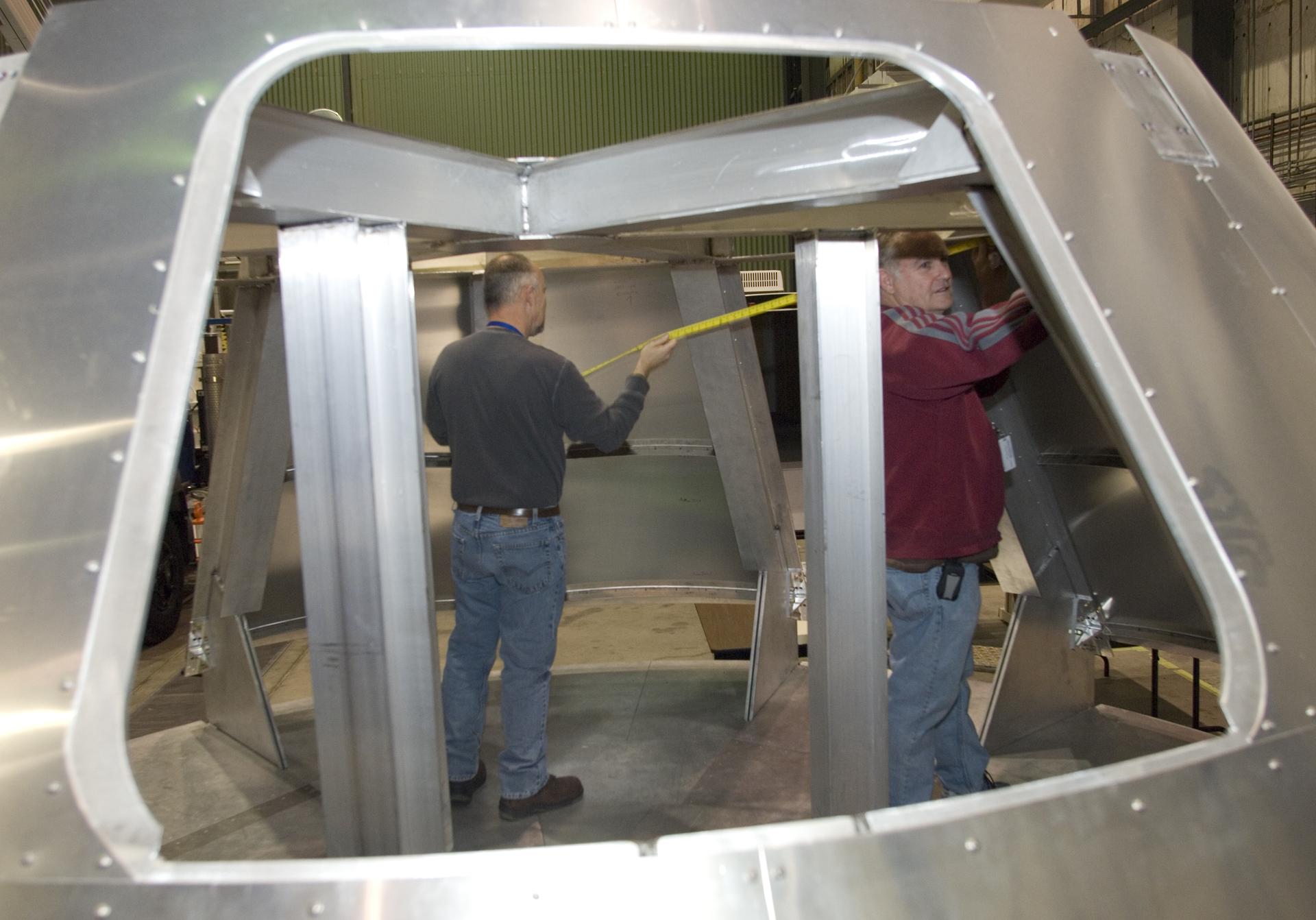
There's a new capsule mockup sitting a short drive from NASA's Johnson Space Center in Houston, and it didn't come from a US company. On July 8, 2026, The Exploration Company — a Germany-based space transportation startup — announced it has stood up a US-based subsidiary, TEC Federal, and opened a "Rapid Innovation Lab" in Houston centered on a full-scale mockup of the crewed variant of its Nyx spacecraft. The message is hard to miss: a European vehicle-builder wants a seat at the table for American human spaceflight contracts, and it's setting up shop within sight of the people who run the space station program.
The move is the clearest signal yet that The Exploration Company sees Houston, not just Brussels or Paris, as essential terrain for its next phase of growth.
What Just Happened
According to SpaceNews, TEC Federal is now a formally established US entity, created specifically to let the company pursue government contracts that are typically closed to foreign-owned firms. The new Rapid Innovation Lab in Houston includes a full-scale mockup of Nyx Crew — the human-rated version of the company's reusable capsule — giving engineers, and potential government customers, something physical to walk through rather than a rendering on a slide.
CEO Hélène Huby framed the choice of location bluntly: "Houston gives us direct access to the people and expertise that have built and operated human spaceflight systems for decades." That's not idle flattery — European Spaceflight reports that TEC is actively recruiting for its Nyx Crew team in Houston, building what it describes as a substantive engineering base there, explicitly to tap the city's "deep pool of human spaceflight expertise."
The Money Behind the Mockup
None of this is happening on spec. Per SpaceNews, the European Space Agency and Thales Alenia Space have already funneled €25 million (about $28.6 million) into Phase 1 of the LEO Cargo Return initiative — the ESA program under which Nyx's cargo variant is being developed. ESA is reportedly weighing a much larger follow-on: up to €200 million for Phase 2. That's roughly an eight-fold jump from Phase 1, and it would represent a serious institutional bet on a company that, until recently, was better known in Brussels than in Houston.
ESA's own commercialisation portal backs up the broader technical picture, describing Nyx as a modular, refuelable, reusable orbital vehicle designed for low Earth orbit and lunar cargo missions — with the agency explicitly noting its growth potential toward crewed flight. That framing lines up with what's now sitting inside the Houston lab: not a cargo can, but a full-scale mockup built for the crewed variant of Nyx, the same vehicle TEC is now staffing an engineering team in Houston to develop, per European Spaceflight's reporting.
Why Houston, Why Now
Setting up a US subsidiary isn't just a branding exercise. Government contracts — particularly anything touching NASA's crew or cargo programs, let alone national security-adjacent work — routinely require a domestic corporate structure and, often, a demonstrable US workforce. TEC Federal exists to check those boxes. Locating the new lab near Johnson Space Center rather than, say, near a launch site, is also a tell: this is a play for engineering credibility and NASA relationships as much as it is about proximity to hardware.
It also puts The Exploration Company in a market where it will be judged directly against SpaceX's Dragon and Boeing's Starliner — companies with years of flight heritage and, in Starliner's case, hard-won lessons about how unforgiving crew certification can be. A full-scale mockup is a strong opening statement, but it is still a mockup. According to SpaceNews, the company is working toward a 2028 orbital flight test of the cargo variant of Nyx, expected to carry cargo to the International Space Station — which would be the real proving ground before any conversation about carrying astronauts.
Why It Matters
American human spaceflight has historically been a closed shop for US-flagged vehicles and US-based primes. TEC Federal is a direct attempt to crack that open from the European side, using a purpose-built US subsidiary rather than partnership deals or licensing arrangements. If ESA follows through with the reported €200 million Phase 2 tranche, Nyx's cargo variant would have a funding trajectory that starts to resemble the early public-private development money NASA once put behind Commercial Cargo and Commercial Crew. Layer a Houston-based crew engineering team and a full-scale Nyx Crew mockup on top of that, and The Exploration Company is signaling it doesn't just want to sell Europe a cargo vehicle — it wants to be a credible bidder for the next round of NASA and, potentially, national security human spaceflight contracts. Whether a five-year-old European startup can turn a lab mockup into a flight-qualified, crew-rated vehicle is an entirely separate question, but the intent is now unambiguous: Nyx is being built to compete on American turf, not just supply it from abroad.
