
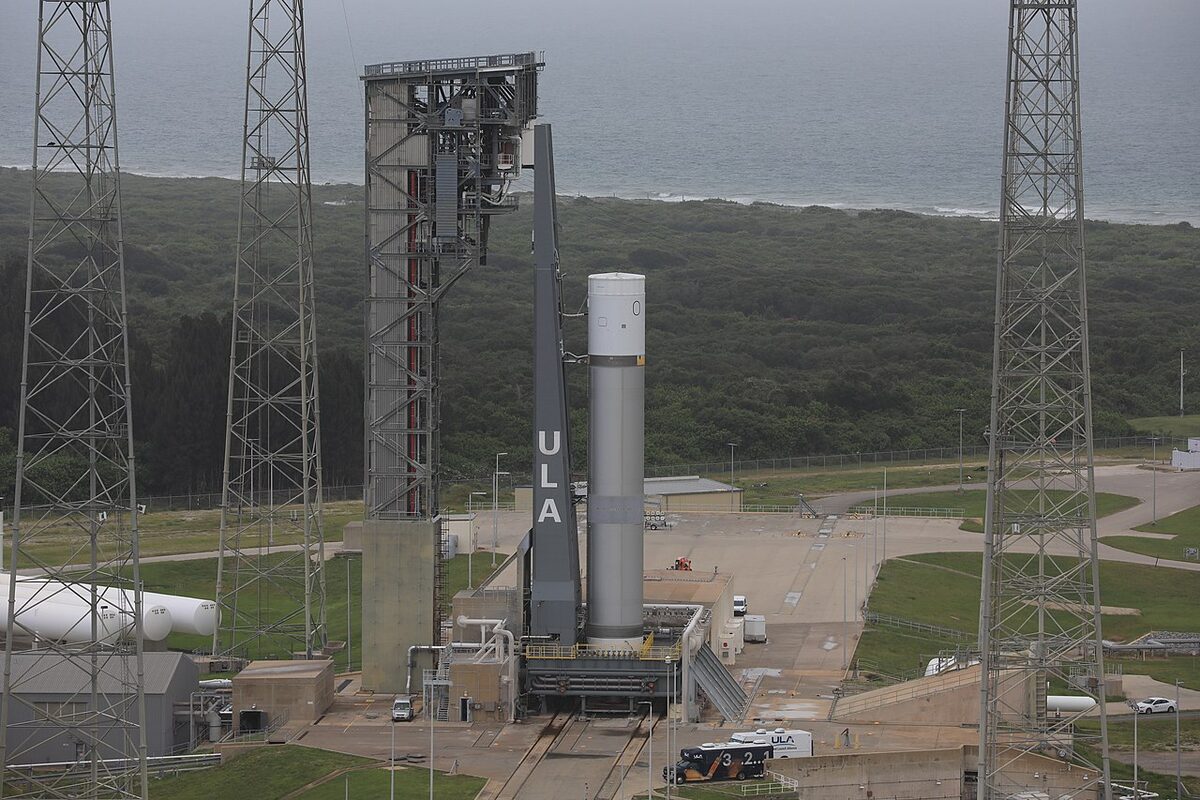
United Launch Alliance built the Vulcan Centaur to be America's workhorse for national security — the rocket that lifts the Pentagon's most valuable and sensitive satellites, from missile-warning sensors to spy payloads, the missions that cannot tolerate failure. After years of development the rocket was certified for that role, a milestone that cleared it to compete for the military's most demanding launches. Then the hardware reminded everyone how hard this is. On two of its flights, Vulcan suffered an anomaly in one of its strap-on solid rocket boosters, and the recurrence has now prompted the U.S. Space Force to pause the Vulcan missions it had lined up.
What went wrong, and why it matters
In each case, something went awry with a solid rocket booster during ascent — on one flight, a nozzle component visibly came apart shortly after liftoff. Crucially, the rocket survived both times: Vulcan's core-stage engines compensated for the disturbance, and the missions reached their intended orbits. By the narrow measure of mission success, both flights worked. But a problem that appears once can be dismissed as a fluke; a problem that appears twice looks like a pattern, and patterns are unacceptable on rockets entrusted with irreplaceable national security satellites. The Space Force's decision to halt further Vulcan launches until ULA identifies and fixes the root cause is the cautious, correct response — better to ground the fleet and understand the fault than to fly another and hope.
The pause carries weight beyond ULA's own schedule. The United States deliberately maintains more than one provider for its critical launches, precisely so that no single failure or grounding can choke off access to space. Vulcan was meant to be the steady, assured counterweight to SpaceX's Falcon family in the national security portfolio. With Vulcan paused, that assurance leans more heavily on SpaceX for the moment — an uncomfortable concentration for a program whose entire premise is redundancy, and a reminder of how thin the roster of heavy-lift options really is.
Vulcan matters to the United States for a reason rooted in independence. It was built to replace ULA's venerable Atlas V and Delta IV rockets and, critically, to end American reliance on the Russian-made RD-180 engines that powered the Atlas — a dependence that had grown politically untenable. Vulcan's first stage instead burns methane in BE-4 engines supplied by Blue Origin, topped by a high-energy Centaur upper stage. Getting it flying reliably is therefore not merely a commercial matter for ULA but a question of sovereign access to space for the nation's most sensitive missions — part of why the recurring booster fault is being treated with such seriousness.
The road back, and the road ahead
ULA's task now is the unglamorous work of a mishap investigation: find out exactly why the booster misbehaved, prove the fix, and satisfy a customer with very little appetite for risk. Solid rocket motors are, in principle, among the simpler and more reliable elements of a launch vehicle, which makes a repeated anomaly both puzzling and urgent to resolve. The company has flown the rocket successfully more than once, and the core vehicle has performed well; the issue appears localized to the boosters that augment its thrust off the pad.
Looking further out, ULA has signaled ambitions to make Vulcan partly reusable, with a concept to detach and recover the rocket's expensive engines after they have done their job — a recognition that the economics of launch, reset by reusable rivals, eventually demand it. But that is a future chapter. The immediate story is simpler and more pressing: a brand-new rocket, certified for the nation's most important payloads, has been sidelined by a fault that showed up twice, and it will not fly those payloads again until everyone is confident it has been fixed. In a business where the margin for error on a national security launch is essentially zero, a pause is not a failure of the program — it is the program working as intended.
