
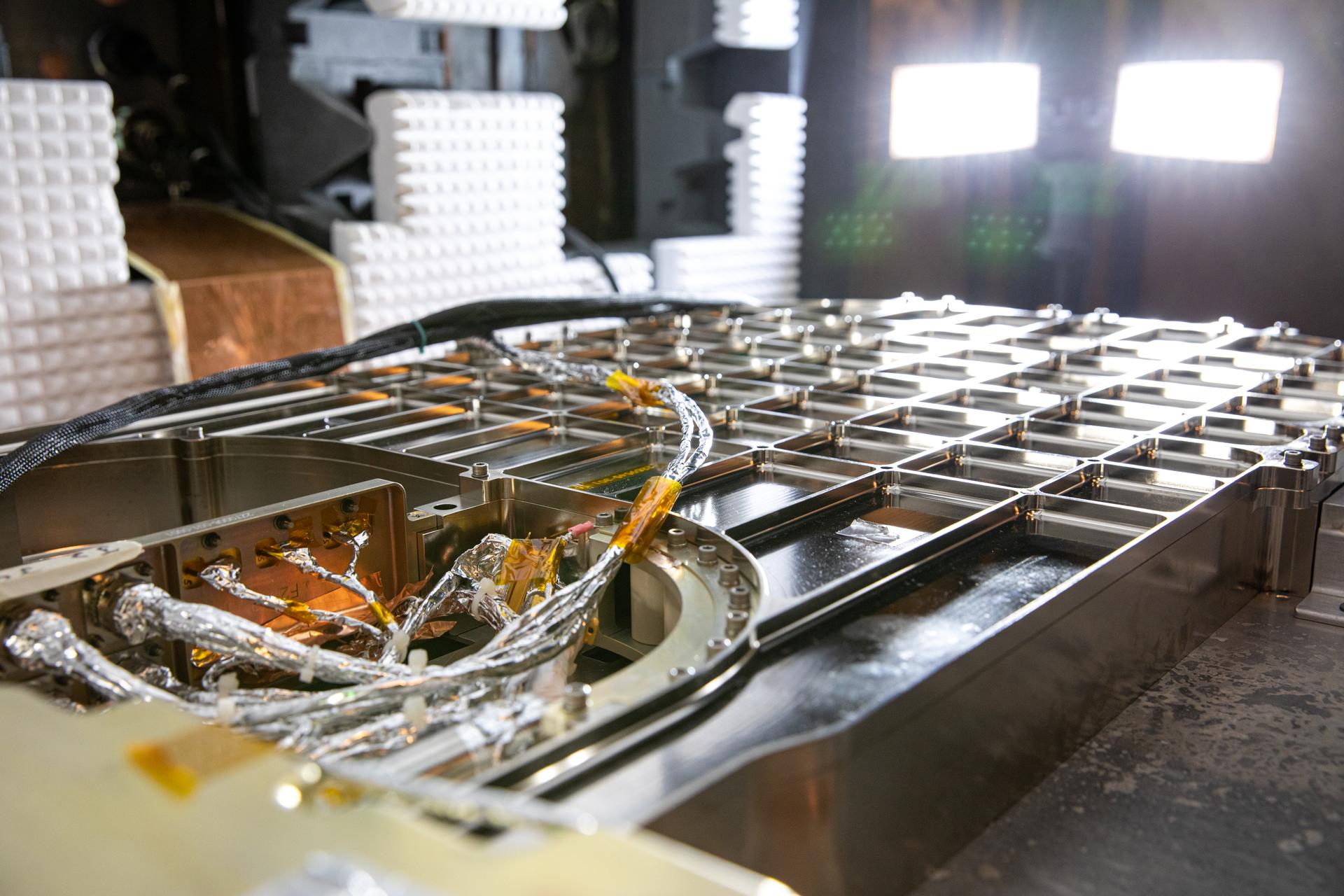
Almost every satellite ever flown has shared the same fate: it works until it runs out of fuel or something breaks, and then it becomes junk — a dead machine drifting in an expensive orbit that no one can reach. On Tuesday, July 21, 2026, the United States is set to launch a spacecraft designed to challenge that assumption. A SpaceX Falcon 9 is scheduled to lift off from Cape Canaveral's Space Launch Complex 40 during a four-hour window that opens at 5:15 p.m. EDT, carrying the first American robot purpose-built to act as a mechanic for satellites already in orbit.
The payload is Northrop Grumman SpaceLogistics' Mission Robotic Vehicle, MRV-1, riding alongside three Mission Extension Pods — described by mission planners as small jetpacks that attach to a satellite running low on fuel and extend its working life. MRV-1 itself carries something more ambitious: the robotic servicing payload developed under DARPA's Robotic Servicing of Geosynchronous Satellites program, or RSGS.
What exactly is launching?
Two related but distinct things are going up on the same rocket.
The first is MRV-1, a servicing spacecraft equipped with robotic arms and a standardized refueling port. According to the mission profile, it can inspect, repair and upgrade satellites in geosynchronous orbit — the roughly 36,000-kilometer-high belt where communications and weather satellites hold a fixed position over the Earth.
The second is the trio of Mission Extension Pods. Each MEP is designed to attach to a client satellite and supply propulsion the aging spacecraft can no longer provide on its own. In the mission's own framing, they are jetpacks for satellites that would otherwise be forced into retirement simply because their tanks ran dry.
The government contribution is the robotic front end. DARPA leads development of the robotic suite in collaboration with the U.S. Naval Research Laboratory and NASA, while SpaceLogistics serves as integration lead and provides the spacecraft bus — building on the flight-proven Mission Extension Vehicle platform the company has already operated in orbit.
Not a quick job
Anyone expecting instant results should recalibrate. This is a demonstration launch aimed at proving the commercial viability of GEO servicing, and the timeline reflects the sheer difficulty of moving hardware to geosynchronous orbit and getting it working.
Why build a robot for this at all?
The economic case is straightforward once you look at what sits in geosynchronous orbit. RSGS targets hundreds of operational GEO satellites — a population of high-value spacecraft that, until now, no one could physically reach once they were on station. A communications satellite that costs hundreds of millions of dollars to build and launch can be rendered useless by a stuck antenna, a solar array that failed to deploy, or an empty fuel tank, with no recourse.
The robotic suite aboard MRV-1 is meant to address exactly those failure modes. Its designed capabilities include on-orbit upgrades, inspections, anomaly resolution and satellite relocation — in plain terms, checking a satellite over, fixing what went wrong, installing new hardware, and nudging a spacecraft into a more useful position. Combined with the refueling and life-extension role of the Mission Extension Pods, the system is intended to ensure continued servicing capability for at least the next decade.
DARPA program manager James Shoemaker framed the effort in terms of a broader shift in how orbital infrastructure gets maintained. "The RSGS program is a government-private partnership for the next wave of satellite servicing," he said. The structure of the mission bears that out: government labs supply the robotic technology, a commercial operator supplies and flies the spacecraft, and the demonstration is explicitly meant to prove that a business can be built around keeping satellites alive.
Why It Matters
For the entire history of the space age, a satellite in geosynchronous orbit has been unreachable and unfixable once it launched. MRV-1 is the first U.S. attempt to change that at an operational scale, targeting a population of hundreds of high-value spacecraft that would otherwise be abandoned the moment they broke or ran out of fuel. If the demonstration works, satellite operators gain something they have never had: the option to repair, upgrade, refuel or relocate an asset in orbit rather than write it off and launch a replacement. That reframes a satellite from a disposable object into serviceable infrastructure — with real consequences for cost, for the pace of orbital debris accumulation, and for how the next generation of GEO spacecraft is designed. The government-commercial structure matters too. By pairing DARPA, the Naval Research Laboratory and NASA's robotic technology with a commercial operator's spacecraft and business model, the program is testing whether in-space servicing can stand on its own as an industry rather than remaining a one-off government experiment. The answer won't be clear until RSGS begins operational work, but the attempt starts on the pad this week.
The wider week
MRV-1 is not the only notable item on the manifest. SpaceX's Starship Flight 13 is scheduled for July 23, following a July 16 engine-ignition abort that scrubbed an earlier attempt. But the robotic servicer is the one carrying a genuinely new capability to orbit — a machine whose entire reason for existing is to make sure other machines don't have to be thrown away.
Sources
- Robotic Servicing of Geosynchronous Satellites technology to launch in 2026 | DARPA
- A robotic satellite servicer and Starship's return headline this week's launches | Astronomy.com
- DARPA readies robotic deep-space repair satellite for 2026 launch | Space.com
- Live coverage: SpaceX to launch novel geosynchronous robotic servicing satellite | Spaceflight Now
