
At 5:15 p.m. EDT on 21 July 2026, a SpaceX Falcon 9 climbed away from Space Launch Complex 40 at Cape Canaveral carrying a spacecraft that does something no privately owned satellite has operationally done before: reach out, grab another satellite by the hand, and fix it.
The payload was Northrop Grumman SpaceLogistics' Mission Robotic Vehicle, or MRV — billed as the first commercial robotic servicing spacecraft built to work in geosynchronous orbit. Bolted to it are a pair of dexterous robotic arms, the business end of a program that has spent years in development under DARPA. Riding along were three Mission Extension Pods, the small propulsion "jetpacks" MRV is designed to install on aging client satellites to keep them flying.
Getting to geosynchronous transfer orbit is demanding, and the mission needed every bit of the rocket. The first stage, booster B1069, flew its 32nd and final flight, expended for the extra performance a GTO insertion requires. It was a fitting end for a veteran booster — retired not to a landing pad but to the job of hauling an orbital repair shop out toward the ring of satellites 22,000 miles up.
What Exactly Launched
It helps to separate the pieces, because this is a genuine government-private hybrid rather than a single company's product.
The spacecraft platform — the bus, the power, the propulsion, the ability to rendezvous and maneuver — comes from Northrop Grumman SpaceLogistics and is based on its Mission Extension Vehicle heritage. SpaceLogistics leads integration and operates the vehicle. This is the company's first robotic servicer.
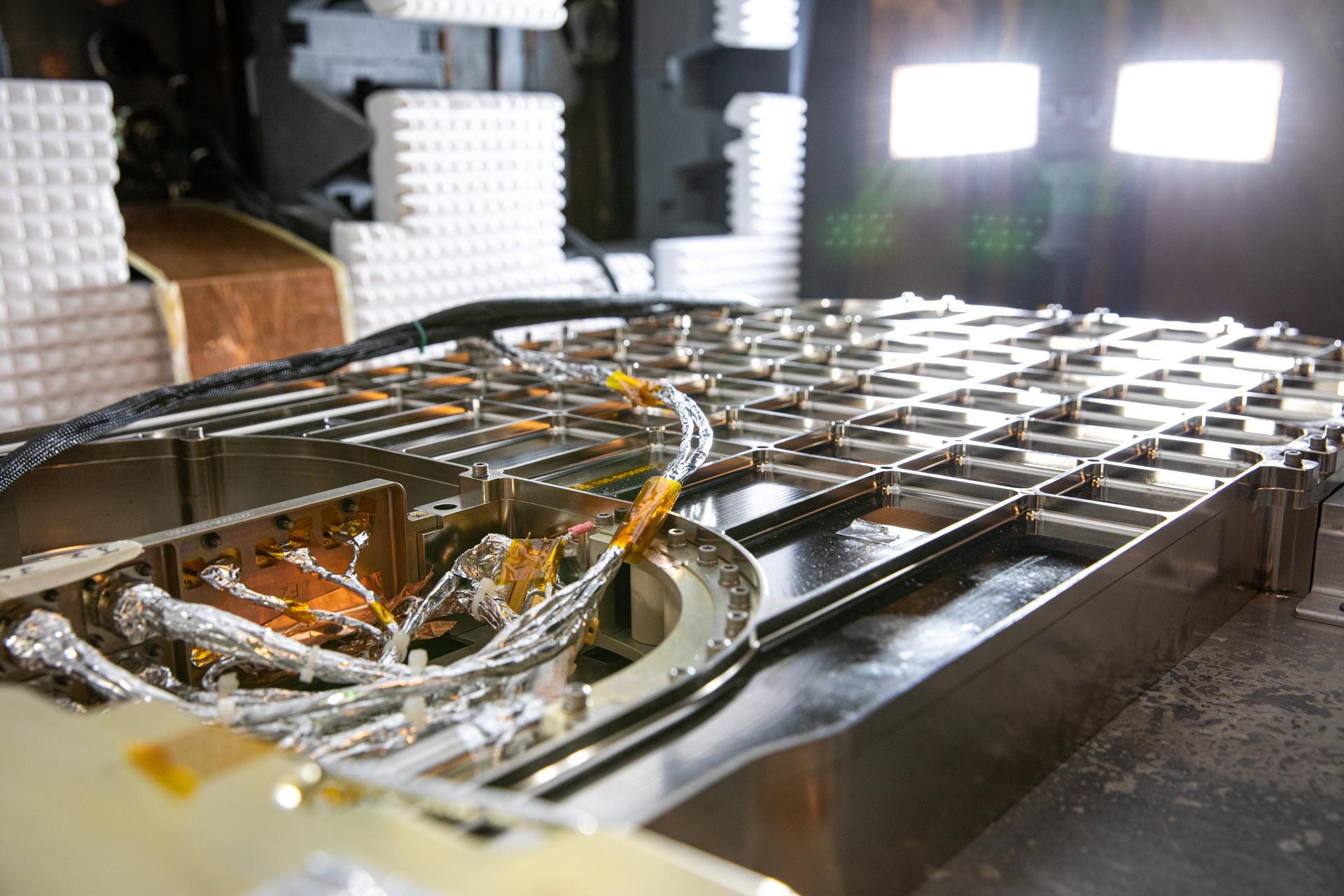
The robotic front end — the arms and the dexterous manipulation that turns a spacecraft into a mechanic — is the Robotic Servicing of Geosynchronous Satellites payload, or RSGS. DARPA leads that program. The U.S. Naval Research Laboratory built the robotic payload, with NASA collaborating on the robotic development. In other words, the muscle is commercial; the hands are federal.
DARPA program manager James Shoemaker frames RSGS as a government-private partnership meant to serve both commercial operators and U.S. government customers — a shared piece of infrastructure rather than a one-off demo.
How On-Orbit Servicing Actually Works
The clever engineering insight sits at the point of contact. MRV isn't designed to grapple a delicate, mission-specific fixture that varies from satellite to satellite. Instead, its arms are built to grip the "launch vehicle interface plane" — the sturdy structural ring where a satellite was once bolted to its own rocket. Nearly every satellite has one, and it's built to take load. That single design choice is what lets one servicer, in principle, work on a broad population of client spacecraft rather than just a bespoke few.
This is not a quick turnaround. After launch, MRV faces roughly a year of transit and checkout before it settles into geosynchronous orbit and begins operations. From there the plan stretches across a decade or more of active servicing.
Once on station, the job list is broad. MRV is meant to inspect satellites up close, resolve anomalies, perform repairs and upgrades, and relocate spacecraft to new orbital slots. And it can install the Mission Extension Pods it carried up — the jetpacks that provide station-keeping propulsion to satellites that are otherwise healthy but running low on fuel, extending their working lives at a fraction of the cost of building and launching replacements.
The first customers are already lined up. Planned installations target satellites operated by Australia's Optus and Luxembourg's SES — two established commercial GEO operators putting real hardware on the line as early clients.
Why It Matters
For the entire history of the geosynchronous belt, a satellite has been a disposable object. It launches with a fixed amount of fuel and a fixed set of capabilities; when either runs out, a multi-hundred-million-dollar spacecraft becomes junk, nudged into a graveyard orbit while a replacement is built from scratch. There has been no way to refuel it, no way to fix a stuck antenna, no way to upgrade an aging payload.
MRV is the first operational, commercially owned attempt to break that pattern in GEO. The stated program goal is explicit: shift from disposable satellites toward sustainable, upgradable, resilient ones. If a satellite can be relocated, repaired, refueled by proxy, and eventually upgraded, the economics of operating in geosynchronous orbit change — and so does the calculus of resilience, since a servicer can respond to anomalies that would otherwise write off a spacecraft.
There's a national-security dimension baked in as well. RSGS emerged from DARPA and NRL precisely because the ability to inspect and service satellites on orbit is strategically valuable to the U.S. government, not just to commercial operators. The same capability that saves Optus and SES money also gives Washington a way to keep critical space assets healthy and adaptable. That dual-use character — one vehicle serving both markets — is the whole point of structuring it as a government-private partnership.
None of this is proven yet. The hard part is still ahead: the year-long journey to GEO, the checkout of those robotic arms, and the first delicate approach to grab a live, operating satellite by its interface ring without damaging it. Commercial in-orbit servicing has been promised for a long time. What made 21 July different is that the mechanic is finally on its way to the job site.
Sources
- Robotic Servicing of Geosynchronous Satellites technology to launch in 2026 (DARPA)
- SpaceX launches novel geosynchronous robotic servicing satellite on decade-long mission (Spaceflight Now)
- SpaceX Launches Northrop Grumman's First Mission Robotic Vehicle (Via Satellite)
- Falcon 9 to launch MRV-1 robotic servicing spacecraft for Northrop Grumman (NASASpaceflight)
