
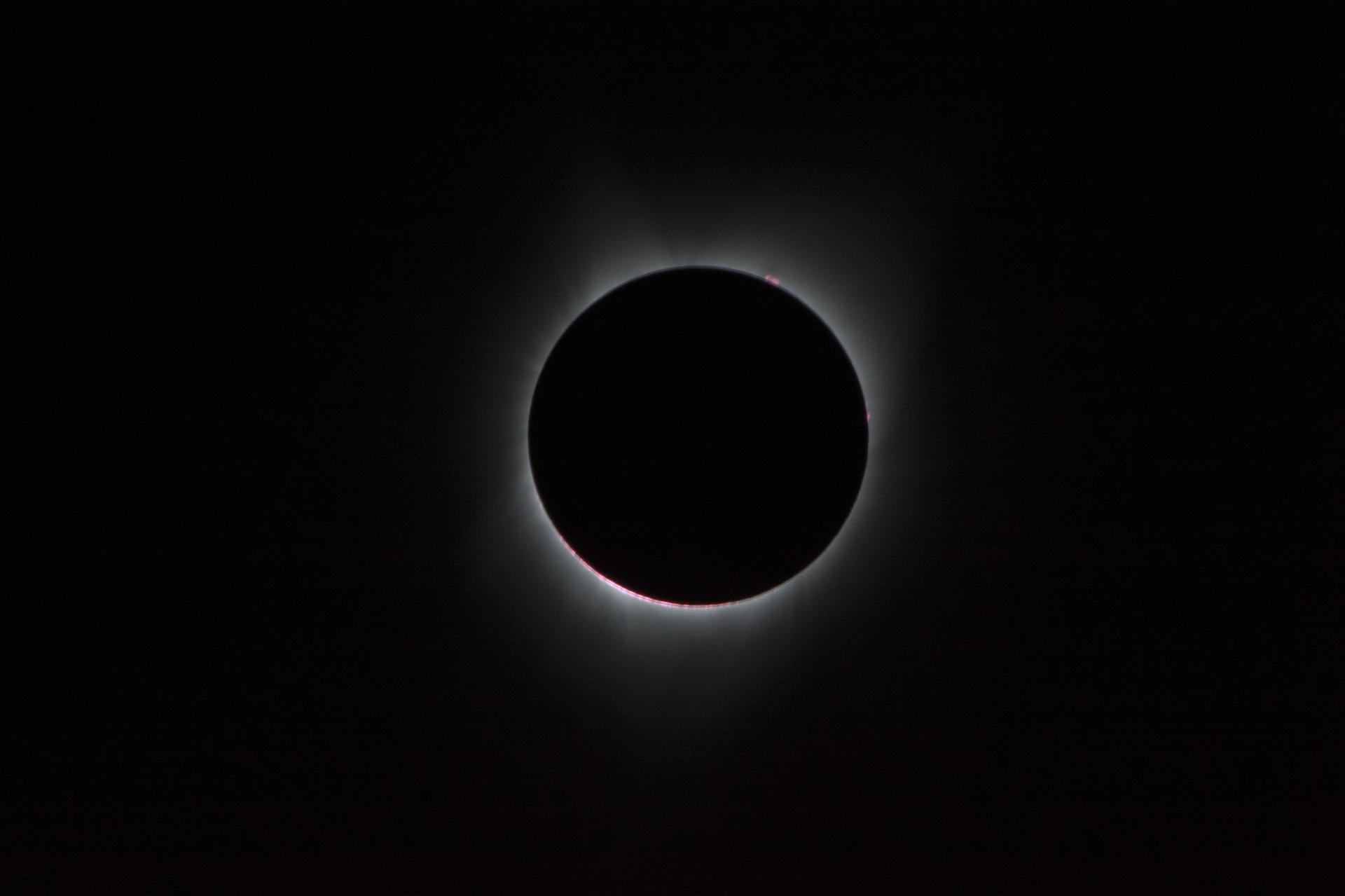
One month from now, on Wednesday, August 12, 2026, the Moon's shadow will race across the top of the world, plunging a narrow corridor of the Arctic, Greenland, Iceland, and northern Spain into daytime darkness. It is the first total solar eclipse to cross mainland Europe since 1999, and for anyone within the path, or anywhere in the wider partial-eclipse zone that includes parts of the northern United States, it is worth planning for now. Here is what NASA and professional eclipse cartographers actually say about where to be, when to look up, and how to do it safely.
The path of totality
According to NASA's eclipse page, the path of totality begins in remote northeastern Siberia near the North Pole, crosses the Arctic Ocean, sweeps over the Greenland ice cap, clips the western edge of Iceland, then crosses the North Atlantic to make landfall in northern Spain, brushing the extreme northwestern tip of Portugal before ending at sunset over the Mediterranean.
Totality is brief and geographically narrow. NASA's technical eclipse calculations (Espenak/GSFC catalog) put the greatest duration of totality at 2 minutes 18 seconds, occurring over open ocean between Greenland and Iceland (around 65°50'N, 25°29'W) at roughly 17:45 UTC. The path of totality is about 294 km (183 miles) wide at that point. Away from that centerline, totality shrinks quickly — Reykjavík gets under a minute, while cities on Spain's path get just over a minute, per the National Eclipse eclipse-overview project's location tables.
Timeline for the day (UTC)
- ~15:34 UTC — Partial eclipse begins along the path (Moon first touches the Sun's disk for the earliest locations)
- ~16:58–17:02 UTC — Totality begins at the western end of the path, in the Arctic
- ~17:45 UTC — Greatest eclipse (maximum duration, over the North Atlantic)
- ~18:32–18:34 UTC — Totality ends as the path reaches Spain's Mediterranean coast near sunset
- ~19:58 UTC — Partial eclipse ends for the last locations still seeing a bite out of the Sun
Convert to local time before you travel: totality reaches Reykjavík in the early evening (around 5:48 p.m. local), while in Spain the Sun will already be low in the west — totality arrives close to 8:30 p.m. local time, just before sunset.
Where to actually stand: Iceland vs. Greenland vs. Spain
Eclipse-weather specialist Jay Anderson's climatology site, Eclipsophile, has tracked decades of satellite and station cloud data along this exact path, and the numbers should shape your itinerary. Iceland runs a general cloud cover of 70–80%, with Reykjavík seeing sunshine only about 32% of possible daylight hours in August — workable if you stay mobile and watch the Icelandic Met Office's short-range forecasts, but not a sure thing. Greenland's interior fjord at Scoresby Sund, reachable by cruise ship, has historically delivered clear skies on eclipse day about 80% of the time.
Spain is the safer bet. Cloud cover drops to roughly 30–35% over the central Meseta and Ebro Valley (the Zaragoza/Huesca region), versus about 60% on the north Biscay coast. The Balearic Islands, including Mallorca, have a historical clear-sky success rate near 75% despite the Sun sitting only a few degrees above the horizon there at totality. Eclipsophile's practical advice for Spain: stay inland on open plains rather than near hills or the coast, and be ready to relocate at short notice if afternoon convective clouds build.
Sample local totality durations compiled by National Eclipse's location database: Reykjavík about 59 seconds; Keflavík about 1 minute 39 seconds; A Coruña, Spain about 1 minute 16 seconds; Zaragoza about 1 minute 24 seconds; Palma de Mallorca about 1 minute 36 seconds. These are estimates for specific city centers — always check an interactive eclipse map for your exact coordinates before travel.
What U.S. skywatchers will see
No part of the path of totality touches North America — this is a European and Arctic event. But NASA's own eclipse page confirms a partial eclipse will be visible across parts of the northern United States, from Alaska to North Carolina, along with most of Canada. NASA's published local-time and coverage table includes: Fairbanks, Alaska (37% of the Sun covered, around 7:37–9:18 a.m. local); Anchorage (28%, 7:36–9:09 a.m.); Juneau (17%, 7:41–9:08 a.m.); Bangor, Maine (24%, 12:54–2:49 p.m.); Portland, Maine (19%, 12:57–2:27 p.m.); Boston (16%, 1:01–2:46 p.m.); New York City (9%, 1:07–2:38 p.m.); Philadelphia (7%, 1:11–2:35 p.m.); Washington, D.C. (4%, 1:17–2:27 p.m.); and Detroit (3%, 1:03–2:08 p.m.). South and west of that band, the Sun will not be eclipsed at all — this is a modest nibble, not a dramatic event, for U.S. viewers, and it never becomes safe to look at without protection since totality itself never reaches U.S. soil.
Eye safety: the part that actually matters
NASA's eclipse safety guidance is unambiguous: it is never safe to look at a partial eclipse without protection, and for the tiny sliver of the world inside the path of totality, direct viewing is only safe during the one to two minutes when the Moon completely covers the Sun's bright face. Every U.S. viewer, and anyone in Europe outside the exact centerline, will be watching a partial eclipse the entire time — meaning ISO 12312-2–certified eclipse glasses or a handheld solar viewer must stay on for the whole event. Regular sunglasses, no matter how dark, do not provide adequate protection.
To check your glasses: look for "ISO 12312-2" printed on the frame, buy only from vendors on the American Astronomical Society's verified supplier list, and do NASA's simple bulb test — through safe glasses, a bright household bulb should appear extremely dim or invisible, with at most the filament faintly visible. Discard any glasses that are scratched, punctured, or more than a few years old. Never point a camera, binoculars, or telescope at the Sun through eclipse glasses — concentrated sunlight will burn straight through a handheld filter; optical solar filters must be mounted on the front of the instrument, not at the eyepiece.
Why It Matters
This is the first total solar eclipse to cross mainland Europe since August 1999, and per NASA's future-eclipses catalog, the next one to touch European soil comes quickly after — southern Spain again on August 2, 2027, that time as part of a path crossing North Africa toward Egypt and the Arabian Peninsula. Two eclipses reaching Spain within twelve months is unusual, making August 12, 2026 a genuinely rare opportunity for hundreds of millions of people within a short flight of totality. It's also a useful case study in how differently the same astronomical event plays out depending on where you stand: a 2-minute, 18-second total eclipse over the open Atlantic is scientifically identical to the single-digit partial nibble visible from Washington, D.C., but the experience — and the safety requirements — are worlds apart. Getting the path, timing, and eye-safety details right matters because eclipse misinformation spreads fast and follows every major eclipse; the only reliable fix is checking primary sources like NASA's eclipse pages and vetted climatology data before you travel or look up.
Sources
- Total Solar Eclipse on August 12, 2026 — NASA Science
- Path of the Total Solar Eclipse of 2026 August 12 — NASA Eclipse Web Site (F. Espenak)
- Eclipse Viewing Safety — NASA Science
- Total Solar Eclipse 2026 August 12: Weather Prospects — Eclipsophile
- 2026 Total Solar Eclipse Overview for Iceland and Spain — National Eclipse
- About the ISO 12312-2 Standard for Solar Viewers — American Astronomical Society
