
If it feels like the Sun has been beating down with extra intensity this month, the seasons say otherwise. Earth reached aphelion this month — the single point in its elliptical orbit farthest from the Sun. It's a reminder that Earth's seasons are driven by axial tilt, not orbital distance; the Northern Hemisphere is in the thick of summer at precisely the moment our planet is farthest from the star that's cooking it. The orbital milestone passes without fanfare or visible effect, but it sets the stage for a month that has plenty to actually look at once the Sun goes down — and, in one case, before it comes up.
A Moon-Saturn Close Pass
The action started almost immediately. On July 7, the Moon reached its last quarter phase at 3:29 p.m. EDT, appearing 47 percent illuminated, and by 6 p.m. EDT that evening it slid to within 7 degrees of Saturn, shining at magnitude 0.7. That's a comfortable naked-eye gap — not a true conjunction — but close enough that the two made an easy, unmistakable pairing for anyone glancing toward the eastern sky in the hours before dawn, according to Astronomy.com's day-by-day sky log. The same stretch of sky held a quieter event: Neptune, sitting about 7 degrees southwest of the Moon, reached a stationary point at midnight EDT in Pisces and began its annual retrograde loop. Neptune is far too dim for the unaided eye, but its stationary point is a useful marker for telescope owners tracking the outer solar system — the planet effectively pauses against the background stars before appearing to reverse direction for the next several months.
Four Worlds at Dawn
The month's marquee event for early risers arrives just a few days later. On the mornings of July 11 and 12, NASA's guide points to a dawn alignment strung across the eastern sky: the Moon, Mars, Saturn, and Uranus, all visible before sunrise. EarthSky's planet-visibility guide separately tracks the Moon passing near Mars in the same morning sky around July 10–13, reinforcing that this is one of the more reliably reported groupings of the summer. It's worth being precise about what "alignment" means here. These four bodies aren't clustered in a tight huddle — they're strung loosely along the ecliptic, the plane in which the planets orbit the Sun, and appear to line up from our vantage point on Earth. Mars and Saturn are bright enough to spot with the naked eye; Uranus is much fainter and generally requires binoculars or a dark sky and a good star chart to track down, and the Moon serves as a convenient signpost for locating the fainter members of the group.
New Moon, Dark Skies, and a Fading Ring Tilt
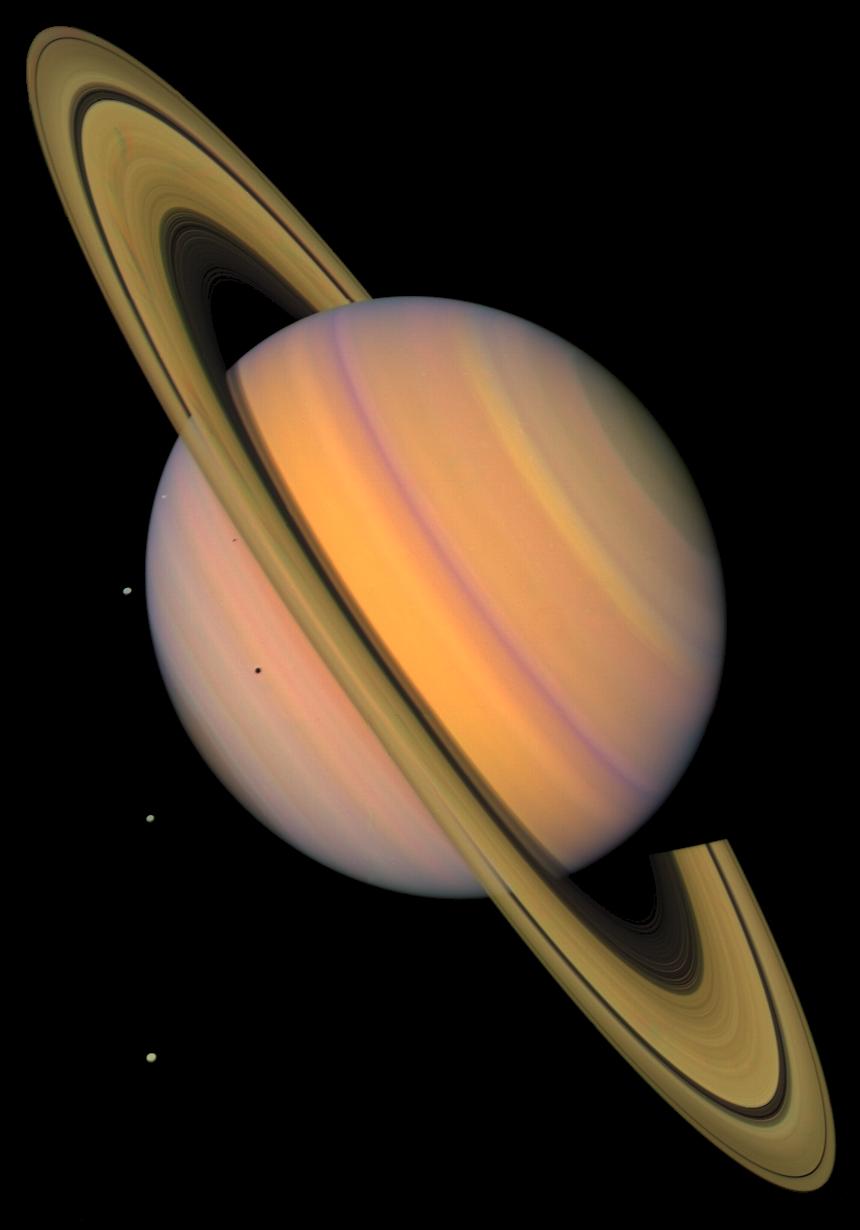
The lunar cycle continues its usual march: first quarter on July 21, full moon on July 29, and — most relevant for deep-sky observers — new moon on July 14. That's the month's best dark-sky window, and NASA's guide flags it specifically as prime time for two things: hunting Comet 10P/Tempel 2 and taking in an unobstructed view of the Milky Way's summer arc, which is otherwise easily washed out by even a partially lit Moon. Saturn, meanwhile, is quietly doing something visually unusual later in the month. Its rings are appearing unusually thin — a tilt effect tied to the changing angle at which Earth views the ring plane. Observers with telescopes who caught Saturn's rings at their widest and most dramatic a few years back may find the current view almost startlingly flat by comparison.
A Comet Worth Watching — With Some Patience
The month's slow-burn story belongs to Comet 10P/Tempel 2, a short-period comet that swings back into the inner solar system every 5.5 years. NASA's guide flags it as a highlight of the July 14 new-moon window, describing its appearance through binoculars or a small telescope as a fuzzy glow, possibly trailing a faint, fan-shaped tail. At that brightness, Comet Tempel 2 sits well below naked-eye limits (roughly magnitude 6 under excellent dark-sky conditions, and far brighter than that near any light pollution), so this isn't a comet that will be visible from a backyard porch light. But paired with the July 14 new moon's dark skies, it's a realistic target for anyone with 10x50 binoculars, a modest telescope, and a reasonably unpolluted horizon. Deeper in the month, the asteroid belt gets its moment: minor planet 3 Juno reaches opposition on July 27, per Star Walk's monthly roundup. Opposition means Juno is on the opposite side of the sky from the Sun and at its closest, brightest approach to Earth for the year — though as one of the larger main-belt asteroids, it still requires a telescope to spot.
Why It Matters
None of July's events are once-in-a-lifetime spectacles — aphelion happens every year, the Moon passes near Saturn roughly every month, and Comet Tempel 2 will be back in 2032. What makes this stretch of sky worth tracking is how it illustrates the mechanics of the solar system in real time: the same orbital tilt that keeps Earth's aphelion from cooling the Northern Hemisphere's summer is the reason Saturn's rings periodically appear to vanish into a thin line, and the same ecliptic plane that carries Mars, Saturn, and Uranus into a loose dawn procession also governs when a five-and-a-half-year comet swings close enough to smudge into view through a pair of binoculars. For casual observers, July's calendar is a low-effort entry point — no special equipment needed for the Moon-Saturn pairing or the dawn planetary lineup, just a clear horizon and a willingness to get up early.