
Stars don't just sit there. They spin — and how fast they spin, and how that spin changes over billions of years, turns out to be one of the more useful clocks astronomers have for figuring out how old a star is, whether its planets are worth a closer look, and how our corner of the galaxy came together. The problem has always been data volume: measuring a rotation period requires tracking subtle, periodic dimming caused by starspots rotating in and out of view, and doing that reliably for hundreds of thousands of stars is a slog.
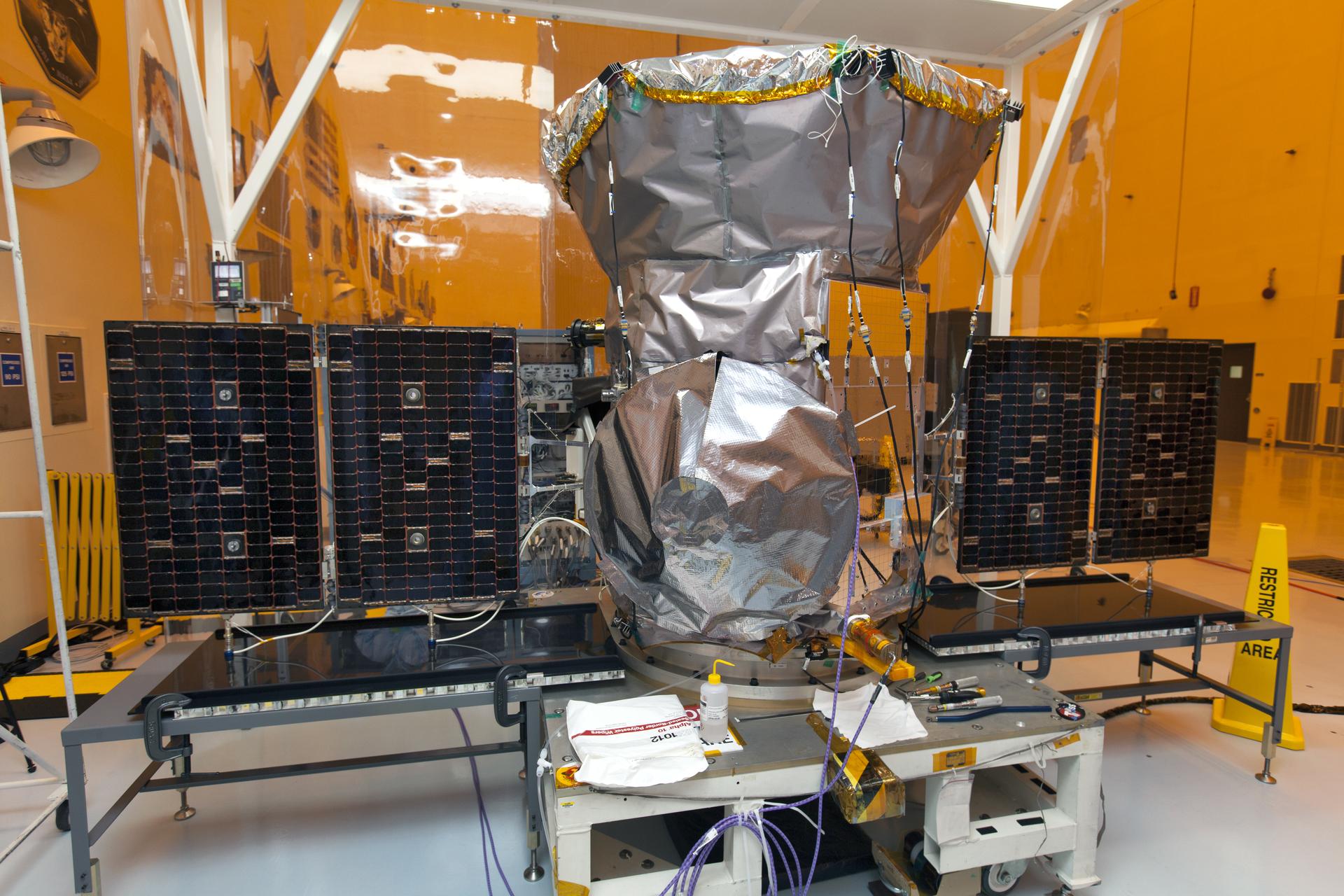
A new catalog built from NASA's Transiting Exoplanet Survey Satellite (TESS) just did the slog at unprecedented scale. The TESS All-Sky Rotation Survey, or TARS, reports rotation periods for 1,046,317 stars within roughly 500 parsecs — about 1,600 light-years — of Earth. It's described in a paper led by Andrew W. Boyle of the University of North Carolina at Chapel Hill, published in The Astrophysical Journal Supplement Series.
How they built it
TARS started from an initial pool of 7,481,412 candidate stars, all brighter than magnitude 16 in TESS's bandpass, drawn from full-frame images the spacecraft has been collecting across its all-sky survey. From that pool, the team generated light curves for each star, searched them for periodic signals, and then ran the results through a classification algorithm designed to weed out false positives — instrumental artifacts, blended nearby stars, and other noise that can mimic a genuine rotational signal.
What survived that filtering is the million-plus-star catalog. According to the paper, an estimated 93 percent of the measured periods represent true stellar rotation rather than some other source of periodic brightness variation. That's a meaningful confidence level for a catalog of this size, and it's what makes TARS usable as a foundation for follow-up science rather than just a big pile of candidate detections.
Why the sky suddenly looks different
The headline number is scale: according to AAS Nova's summary of the work, TARS expands the census of known stellar rotation periods by a factor of 2.3 within about 325 light-years of Earth, and by a factor of 4 within the full 1,600-light-year survey volume. That's not an incremental update — it's closer to redrawing the map.
One of the clearest payoffs shows up in young stellar associations — loose, physically related groups of stars that formed together and haven't yet drifted apart. Young stars tend to rotate fast, a leftover of the angular momentum they carried as they contracted out of their birth clouds, and that rotation slows steadily as a star ages and sheds momentum through its magnetized stellar wind. When the TARS team mapped out the fast rotators in their sample, AAS Nova reports that these young associations became "significantly clearer" — the fast-spinning stars cluster together in ways that trace out structures that were previously fuzzier or harder to distinguish from the general galactic population.
A Q&A on what this is actually good for
Why do astronomers care about how fast a star spins?
Because rotation is an age proxy. Stars are born spinning quickly and slow down predictably as they age — a relationship known as gyrochronology. With a big enough calibrated sample, rotation period becomes a way to estimate a star's age just from watching it dim and brighten as starspots rotate through view, without needing other, harder-to-get age indicators.
Does this help with exoplanet research?
Indirectly but substantially. TESS's main job is finding exoplanets by watching for the dips in brightness caused by planets crossing in front of their host stars. Knowing the rotation period — and by extension the age and activity level — of a planet's host star helps astronomers interpret what they're seeing, from stellar activity that can masquerade as planetary signals to the age of a planetary system itself.
What about the "Galactic structure" angle?
Rotation periods, combined with a star's position and motion, help identify which stars belong to the same birth cluster or association even after they've spread out over time. That's useful for reconstructing how star formation has proceeded across the local galactic neighborhood.
Is this catalog final, or a stepping stone?
The paper's own methodology section — light-curve generation, a periodicity search, and a classification algorithm to reject instrumental artifacts — reads like infrastructure other researchers are meant to build on, not a one-off result. NASA's own archive of TESS astrophysics publications situates TARS alongside the mission's broader body of science output, underscoring that it's one entry in an ongoing pipeline of TESS-enabled catalogs rather than a standalone curiosity.
Why It Matters
Large, homogeneous catalogs are quietly some of the most valuable products astronomy produces, because they let researchers ask population-level questions that a handful of individually studied stars can't answer. A single star's rotation period is a data point; a million of them, measured the same way with a known error rate, is a tool. TARS gives astronomers a way to estimate ages for enormous numbers of stars via gyrochronology, to flag which exoplanet-hosting stars are old or young (and therefore how stable or violent their space environment likely is), and to trace the skeletons of star-forming regions that have since drifted apart. Quadrupling the known sample within 1,600 light-years doesn't just add more stars to a list — it changes the resolution at which astronomers can see the structure of the galaxy's immediate neighborhood, turning smudges into shapes.
Sources
- The TESS All-Sky Rotation Survey: Periods for 1,046,317 Stars Within 500 pc (arXiv)
- A New Catalog of Stellar Rotation Periods for Over a Million Stars (AAS Nova)
- The TESS All-Sky Rotation Survey: Periods for 1,046,317 Stars Within 500 pc (The Astrophysical Journal Supplement Series, IOPscience)
- TESS astrophysics publications (NASA HEASARC)
