
Most months give skywatchers one headline event and some filler. November 2026 gives you a schedule. Between NASA's monthly What's Up briefing, EarthSky's November planet guide (Nov 3) and the Royal Museums Greenwich highlights, the month comes down to four things: the Taurid meteor showers, known for the odd fireball, a close pairing of Mars and Jupiter before dawn, the Leonids, and a full supermoon that opens a three-month run.
Here is how the month plays out, and where the Moon helps or gets in the way.
The Lunar Calendar Sets the Terms
For anything faint, and meteors are mostly faint, the Moon's phase matters more than anything except cloud cover. Royal Museums Greenwich lists the key phases: new moon on 9 November at 07:02 GMT, first quarter on 17 November at 11:47 GMT, and full moon, a supermoon this time, on 24 November at 14:53 GMT.
That calendar puts the Northern Taurid peak three nights after new moon, which is a good draw. The Leonids land on the night of first quarter, so the timing of moonset matters. The month ends under a bright, oversized full Moon, which washes out faint stars but is worth watching in its own right.
Two Taurid Peaks
The Taurids aren't one shower. They come as two streams, the Southern and Northern Taurids, which both appear to radiate from the constellation Taurus. NASA puts the Southern Taurids' peak around Nov 5 and the Northern Taurids' around Nov 12.
Don't go out expecting volume. NASA says each Taurid shower produces around five meteors per hour under ideal conditions, which is modest by any measure. What the Taurids have going for them is quality. NASA says an occasional bright fireball can make the wait worthwhile, meteors bright enough to make people who weren't looking up ask what just lit the yard.
That changes how you watch. A high-rate shower rewards a short session at the peak. A low-rate shower known for the odd fireball rewards patience: a reclining chair, a dark site, and a willingness to sit through long stretches where nothing happens. With new moon on Nov 9, the nights around the Northern Taurid peak on the 12th should have the darker skies of the two.
Mars and Jupiter, 1.2 Degrees Apart
On the mornings of Nov 15 and 16, NASA says to look southeast before sunrise: Mars and Jupiter will appear about 1.2 degrees apart, a little more than the width of two full Moons side by side. EarthSky also lists the Jupiter-Mars conjunction among the month's highlights.
At that spacing the two planets will look like a pair rather than two unrelated points of light. The pairing is only apparent. As NASA puts it, they are still far apart in space, but from Earth they appear almost side by side. That alignment is the whole show. NASA says both planets are easy to see with the unaided eye, with Jupiter the brighter point of light and reddish Mars nearby.
Since this is a dawn event, plan for an early alarm rather than a late night. And because the pair is close across two mornings, a cloudy Nov 15 still leaves you a second try.
The Leonids, After Moonset
NASA puts the Leonids on the early morning hours of Nov 17-18, with up to about 15 meteors per hour under ideal conditions, though NASA adds that most viewers will see fewer. That rate is three times the Taurids', but the Moon is a factor: the peak falls on the night of first quarter, per the Royal Museums Greenwich calendar.
NASA's advice is to watch after moonset. That is the practical difference between seeing a decent shower and seeing almost nothing. A half-lit Moon above the horizon brightens the sky enough to hide the dimmer meteors, and those make up most of what a shower produces. NASA also suggests finding a dark location, giving your eyes about half an hour to adjust, and taking in as much sky as you can.
NASA's briefing also notes something for the same date that has nothing to do with meteors: on Nov 17 it invites people to take part in its Shine Bright for Voyager light-day activation, marking the month in which Voyager 1 becomes the first human-made object to travel one light-day from Earth. At that distance, NASA says, a signal traveling at the speed of light takes 24 hours to reach the spacecraft.
The Beaver Supermoon by the Pleiades
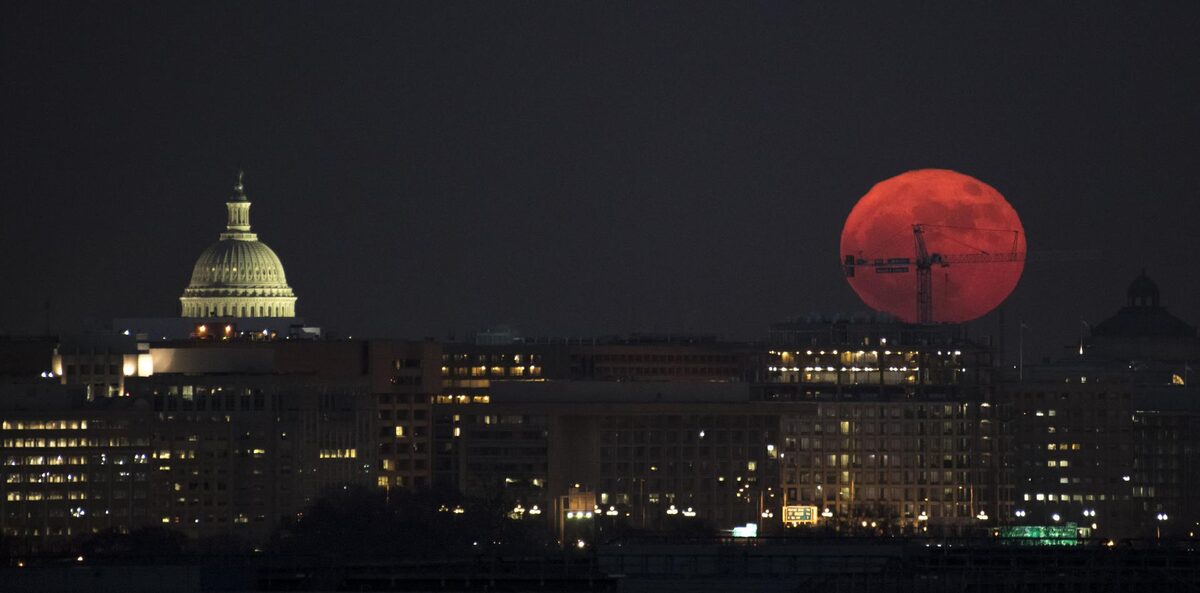
The month ends with the brightest event on the list. Royal Museums Greenwich gives the full Moon on 24 November at 14:53 GMT, at a distance of roughly 360,800 km, about 20,000 km closer than average. RMG says that makes it appear up to 7% larger and 15% brighter than an average full Moon.
Those numbers deserve some honesty. NASA itself says the difference can be subtle. Seven percent is real, but few people would notice it standing alone in a field without a side-by-side comparison. Without the label, most people would just see a nice full Moon. The setting is what makes this one worth going out for.
EarthSky notes that on Nov 23 the bright waxing gibbous Moon will shine near Aldebaran, the brightest star of Taurus, with the Pleiades star cluster nearby, and that the Full Beaver Supermoon on Nov 24 follows the next evening. Next to a nearly full Moon, those make one of the better naked-eye compositions of the year, and a good target for anyone with a camera and a tripod. The Moon's glare will dim the Pleiades, so the evening of the 23rd, a night before full, may show the cluster a little better.
Why It Matters
NASA says the Nov 24 full Moon kicks off a series of three consecutive supermoons, in November, December and January. That turns a single event into a series and gives observers a chance to compare: photograph the November Moon, then do it again on the next two full moons, and you have a record of the Moon near the close point of its orbit three months running.
The month as a whole also shows how much of observing depends on timing. The same patch of sky can be useless or excellent depending on when the Moon sets. A shower that averages a handful of meteors an hour can still produce the one fireball people talk about for years. And two planets can appear side by side for two mornings while being far apart in space. None of November's events needs a telescope. They need a calendar, a clear horizon, and the patience to keep watching after the first ten quiet minutes.
If you can only get out on a few nights, pick these: the night of Nov 12 for the Northern Taurids under dark skies, the morning of Nov 15 or 16 for Mars and Jupiter, the late hours of Nov 17-18 after moonset for the Leonids, and the evening of Nov 23 or 24 for the Moon among the stars of Taurus.
