
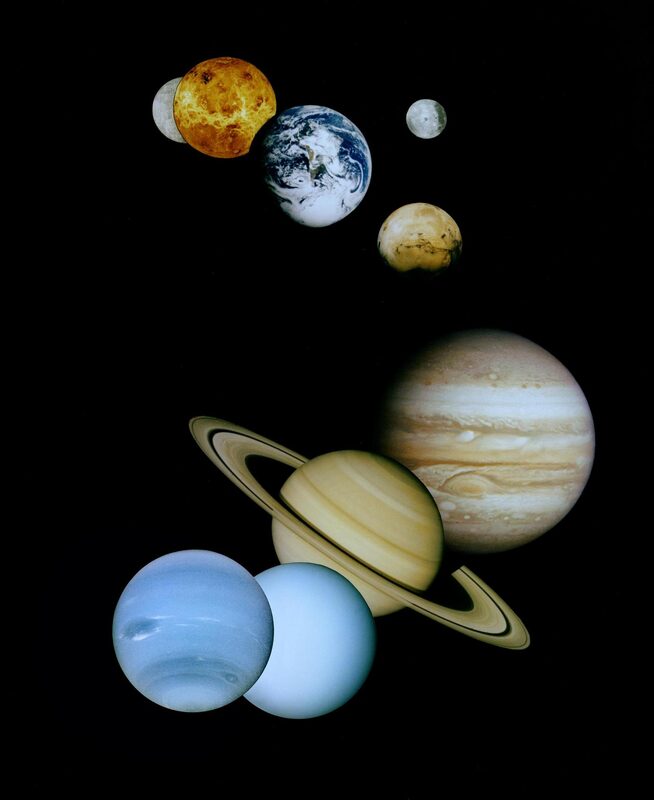
If you have been putting off early-morning stargazing, November gives you a reason to set an alarm. The months around a planet's best showing tend to be quiet affairs with one bright object at a time. This month the eastern sky before dawn holds four planets: Mars and Jupiter drawing together near the Sickle of Leo, Venus rising out of the sun's glare, and Mercury making its most favorable morning appearance of the year. Saturn has the evening sky to itself.
There is also a practical bonus for anyone in the US: clocks fell back on Nov. 1. Sunrise now comes an hour earlier on the clock, so the predawn sky arrives at a much friendlier time on the alarm.
The Moon Calendar: When the Sky Is Darkest
Planets are bright enough to cut through moonlight, but the fainter background, including the stars of Leo that frame the Mars-Jupiter pairing, looks much better without a bright Moon in the way. According to the U.S. Naval Observatory's phase tables, November 2026 runs like this (all times UT):
- Last Quarter: Nov. 1, 20:28
- New Moon: Nov. 9, 07:02
- First Quarter: Nov. 17, 11:48
- Full Moon: Nov. 24, 14:53
- Last Quarter: Dec. 1, 06:08
The USNO's third-quarter time matches the 20:28 UTC figure given by EarthSky, which notes that the stars Castor and Pollux lead the Moon across the sky that night. The best dark-sky stretch is the week or so around the Nov. 9 new moon. As the month goes on, the waxing Moon moves into the evening sky, so the predawn hours stay fairly dark through the Mars-Jupiter pass in mid-month. That changes by the Nov. 24 full moon, which is up all night.
The Headliner: Mars Overtakes Jupiter
Mars and Jupiter rise above the east-northeast horizon around the middle of the night and stand high in the south before dawn, near the Sickle of Leo, according to Space.com. Early in the month Mars is visibly closing the gap on Jupiter. If you check every few mornings, you can watch the red planet move against the stars.
The two sources don't agree on the exact date of the pass. Space.com says Mars passes Jupiter on Nov. 16, 1.2 degrees to the upper left of the giant planet. EarthSky puts it a day earlier, saying Mars passes 1.2 degrees north of Jupiter on Nov. 15, though it also recommends watching on the mornings of Nov. 15 to 17.
Neither outlet explains the difference, but a one-day gap like this is common for conjunctions. Which calendar date an event falls on depends on the time zone used, and an event that happens late on one day in Universal Time can fall on the next day for some observers, or the other way around. Different outlets also sometimes define the "pass" a bit differently. For observers it doesn't change much. Go out before dawn on both Nov. 15 and Nov. 16. The planets will be about as close as they get on either morning, a little over a degree apart. EarthSky describes the gap as almost two full-Moon widths.
Once Mars passes, it keeps moving east, away from Jupiter, for the rest of the month. The two planets look very different next to each other: Space.com describes Jupiter as shining with a steady, silvery light and outshining the red planet 13-fold, while Mars is the dimmer, distinctly ruddy one.
Venus: From Invisible to Dazzling in Five Weeks
Venus passed between Earth and the sun at inferior conjunction on Oct. 24, and November is when it comes back into view. The pace is quick. Space.com's figures:
- Nov. 1: rises just 55 minutes before sunrise, buried in twilight.
- Nov. 5: rises 1 hour 25 minutes before the sun and stands about 15 degrees up at sunrise from latitude 40 degrees north.
- End of November: rises nearly 3.5 hours before the sun and climbs to nearly 35 degrees altitude.
Venus also gets brighter as it rises. Space.com says it reaches peak brightness, magnitude -4.9, on the penultimate day of November. Along the way it passes the blue-white star Spica, 2.4 degrees away on Nov. 3 and closest at 1.8 degrees on Nov. 19. The Nov. 3 pairing will be hard to catch low in bright twilight. The Nov. 19 approach comes with Venus much higher and is the better target.
Around Nov. 7, EarthSky notes, Venus, Jupiter and Mars are all visible together in the morning sky before dawn.
Mercury: The Year's Best Morning Apparition
Mercury is the planet most people have never knowingly seen. It stays close to the sun and is usually low in bright twilight. November is one of the easier chances. Mercury reaches inferior conjunction on Nov. 4 and then moves quickly into the morning sky, reaching greatest western elongation, 20 degrees from the sun, on Nov. 20, per Space.com. (EarthSky lists the moment of greatest elongation as 0 UTC on Nov. 21, which is the same event expressed in Universal Time.)
The number that matters most for observers is how long Mercury rises before the sun. Between Nov. 16 and Nov. 26 it rises more than 95 minutes before sunrise, according to Space.com, before the beginning of astronomical twilight. You need a clear, flat view toward the east-southeast. Brilliant Venus, higher in the same part of the sky, is a useful marker for where to start looking.
If you go out once this month, the morning of Nov. 16 is a good pick. Mars and Jupiter are at or near their closest, Mercury is entering its best window, and Venus is climbing, all with no Moon in the predawn sky.
Saturn: The Evening Planet
If you don't want to get up early, Saturn is there in the evening. It reached opposition on Oct. 4, EarthSky notes, and is now well placed in the southern sky in mid-to-late evening. It is no longer visible before dawn, so it never shares the sky with the morning planets. Through a telescope, Space.com gives the southern side of the rings a tilt of only about 6.5 degrees to our line of sight. That narrow, edge-leaning view is less showy than the wide-open rings of some years, but it's worth a look while it lasts.
Why It Matters
Planetary conjunctions are line-of-sight effects. Mars and Jupiter are not physically close on Nov. 15 or 16; they only appear near each other from our vantage point. Still, watching one from night to night is one of the most direct ways to see the solar system's geometry for yourself. Mars catching and passing Jupiter, Venus climbing quickly after inferior conjunction, and Mercury reaching a maximum distance from the sun and then falling back are all the predictable results of planets moving in orbits at different speeds. Seeing them play out with your own eyes over a few weeks says more about orbital motion than a diagram does.
The date discrepancy is useful in its own way. Sky guides are compiled by people working from ephemerides, time zones and conventions, and careful sources can still differ on details. The fix is the one astronomers have always used: go out more than once and look.
