
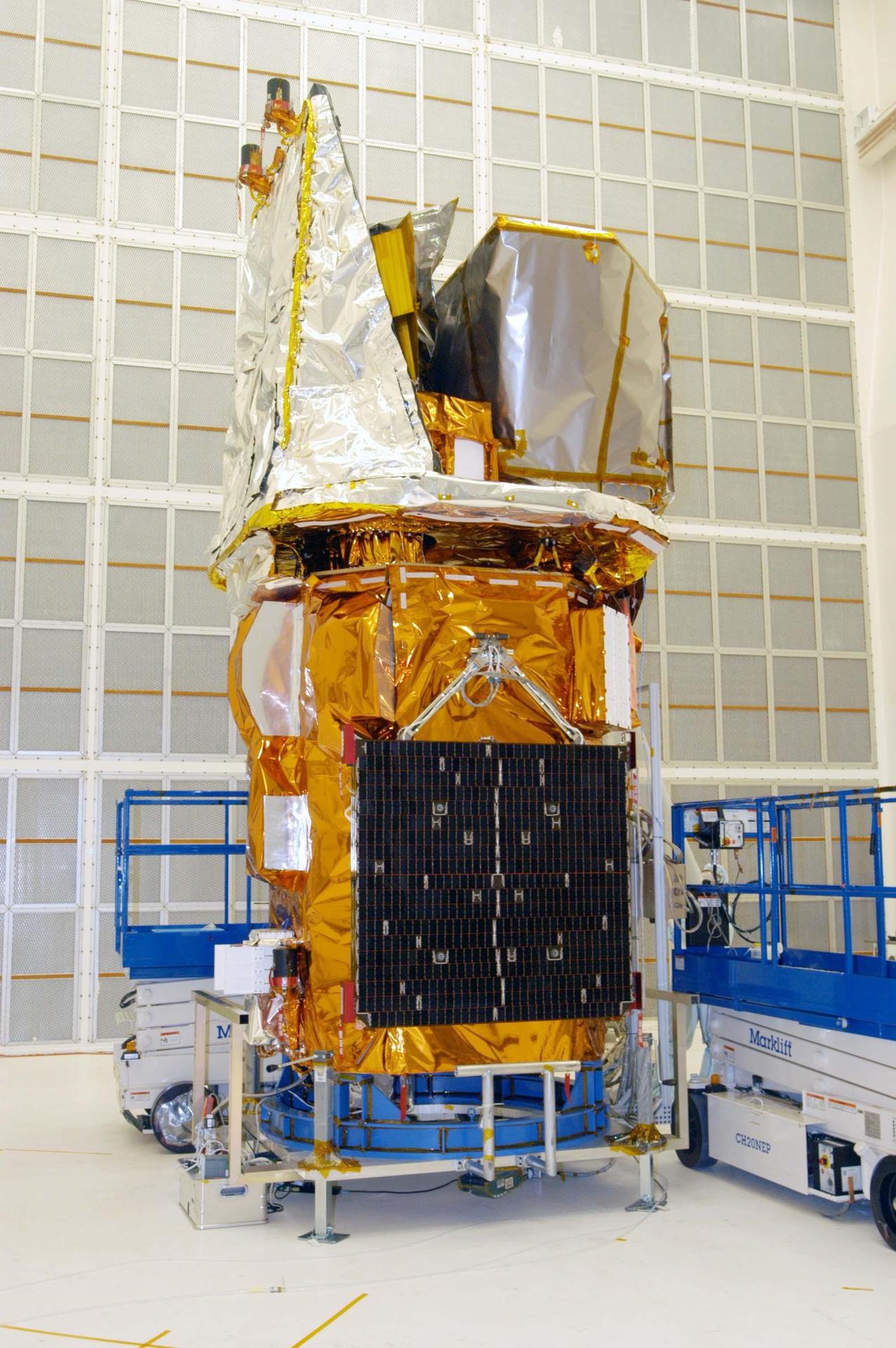
At 4:36 a.m. Eastern on July 3, 2026, a Northrop Grumman Pegasus XL rocket dropped away from the belly of the Stargazer carrier aircraft somewhere over the Pacific near Kwajalein Atoll and lit its first stage. It was a routine-looking release for a rocket that has flown since 1990 — except this was expected to be its final flight, and its cargo was anything but routine. Tucked inside the fairing was a 425-kilogram robotic spacecraft called LINK, built by a small Flagstaff, Arizona company named Katalyst Space Technologies in roughly nine months, on a mission that has never been attempted before: catching a 22-year-old NASA space telescope that is falling out of the sky, and shoving it back up to a safer altitude.
The target is the Neil Gehrels Swift Observatory, a gamma-ray-burst hunter that has been quietly watching the universe's most violent explosions since 2004. Its orbit has been decaying faster than engineers expected, driven by atmospheric drag that gets worse as solar activity heats and puffs up the outer atmosphere. Left alone, Swift was on a path toward an uncontrolled reentry as soon as late 2026. NASA's answer was to pay Katalyst $30 million — awarded in September 2025 — to design, build, test, and launch a rescue spacecraft in under a year.
That LINK made it to the pad at all inside that window is itself notable. Spacecraft that dock with other objects in orbit typically take years to develop, in part because rendezvous and capture hardware has to work precisely on the first try, with no repair crew available if something goes wrong. Katalyst compressed that timeline to nine months.
How the Rescue Is Supposed to Work
The mission unfolds in stages. After reaching orbit, LINK spends about two weeks on in-orbit checkout, making sure its own systems survived launch and are functioning. It then spends two to three weeks maneuvering toward Swift and inspecting the telescope up close — gathering the imagery and tracking data needed to safely approach and capture a satellite that, unlike the International Space Station or a purpose-built servicing target, was never fitted with a docking port, grapple fixture, or any other hardware meant to make this easier.
Once LINK captures Swift, the real work begins: roughly three months of reboost operations, firing thrusters to walk the telescope from its current altitude of about 360 kilometers back up toward its original operating altitude of 550 to 600 kilometers. NASA has described the minimum acceptable target as at least 300 kilometers — a floor, not a goal — underscoring how urgent the situation had become before this mission was approved.
The launch itself didn't go off on the first attempt. Weather and technical issues pushed the flight back three days before Pegasus XL finally got its send-off near Kwajalein. It was a fitting, if unglamorous, closing chapter for a rocket family that has been flying since the first Bush administration.
A Rocket's Retirement, a Spacecraft's Debut
The Pegasus XL's obsolescence and LINK's novelty make an odd pairing on the same mission. Pegasus, air-launched from beneath a carrier jet rather than fired from a traditional pad, was once marketed as flexible, responsive small-satellite access to orbit. It has been eclipsed by cheaper, more frequent commercial launch options in the years since, and this flight is expected to mark its retirement. LINK, by contrast, represents the leading edge of an entirely new commercial capability: satellite servicing, refueling, and life-extension missions aimed at a market that barely existed a decade ago.
What makes this particular servicing attempt historic isn't just the speed of development — it's the target. Commercial servicing demonstrations to date have generally involved either purpose-built client satellites or commercial assets designed with some accommodation for a future visitor. Swift is neither. It's a government science asset, built and launched with no expectation that anything would ever try to dock with it, let alone grab it and change its orbit. If LINK succeeds, it will be the first time a commercial spacecraft has captured and serviced a government satellite that wasn't designed for on-orbit servicing at all.
Why It Matters
Swift has spent nearly 22 years cataloguing gamma-ray bursts, the most energetic explosions known in the universe, and has become a workhorse for the broader field of time-domain astronomy — the study of things in the sky that flare, fade, or explode on human timescales. Losing it to an uncontrolled reentry would end that science years earlier than astronomers would like, and do so in the least dignified way possible: not through a planned decommissioning, but a slow, physics-dictated fall.
Beyond Swift's own scientific legacy, this mission is a stress test for an idea NASA and the commercial space industry have been circling for years — that aging, otherwise-healthy satellites don't have to be written off just because their orbits are decaying or their fuel is spent. If a nine-month, $30 million commercial contract can genuinely add years of life to a NASA observatory, it reframes the economics of every future spacecraft, government or commercial, that might otherwise be abandoned to gravity. A botched capture attempt, on the other hand, would be a costly and visible reminder of just how difficult in-space servicing remains, especially on hardware that was never built to be touched.
Either way, the outcome will shape how NASA thinks about designing future missions — and whether "not built for servicing" remains an excuse, or becomes an increasingly solvable problem.
