
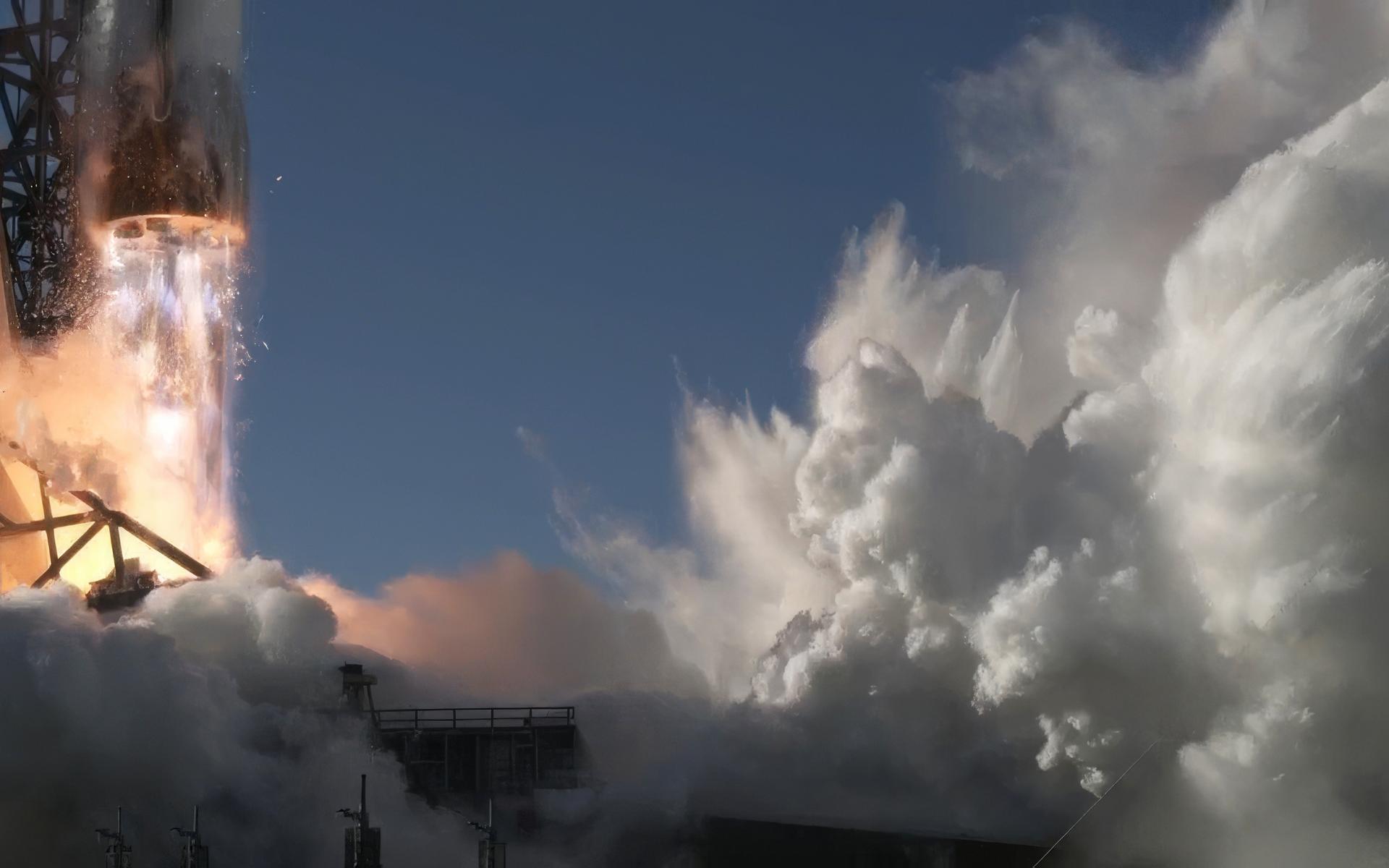
Roughly a month after an explosion tore through the vehicle and infrastructure it had prepared for a milestone lunar flight, Blue Origin has laid out how it intends to get New Glenn back into the sky — and the plan involves rethinking the launch pad rather than simply rebuilding what was lost.
In statements made public on June 30, 2026, the company confirmed it will not re-create the ruined pad at Launch Complex 36A as it stood. Instead, Blue Origin is moving to a different integration concept: a hybrid horizontal-vertical approach in which the rocket is assembled lying down, then craned to vertical at the pad before the payload is attached. The goal, CEO Dave Limp and colleagues signaled, is to return New Glenn to flight before the end of this year.
What actually happened
The explosion occurred roughly a month before the June 30 messaging, while Blue Origin was preparing a New Glenn to fly the first Blue Moon Mark 1 cargo lander, named "Endurance," carrying NASA science payloads. The blast destroyed the vehicle being readied and damaged the pad infrastructure at LC-36A. In the aftermath, Blue Origin opened a root-cause investigation, aided by extensive instrumentation and multi-angle camera data captured during the event.
On the cause, Blue Origin is being deliberately measured. "Early analysis points to the aft section of the first stage," Limp said, while stressing that involvement of the BE-4 engines has not been confirmed. That distinction matters: the aft section houses a great deal more than just the engines — plumbing, avionics, structures, and propellant feed hardware all live there — and pinning the failure on a specific component prematurely would be exactly the kind of guesswork a formal investigation exists to avoid.
Why not just rebuild the pad?
The most striking decision here is what Blue Origin chose not to do. Rebuilding a destroyed pad exactly as it was is the intuitive move, but the company is instead treating the setback as an opening to shift to a next-generation launch and integration concept. Under the hybrid horizontal-vertical scheme, stages are mated horizontally — generally easier and safer for technicians to access — and only then raised to vertical at the pad using existing infrastructure, with the payload installed last.
That sequencing has practical implications. Integrating horizontally can simplify assembly and inspection, and attaching the payload at the very end keeps sensitive spacecraft off the vehicle during the riskier stacking operations. GeekWire, reporting on the same June 30 messaging from Limp, framed the shift as a deliberate pivot to a different launch concept rather than a like-for-like restoration — a choice that reads less like damage control and more like Blue Origin using a forced pause to reset how it operates New Glenn.
How the schedule shakes out
Blue Origin is targeting a return to flight "later this year." The Blue Moon Mark 1 mission itself, however, has slipped to early 2027. To keep the lunar effort moving, NASA and Blue Origin are exploring the option of flying the Blue Moon lander on an alternative rocket rather than waiting for New Glenn alone.
The urgency is real but not panic-inducing, at least by one account. NASA Administrator Jared Isaacman, weighing in on the timeline, noted that "we've got time beyond that point, into 2027" — a comment that captures the tension between wanting New Glenn back quickly and not forcing a premature launch before the investigation and pad changes are complete.
Why It Matters
New Glenn is not flying in isolation. NASA has a direct stake in its return, because the agency is counting on Blue Moon to help build out lunar surface capability. NASA selected the Blue Moon Mark 1 "Endurance" lander for its Moon Base I mission and awarded Blue Origin $188 million — plus a $280.4 million option — for lunar cargo delivery under the Commercial Lunar Payload Services (CLPS) program. That makes New Glenn's grounding an Artemis-adjacent problem, not just a commercial-launch inconvenience.
The decision to change the pad concept rather than rebuild also tells you something about how Blue Origin reads its own program. A company purely focused on schedule recovery would rush to restore the status quo. Choosing a new integration architecture — and accepting a Blue Moon slip to early 2027 while it does so — suggests Blue Origin sees more long-term value in operating New Glenn differently than in simply getting back to where it was before the blast. Whether that bet pays off depends on two things still outstanding: the formal root-cause finding that closes out the investigation, and whether the "later this year" return-to-flight target survives contact with the actual work.
For NASA, the pragmatic hedge — studying whether Blue Moon could ride an alternative rocket — is a reminder that the agency has learned to build slack into its commercial-partner timelines. The lander, not the launch vehicle, is what has to reach the Moon. If New Glenn's recovery runs long, decoupling the two could keep the lunar cargo mission from sliding along with it.
Sources
- Blue Origin outlines return to flight logistics for its New Glenn rockets — Spaceflight Now
- Blue Origin outlines new launch pad approach as it pushes to return New Glenn to flight — SpaceNews
- Blue Origin decides not to re-create ruined pad but will move on to a different launch concept — GeekWire
- NASA Provides Update on Moon Base Rovers, Landers, Missions — NASA
