
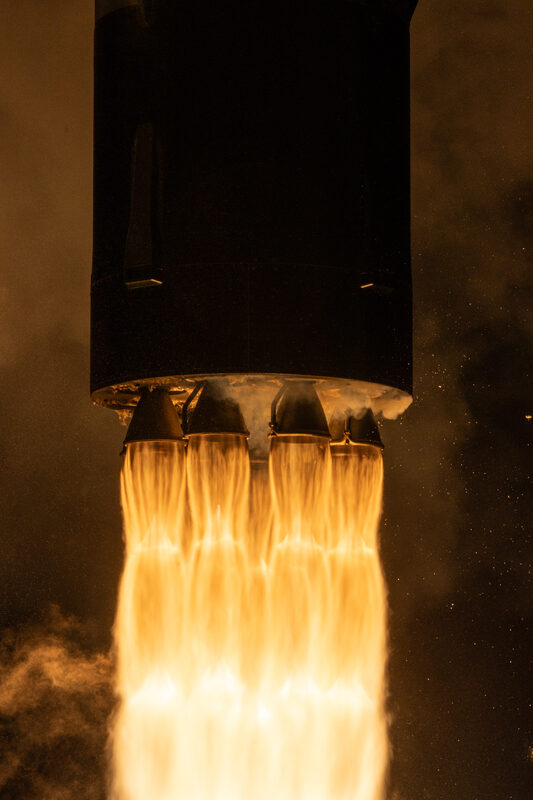
On July 2, 2026, Planet Labs Germany and Munich-based Isar Aerospace announced what both companies are calling a first: a satellite built in Germany, launched on a rocket built in Germany, flying from a European spaceport. The agreement calls for one of Planet's next-generation Pelican high-resolution imaging satellites — assembled at Planet's new Berlin facility — to fly aboard Isar's Spectrum rocket from Andoya Space in Norway, with options for additional launches beyond the first. The companies are targeting a first flight within 12 months.
It's a milestone with an asterisk. Spectrum has never reached orbit. Its debut flight failed shortly after liftoff in March 2025, and a second qualification flight — meant to prove the rocket can actually do what it's built for — has been delayed repeatedly since then by technical issues, including a range violation that scrubbed a March attempt and, most recently, an abandoned attempt on June 15, 2026 due to what Isar described as off-nominal behavior in the vehicle's fluid systems.
What's actually being agreed to
The core of the deal is straightforward: a Pelican satellite, part of Planet's next-generation high-resolution imaging line, will launch on Spectrum from Andoya Space, a spaceport on a Norwegian island above the Arctic Circle. Martin Polak, managing director of Planet Labs Germany, and Stella Guillen, Isar Aerospace's chief commercial officer, are both quoted framing the mission as proof of a homegrown European space supply chain — a satellite and a rocket, both engineered and built without leaving Germany, launching from European soil rather than hitching a ride on a Falcon 9 or another non-European vehicle.
Behind the announcement sits a real industrial buildout on both sides. Planet's Berlin facility currently employs around 150 people and plans to add up to 70 more. Isar Aerospace has grown to more than 400 employees across five locations, anchored by a 40,000-square-meter factory near Munich that the company says has capacity to produce up to 40 launch vehicles a year — a figure that, for now, describes potential manufacturing throughput rather than any near-term flight cadence.
The rocket that hasn't reached orbit yet
Spectrum's flight history is the obvious shadow over the announcement. The rocket's first launch attempt, in March 2025, ended in failure shortly after liftoff. Isar had originally planned to fly the second qualification mission in January 2026, but that timeline slipped: a range violation scrubbed an attempt in March, and the company most recently called off a June 15 attempt just hours before its scheduled liftoff window, citing off-nominal behavior in the rocket's fluid systems. SpaceNews, which has tracked the delays, attributes them to a mix of technical issues and range violations rather than a single root cause.
That track record is why the European Space Agency's involvement matters as context, not just cheerleading. ESA's Boost! programme has backed Isar Aerospace since the company's days in ESA's Business Incubation Centre, and the agency continues to fund the second Spectrum qualification flight and Isar's facility scale-up. Ahead of the June 15 launch window, ESA Director General Josef Aschbacher said "we are witnessing a clear signal of Europe's burgeoning commercial space transportation services" — an institutional endorsement that predates, and now underwrites, the Planet deal.
Why now?
The timing lines up with a broader German and European push for what officials describe as sovereign space capabilities — the ability to build, launch, and operate satellites without depending on non-European rockets or, in sensitive cases, non-European launch providers at all. SpaceNews notes the German government has pledged EUR35 billion (about $40 billion) for military space spending over five years, a figure that signals where some of the strategic urgency behind homegrown launch capacity is coming from, even though the Planet-Isar deal itself is a commercial imaging mission, not a defense contract.
For Isar, landing a customer as established as Planet — a company that already operates one of the largest commercial Earth-imaging satellite constellations in orbit — is a vote of confidence that goes beyond ESA's institutional backing. It suggests Planet is willing to bet a Pelican satellite, and a year-long timeline, on a rocket that still needs to prove it can complete a single successful orbital flight.
Why It Matters
This deal is a bet on two things happening roughly in parallel: Isar Aerospace finally getting Spectrum to orbit, and Planet's next-generation Pelican satellite line coming online at a new Berlin facility built specifically to produce it. Neither is guaranteed on the announced timeline. A launch vehicle that has failed once and seen its follow-up qualification attempt scrubbed multiple times since a planned January debut — most recently just weeks before this deal was unveiled — is not a mature, operational rocket yet, whatever its manufacturing capacity on paper.
But the strategic logic is bigger than one satellite. Europe has spent years watching launch capability concentrate around a small number of non-European providers, and Germany's pledge of tens of billions of euros toward space spending signals that this is being treated as a supply-chain and sovereignty problem, not just a commercial inconvenience. A fully domestic satellite-and-rocket pairing — even a modest one, even a risky one — is the kind of proof point European space policy has been chasing since Ariane 6's own troubled development. If Spectrum reaches orbit and then successfully carries a Pelican satellite within the announced year, it would mark a genuine inflection point for German and European launch independence. If the delays continue, this announcement becomes another entry in a long list of ambitious timelines the European launch sector hasn't yet met.
