
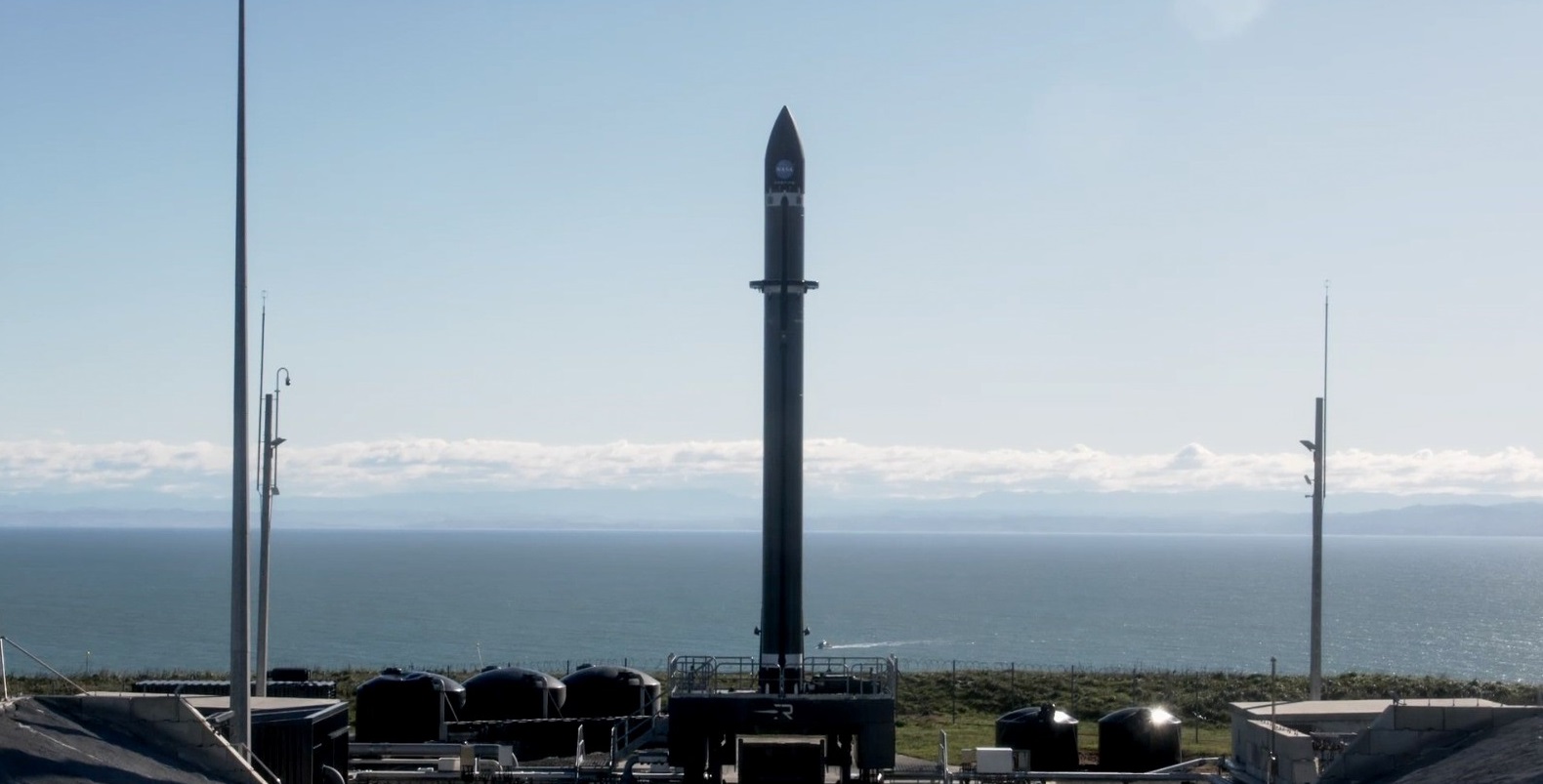
There is a particular kind of pressure that comes with a rocket's first flight, and it is not eased by the fact that most debut launches fail. New vehicles routinely shred themselves apart in the first minutes, and the industry has more or less normalized the idea that the maiden flight is really a very expensive test. Skyroot Aerospace, evidently, did not get that memo.
On July 18, 2026, the company's Vikram-1 rocket lifted off from the Satish Dhawan Space Centre at Sriharikota — 12:05 pm local time, or 2:35 a.m. Eastern — and roughly fifteen minutes later it had placed its payloads into a low Earth orbit at about 450 kilometers. Named "Mission Aagaman," Sanskrit for "arrival," the flight was clean enough that the company declared the mission "a grand success" on the first attempt. India's first private orbital rocket had reached orbit on its debut, a result that a great many far better-funded programs have not managed.
What actually flew
Vikram-1 is built around three solid-fuel stages topped by a liquid-propellant orbit-adjustment module — a "kick stage," in the vernacular, that handles the fine work of trimming the trajectory and releasing satellites where they are supposed to go. Solid motors are the workhorse choice here: simpler, storable, and reliable, if less flexible than liquid engines. The liquid upper stage buys back some of that precision at the moment it matters most.
The rocket can loft roughly 350 kilograms to low Earth orbit, with a variant fitted with strap-on boosters, the Vikram-1U, rated for around 550 kilograms. For the debut, the manifest was a mix of technology demonstrators and small satellites. Skyroot flew its own SCOPE payload; the rest of the cabin was shared by cubesats and payloads from Grahaa Space, Cosmoserve, and DCubed. ISRO's own account of the launch counted two satellites, SCOPE and Grahaa's, plus additional payloads delivered to orbit.
It is worth noting how the launch actually came together, because it complicates the tidy "private company does it alone" narrative. ISRO — India's national space agency — provided the solid-motor casting and static-test facilities at Sriharikota, and the first and second stage motors were cast and tested at the government center. This is not a knock on Skyroot; it is how the whole thing was designed to work. India's space-sector reforms deliberately opened national infrastructure to private industry, and Vikram-1 is arguably the first flagship result of that policy rather than a repudiation of it.
How a startup got here
Skyroot has moved unusually fast for a launch company. Reaching orbit on a maiden flight is a feat that many far better-funded programs have never managed, and getting there means clearing a technical bar — full orbital insertion — that is an order of magnitude harder than a suborbital test, because the energy budgets are not remotely comparable. By the standards of the launch industry, Skyroot got there briskly.
The company closed a $60 million funding round in May 2026, shortly before this flight. That capital matters, because a single successful launch does not make a business. Skyroot says it plans up to two more Vikram-1 flights before the end of 2026 and is developing a larger follow-on, Vikram-2, aimed at heavier payloads. Cadence is the real test here: reaching orbit once is a milestone, but reaching orbit repeatedly and affordably is a company.
Why It Matters
The headline is a milestone: India now has its first privately built rocket to reach orbit, a distinction that until this flight belonged to the national space agency alone. Joining that club is not a matter of national pride alone — it signals that a domestic commercial launch industry can actually clear the hardest technical bar, not just talk about doing so.
For years, orbital launch from India meant ISRO, and only ISRO. The space-sector reforms were an attempt to change that, to seed a private sector that could take on small-satellite launch demand while the national agency focused on larger and more complex missions. Vikram-1's debut is the clearest evidence yet that the policy is producing hardware rather than press releases. A working private launch vehicle with a ~350-kilogram class capacity slots neatly into the booming small-satellite market, where operators want frequent, dedicated rides rather than waiting for a slot on someone else's big rocket.
The caveats are real. One flight is a data point, not a track record, and the economics of small launch have proven brutal worldwide — several well-capitalized Western startups reached orbit and still could not make the numbers work. Skyroot's reliance on ISRO's casting and test facilities is a strength today and a question mark tomorrow, depending on how the company scales. But those are the problems of a company that has already done the hard part. Most of the field never gets to have them.
The reception at home suggests the milestone landed. IN-SPACe, the Indian agency charged with promoting and authorizing commercial space activities, backed the flight, and Prime Minister Narendra Modi personally phoned the company's founders after the launch. Skyroot CEO Pawan Kumar Chandana framed it, unsurprisingly, as a beginning rather than an endpoint. For once, the framing is hard to argue with: an arrival, as the mission's name has it, rather than a destination.
