
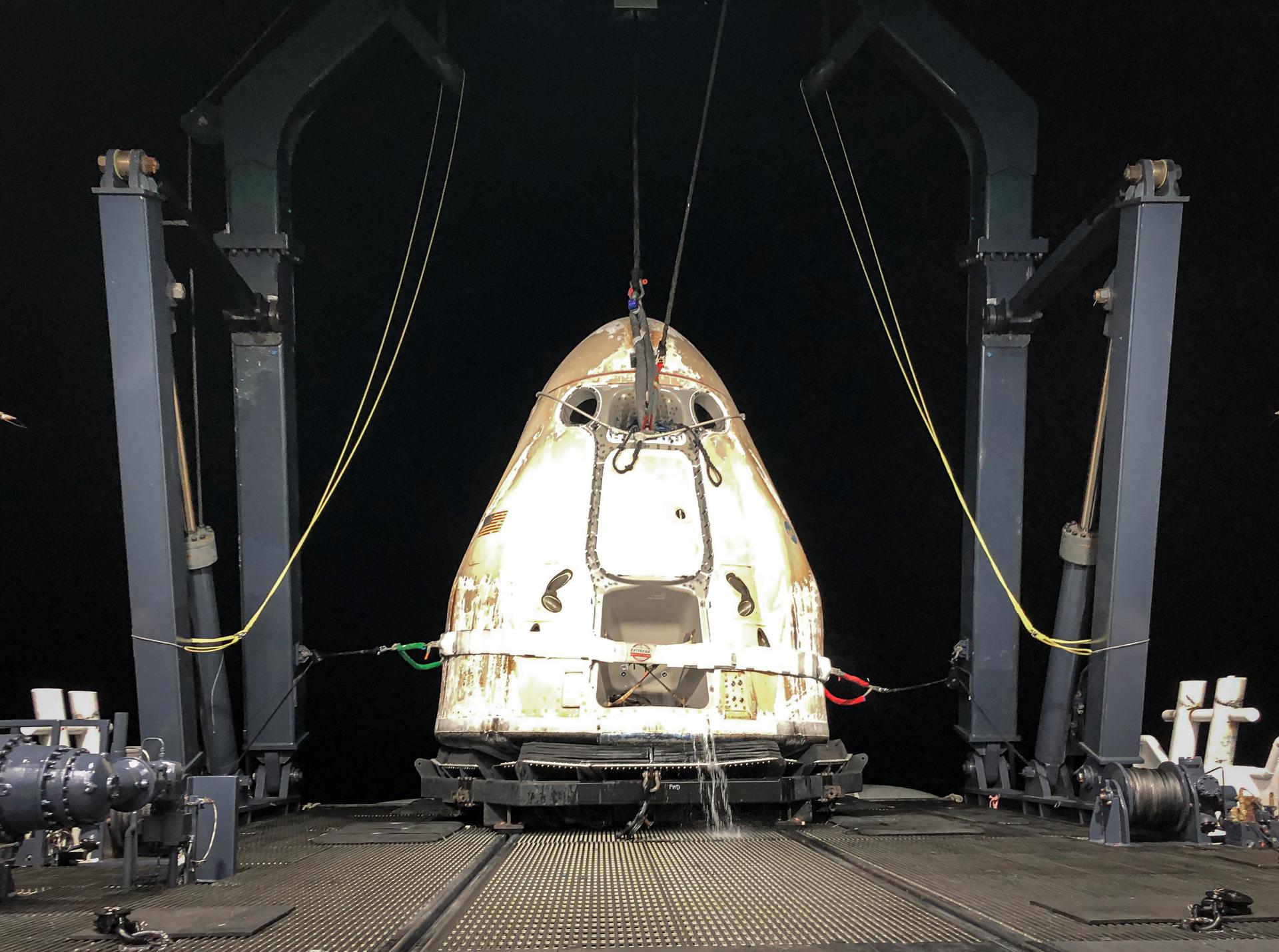
For most of its short history, Varda Space Industries has launched its capsules one at a time. Each launched, spent time in orbit and then came back through the atmosphere to a landing site in the Australian outback. That changed on Oct. 1, when two Varda vehicles, W-8 and W-9, went up together on SpaceX's Transporter-18 rideshare from Vandenberg Space Force Base in California.
CEO Will Bruey called it "humanity's first time launching multiple commercial reentry vehicles simultaneously," Space.com reported on Oct. 13. That claim comes from the company, but the plans behind it are concrete. Varda expects a third vehicle to launch in the coming days. It wants all three to land at the Koonibba Test Range in South Australia, through coordination with Southern Launch, before Christmas. It has seven more missions lined up for 2027.
A crowded rideshare
Transporter-18 was a busy flight. According to Spaceflight Now's launch preview, the Falcon 9 was scheduled to lift off from Space Launch Complex 4E at 11:32 a.m. PDT (1832 UTC) on Thursday, Oct. 1, and deploy 130 payloads into polar orbit. The booster, B1082, was set for its 25th flight, with a landing planned at Landing Zone 4, which would be the 36th landing at that site and the 665th Falcon booster landing overall. It was SpaceX's second launch that day, after Crew-13.
Varda's two capsules shared the ride with a long list of other payloads. NASA, in an image article published Oct. 13, highlighted three small spacecraft it supported on the flight. The ASCENT Propulsion Dual Mode CubeSat will demonstrate new propulsion technologies. The SPRITE CubeSat studies how galactic dust and high-energy radiation move through galaxies. SSPICY is meant to advance capabilities for inspecting inactive satellites.
What's inside W-8 and W-9
Varda calls itself a leader in orbital pharmaceutical processing and hypersonic reentry, and drug processing is still part of its pitch. Space.com lists pharmaceuticals among the payloads on the current missions. These two vehicles also show how much of the business now involves reentry testing itself. Varda's release says that flying subsystems and materials through real hypersonic reentry conditions gives researchers data that cannot be replicated on the ground.
According to Varda's Oct. 1 press release, W-8 carries a Smart TPS-F system from Canopy Aerospace & Defense inside the capsule. It uses fiber-optic sensors to monitor the condition of the heat shield during reentry. The outside of W-8 carries thermal protection materials funded by a government hypersonic-test program and by the Air Force Research Laboratory's Prometheus program.
W-9 carries a government-funded navigation system and samples of Syensqo heatshield composite mounted on its nose tile. Space.com describes the payload mix the same way: pharmaceuticals, demonstration navigation systems and exterior thermal-protection materials.
The release quotes Wendy Shimata, Varda's vice president of autonomous systems, and Brandi Sippel, its vice president of mission management. It is a company announcement, not independent verification. The company says it has safely reentered six capsules since 2024.
From missions to a fleet
The bigger story is about operations. Running two vehicles in orbit at once, with a third on the way, means tracking, commanding and recovering several spacecraft in overlapping windows, with all of them heading to the same landing range. The release says Varda has operated two vehicles on orbit simultaneously before, but launching them together marks a shift to fleet operations. Bruey told Space.com the company is moving to a fleet mentality rather than a space mission mentality.
The 2027 schedule shows what that looks like. Varda plans two missions in the first quarter and two in the second. In the third quarter it plans three, all on the same rocket. That is seven flights in a year. Varda says it has safely reentered six capsules since 2024.
The company is funding that growth with money it raised recently. Space.com reports that Varda announced a $251 million Series D round in September and plans to hire 100 people by the end of 2027, on top of a current headcount of 286. Bruey's long-term goal is daily flights, with the vehicle built as a standardized product on an assembly line rather than a one-off spacecraft.
The rocket problem
Space.com also names a risk that Varda can't fix by building more capsules: an anticipated rocket shortage beginning in about 2029, as SpaceX readies to retire Falcon 9. Space.com puts the end of the rocket's service at 2028 or 2029.
For a company that has relied on SpaceX's Transporter and Bandwagon rideshares, that matters a great deal. Space.com says newer rockets such as Blue Origin's New Glenn and Relativity Space's Terran R are under production, though they are far less mature and in some cases unflown. Bruey said Varda is "stacked with launches from now through that 2029 time frame," and that its current vehicles are "launch-agnostic," with the next generation aiming to be even more so. If Varda wants to fly more often while Falcon 9 supply shrinks, it will need other launch options that are just as reliable.
Why It Matters
Commercial reentry has been a niche field. Getting payloads into orbit is a mature business. Bringing them back intact on a schedule, and landing them somewhere you can retrieve them, is much less common. Varda's doubled-up launch, if all three capsules come home on time, would show that reentry can scale from single demonstrations to a regular service.
The customer list explains why this matters beyond one startup. Heat-shield materials from a government hypersonic-test program, an AFRL Prometheus payload and a government-funded navigation system all point to reentry capsules becoming a flight-test asset. Varda's release says real hypersonic reentry conditions give researchers data that cannot be replicated on the ground. Each extra flight is another chance to test materials and sensors in those conditions.
The launch-supply concern is a reminder of how much commercial spaceflight depends on one rocket. A fleet strategy only works if there are enough rides to orbit. The next real test is whether all three vehicles land in South Australia before Christmas.
Sources
- 2 spacecraft in orbit and 8 more coming soon: Varda has big plans for in-space manufacturing (Space.com, Oct. 13, 2026)
- Varda Space Industries launches two vehicles to orbit at the same time (company press release, Oct. 1, 2026)
- Transporter-18 SmallSats Encapsulation (NASA, Oct. 13, 2026)
- Launch preview: More than 100 spacecraft hitch a ride to orbit on SpaceX's Transporter-18 (Spaceflight Now, Oct. 1, 2026)
