
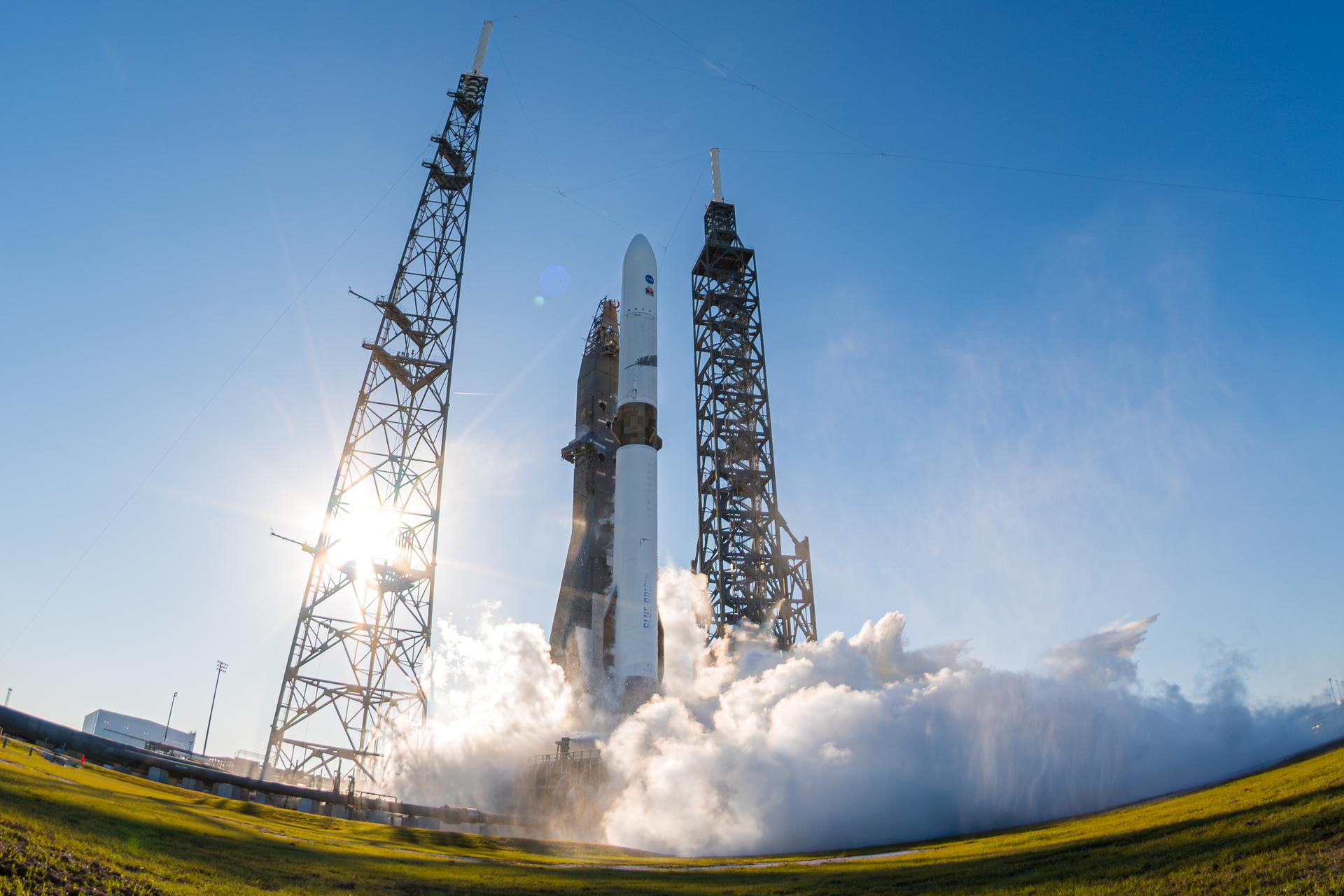
Blue Origin is still rebuilding from the explosion that damaged its New Glenn launch site during a static test in May. Even so, it is asking for permission to fly far more often. On Oct. 16 the company said it will add more Florida launch pads, two new landing vessels and a $330 million expansion of its upper-stage factory. Separately, the Federal Aviation Administration has opened public comment on a proposal that would raise New Glenn's permitted launch rate at its Cape Canaveral pad from 12 flights a year to 50.
Ian Richardson, Blue Origin's senior vice president of operations, put the goal plainly, according to Spaceflight Now: the infrastructure is designed to support "multiple flights per week by the end of the decade."
What Blue Origin announced
The new pads will be modeled on Launch Complex 36 at Cape Canaveral Space Force Station, New Glenn's current home. Blue Origin has not said where they will go. LC-36 itself is already splitting in two:
- LC-36A, which is being rebuilt after the May explosion, serves the New Glenn 7x2 configuration.
- LC-36B, now under construction, is for the larger New Glenn 9x4. That version has nine BE-4 engines on the first stage and four BE-3U engines on the upper stage.
The rest of the package fills in the support work a high flight rate needs. Blue Origin will add two new landing vessels to its marine fleet, and returned boosters will be serviced at a new vertical integration facility under construction just down the road from LC-36. A payload processing facility that Blue Origin and others can use is also going up in partnership with the U.S. Space Force.
The largest single item is the factory. Blue Origin's $330 million expansion of its Rocket Park site, aimed at producing upper stages for the 9x4 rocket, centers on a 1.37-million-square-foot facility that is expected to be finished by summer 2027. It is designed to support up to 150 upper stages a year. The company says it has invested more than $3 billion in facilities and infrastructure across Florida so far, and that more than 5,000 employees and 500 Florida suppliers support its work. Its footprint now spans more than 20 sites across Brevard and Orange counties.
A two-rocket lineup taking shape
The two-pad layout at LC-36 was not announced this week. In August, FOX 35 Orlando reported that Blue Origin was building two separate pads for two sizes of New Glenn, with LC-36A for the smaller variant and the newly announced LC-36B for the larger one. A Blue Origin update at the time said the payload processing facility, built in partnership with the U.S. government, would support both variants of New Glenn as well as National Security Space Launch providers on the Eastern Range.
Zac Aubert, CEO of Launch Pad Network, compared the arrangement to SpaceX's Falcon 9 and Falcon Heavy: one company offering vehicles of different sizes. At the time, Blue Origin said it was aiming to return New Glenn to flight by the end of the year, and Spaceflight Now reports that founder Jeff Bezos said earlier this month the company is still pushing to fly the 7x2 rocket again before the end of 2026.
The regulatory side: from 12 to 50
A rocket company cannot simply decide to launch more often. Blue Origin's current FAA vehicle operator license, VOL 24-133, authorizes up to 12 New Glenn launches a year at Space Launch Complex 36 at Cape Canaveral, according to the FAA's stakeholder engagement page for the program. That figure traces back to a 2016 environmental assessment, which analyzed engine testing and up to 12 launches a year.
The FAA is now the lead agency on a Draft Environmental Assessment for a cadence increase at SLC-36A. The proposed action would modify the license to raise the maximum annual cadence from 12 to 50. The review covers more than launches. It also includes static-fire engine testing, downrange first-stage landings on ocean platforms, payload fairing recovery and the temporary airspace closures associated with New Glenn launches.
The FAA will hold a virtual public meeting on Thursday, Oct. 22, from 6:00 to 8:00 p.m. Eastern, with oral comments limited to three minutes per speaker. Written comments go through regulations.gov under Docket FAA-2026-9841, and the agency is encouraging submissions by Oct. 30, which is when Spaceflight Now reports the 30-day comment period closes.
Why It Matters
The numbers show how big a jump Blue Origin is planning. Fifty launches a year from one pad works out to just under one a week. Richardson's target of "multiple flights per week" would require more than that, which helps explain why the company is building additional pads, extra landing vessels and a factory sized for up to 150 upper stages a year rather than counting on SLC-36A alone.
The timing is also notable. The pad that would get the higher cap is still being rebuilt after a static-test explosion five months ago, and New Glenn has not yet returned to flight. The infrastructure announced this week is a plan for a launch rate New Glenn has not yet come close to. Whether it pays off depends on the rocket flying reliably once it returns, not on how much concrete gets poured.
For the Space Coast, the draft assessment is the formal opportunity for the public to weigh in on what more than four times as many permitted New Glenn launches from one pad would mean. That includes more static fires, more downrange recovery operations and more airspace closures. The 12-launch figure comes from analysis done a decade ago. The comment period running through Oct. 30 is when the next ceiling gets debated.
The package also reads as a bid for a bigger role on the Eastern Range. A two-vehicle lineup, a government-partnered payload processing facility and an explicit mention of National Security Space Launch providers are consistent with a company aiming for a steady share of government and commercial missions. That would require both regulatory approval and hardware that can keep up.
