
September doesn't usually get top billing on the skywatching calendar. It has no total eclipse, no once-a-decade comet, no meteor storm. What it has instead is a tidy sequence of dependable, naked-eye events spaced almost exactly a week apart — the kind of month that rewards someone who just steps outside a few times rather than someone who plans a whole vacation around it. Here's what's actually happening, and when.
A quiet opening act
The month starts with the Aurigid meteor shower peaking on September 1. It's a minor shower — up to about 6 meteors per hour under ideal conditions — and this year a waning gibbous moon washes out much of the fainter activity. Worth a glance if you're already up, not worth setting an alarm for.
The sky gets more cooperative around September 10-11, when the New Moon strips out moonlight entirely and hands the month its darkest skies. That's the window for anyone chasing the Milky Way or faint deep-sky targets away from city lights, before the Moon starts waxing back into the evening sky.
The Moon makes its rounds
In between, the Moon pays visits to two planets. On September 8, it pairs up with Jupiter — and for observers in the right location, actually passes in front of it in an occultation, though the event happens mostly in daylight, which limits how many people will get a clean view of the disappearance and reappearance. Six days later, on September 14, the Moon swings past Venus for a second easy pairing, low in the western sky after sunset, where Venus has been holding court as the evening's brightest point of light.
Venus takes the spotlight
Venus itself is the month's headline performer. On September 18, it reaches greatest brilliancy — magnitude -4.8, "super bright" by any skywatcher's standard, and easily the most dazzling object in the evening sky besides the Moon. This is Venus at its show-off best, and it won't stay this good for long: the planet is heading toward inferior conjunction on October 23-24, when it passes roughly between Earth and the Sun and drops out of easy view altogether. Catch it now.
Elsewhere in the planetary lineup, Mars spends the month closing in on the bright twin stars Castor and Pollux, lining up with them by September 25 — a nice three-way grouping for anyone tracking the planet's slow drift through Gemini. Neptune, for its part, reaches opposition around September 25-26, though at its faint magnitude it's a telescope target rather than a naked-eye one.
The equinox, precisely
Fall officially arrives at 00:05 UTC on September 23, according to data from the U.S. Naval Observatory — the exact moment the Sun crosses the celestial equator heading south. Depending on which side of the Atlantic you're on, that clock time lands on the evening of the 22nd or the early hours of the 23rd locally, which is why casual coverage of the date sometimes rounds it to "September 22-23." The USNO number is the authoritative one: 00:05 UTC, September 23.
Closing with a Harvest Moon
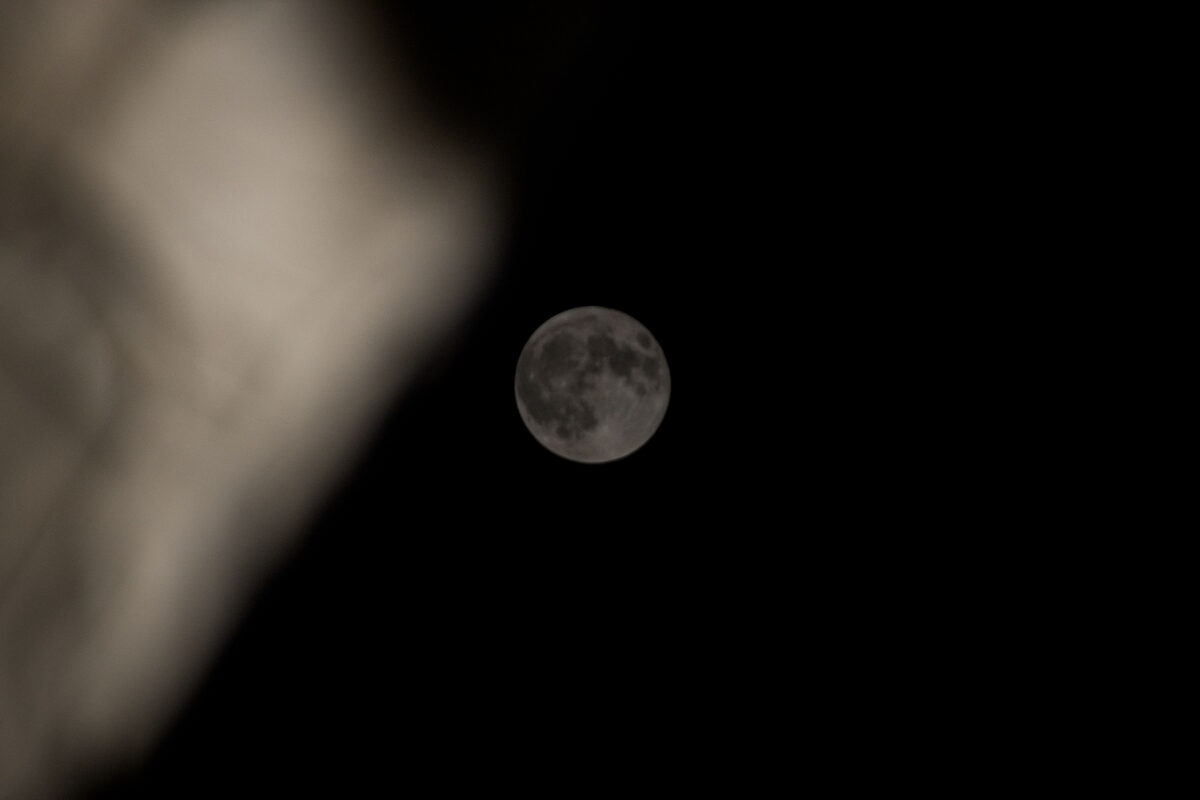
The month wraps with its most photogenic pairing. The Full Moon on September 26 is this year's Harvest Moon — the full moon falling closest to the equinox — and it floats near Saturn in the eastern sky after sunset. Saturn is well placed for observing this month, heading toward its own opposition early next month, so the Moon's close pass gives casual observers an easy way to locate it: find the bright full moon, and the pale, steady point of light near it is Saturn.
Why It Matters
None of September's events require a telescope, a dark-sky preserve, or a plane ticket to an eclipse path — that's precisely what makes the month useful as a case study in how astronomy actually reaches most people. A Moon-planet pairing or a planet at peak brightness is legible to anyone who looks up at the right time, no equipment or expertise required, which is why these recurring alignments do more for public engagement with astronomy over a year than rarer spectacles do. The equinox also matters beyond ceremony: it's one of two moments a year when the Sun's geometry relative to Earth is precisely defined, which is why the U.S. Naval Observatory publishes it to the minute rather than the day — that figure is a real astronomical measurement, not a calendar convention, and it anchors the timing of everything from solar-angle calculations to the cultural marking of the start of fall.
