
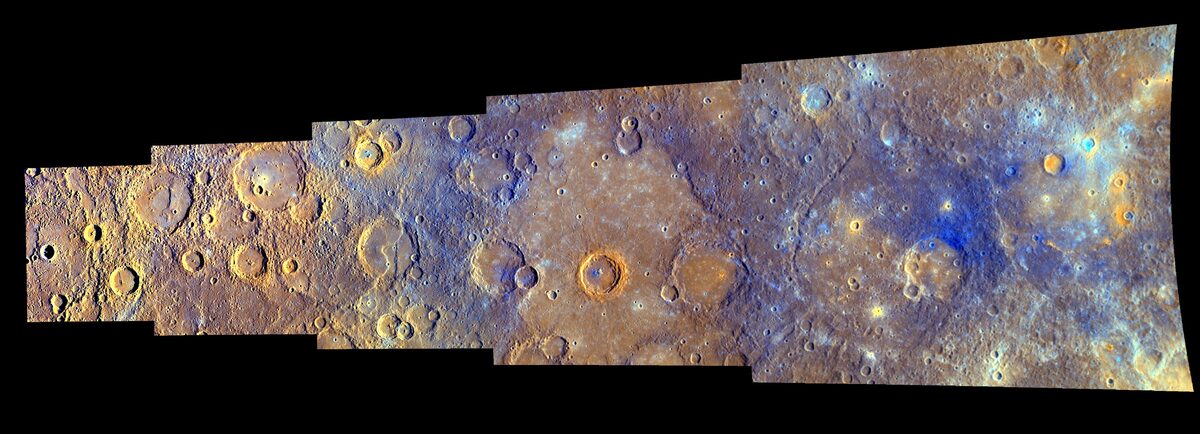
Mercury is hard to catch. The innermost planet never strays far from the Sun, so it spends most of its time lost in twilight glare. A few times a year it reaches its widest angle from the Sun as seen from Earth, and that is the best chance to find it. The next one comes on Monday, October 12, 2026. This time, observers south of the equator get the better view.
According to EarthSky, Mercury reaches greatest eastern elongation at about 10 UTC on October 12, when it sits 25 degrees from the Sun in the evening sky. Forecast Bar, which calculates from the JPL DE421 ephemeris, puts the peak at 10:03 UTC.
What "greatest eastern elongation" means
Elongation is the angle between a planet and the Sun as seen from Earth. "Eastern" means Mercury is east of the Sun, so it trails the Sun across the sky and shows up in the west after sunset. "Greatest" means that on this date the angle reaches its widest point for the current apparition. After that, the angle shrinks again as Mercury heads back toward the Sun.
The exact moment of the peak is less important than it sounds. Forecast Bar notes that the peak "is not necessarily the best time to look from your location." What decides whether you see Mercury is your local horizon, how dark the sky is, where the Moon is and the weather. Star Walk advises looking on several evenings around October 12 rather than trying to catch the exact moment, so if one night is cloudy you can try another.
The numbers
EarthSky's figures for the elongation:
- Separation from the Sun: 25 degrees
- Brightness: about magnitude -0.1, brighter than most stars
- Phase: about 60% illuminated through a telescope
- Apparent size: about 6.75 arcseconds, a very small disk
- Background: in front of the constellation Libra, though EarthSky expects the stars there to be lost in the twilight
At magnitude -0.1, Mercury is brighter than most stars, but its low altitude and the twilight around it are the real problems. Star Walk says binoculars may help you find it, but wait until the Sun has fully set before using them. Never point binoculars or a telescope near the Sun.
A crescent Moon as a guide
EarthSky notes that the waxing crescent Moon visits Mercury on October 12. A thin crescent low in the west after sunset can serve as an easy landmark and gives first-time observers a starting point for finding the planet nearby.
Why latitude matters so much
On paper this apparition looks the same everywhere: 25 degrees is 25 degrees. In practice, how high Mercury appears at dusk depends on the angle the evening ecliptic makes with your horizon. That angle changes with season and latitude.
EarthSky calls this the Southern Hemisphere's best evening elongation of Mercury in 2026. The same source warns that for viewers in the Northern Hemisphere, Mercury will most likely be too low to spot because of the low angle of the ecliptic at this time of year. In autumn, EarthSky explains, the ecliptic makes a narrow angle to the horizon in the evening, so evening elongations are harder to see and morning ones are better. October is autumn in the north and spring in the south, where the situation reverses and evening elongations are best.
If you are in the north and want to try anyway, find a flat, clear western horizon with no buildings, trees or hills blocking the sunset direction, as Star Walk advises, and start looking soon after sunset. Even so, expect a difficult target.
What comes next for Mercury
After October 12, Mercury drops rapidly toward the horizon. EarthSky says it will disappear late in October and reach inferior conjunction, when it passes between Earth and the Sun, at 14:00 UTC on November 4. It then moves into the morning sky and reaches greatest western elongation later in November. EarthSky lists November 21, while Star Walk gives November 20 at 23:29 GMT and Forecast Bar gives 23:31 UTC on November 20. Those times fall late in the day in UTC, so the one-day gap probably comes from time-zone conventions; check a local almanac for your location.
Star Walk's list of upcoming elongations continues with Venus at greatest western elongation on January 3, 2027, and Mercury back in the evening sky at greatest eastern elongation on February 3, 2027.
The rest of October's sky
Mercury is not part of NASA's monthly sky guide. The October 2026 "What's Up", presented by Raquel Villanueva of JPL, doesn't mention it. The month still has plenty to see:
- October 4: Saturn at opposition, when the ringed planet is opposite the Sun in our sky and visible for much of the night. NASA also highlights recent Hubble observations showing a ten-sided wave around Saturn's south pole.
- October 6: A thin crescent Moon near Jupiter before sunrise.
- October 21-22: The Orionid meteor shower peaks. A bright waxing gibbous Moon will wash out some of the fainter meteors this year, and NASA suggests watching in the few hours before dawn, after moonset.
- October 27-28: The Moon near the Pleiades star cluster.
Together, Mercury on October 12 and Saturn earlier in the month give observers two planets to find, one an evening target best suited to the Southern Hemisphere and the other an object that is up for much of the night around opposition.
Why It Matters
Mercury is the planet many people have never knowingly seen, because it is so often lost in the Sun's glare. Elongations are when that changes, and this one is the best evening opportunity of 2026 for Southern Hemisphere observers, with a crescent Moon nearby to help find it.
The event is also a lesson in observing. Forecast Bar's point that the peak moment isn't necessarily the best time to look applies to most sky events. Geometry sets up the opportunity, and your horizon, latitude and weather decide whether you get to use it. Here, the same elongation is a good target in one hemisphere and a hard one in the other.
Northern observers who miss this one have other chances coming: the November morning elongation and the February 2027 evening apparition.
