
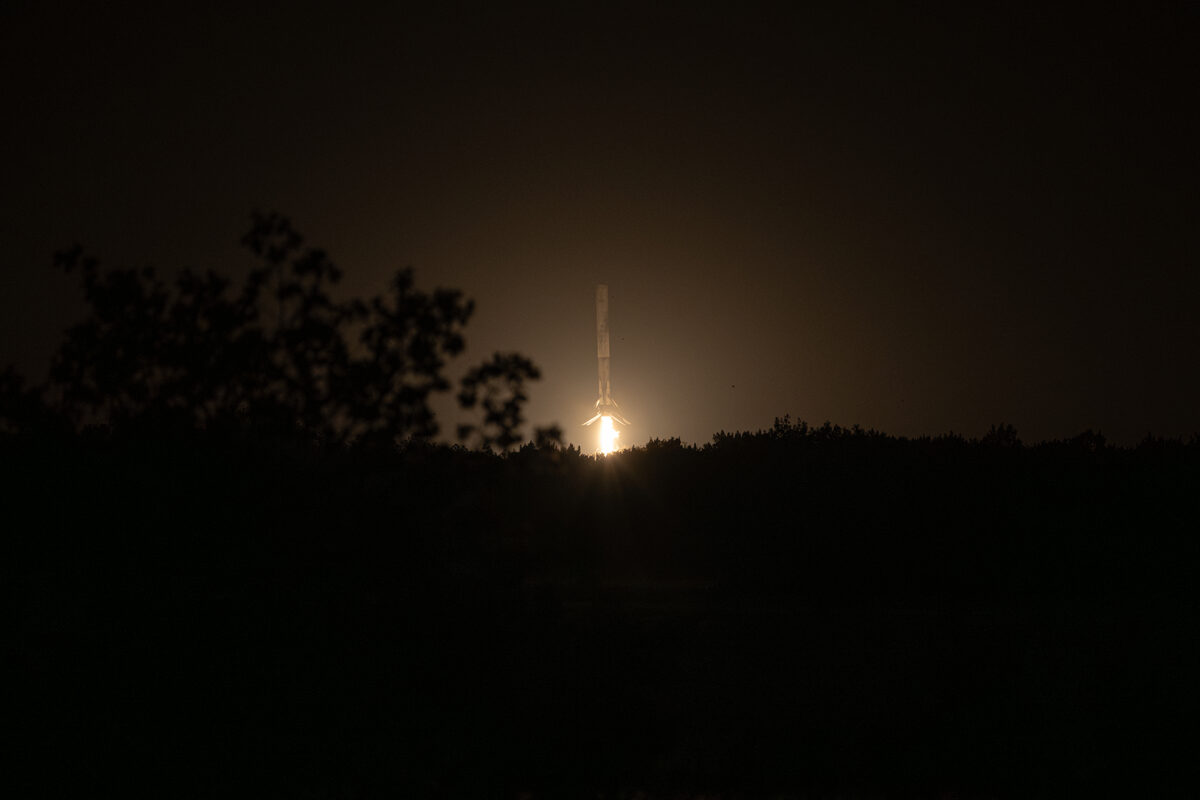
On July 10, 2026, a Chinese rocket did something only SpaceX and Blue Origin had done before: it flew to orbit, dropped its first stage back through the atmosphere, and caught it. The Long March 10B's debut — landing engines-first into a net rigged on a floating platform off Wenchang — is as good a marker as any for where the launch industry stands in the middle of 2026. Reusability has gone from SpaceX's private trick to an industry-wide design requirement, cost per kilogram keeps sliding, and at least four brand-new heavy-lift vehicles are either flying their first missions or nursing the wounds of trying to. Below is what the numbers actually say about each major active or imminent orbital launcher — payload, price, and how much of the rocket comes back.
The Established Workhorses
SpaceX's Falcon 9 remains the reference point every other vehicle gets measured against, not because it is the biggest rocket flying but because it is the only one with genuine production-line reuse: a Block 5 booster has now flown 36 times on a single airframe, and the fleet has logged 662 total launches with 619 successful droneship and landing-zone recoveries out of 630 attempts. SpaceX's advertised dedicated-launch price sits at $74 million as of 2026, though the marginal cost of flying an already-recovered booster is understood to be far lower. Falcon Heavy, essentially three Falcon 9 boosters strapped together, is NASA's own benchmark for heavy lift — the agency's Launch Services Program describes it as able to lift "nearly 64 metric tons" to orbit, expended. Recovering all three cores costs a meaningful chunk of that performance, which is why SpaceX still expends the center core on the heaviest missions.
The Reusability Challengers
Three vehicles are trying to build a second reusable heavy-lifter to compete with Falcon: Blue Origin's New Glenn, ULA's Vulcan Centaur, and Rocket Lab's Neutron. New Glenn is the furthest along and the hardest hit. NASA's own vehicle page credits it with more than 13 metric tons to GTO and 45 metric tons to LEO, and the booster achieved one successful landing and one reuse before a May 28, 2026 static-fire test destroyed both the vehicle and its only launch pad's transporter-erector. Blue Origin says it is rebuilding around a different pad approach and targets a return to flight by year's end. ULA's Vulcan, by contrast, is flying and expendable — 27,200 kg to LEO, 15,300 kg to GTO, four launches on the books — but has never recovered a component; its SMART reuse concept, which would parachute the BE-4 engine section back for a helicopter catch, remains a slide deck, not hardware. Rocket Lab's Neutron hasn't flown at all yet, targeting a debut no earlier than the fourth quarter of 2026 with a first stage meant to land on an ocean platform, a partially reusable payload of roughly 13,000 kg to LEO, and pricing pitched around $50–55 million a flight — figures that are the company's own targets rather than demonstrated performance.
| Vehicle | Operator / Country | LEO payload | GTO payload | Cost per launch | Reusability | Flight heritage |
|---|---|---|---|---|---|---|
| Falcon 9 | SpaceX / USA | 22,800 kg (17,500 kg reusable) | 8,300 kg (5,500 kg reusable) | ~$74M (advertised) | Partial — booster only, up to 36 flights | 662 launches (as of Jul 9, 2026) |
| Falcon Heavy | SpaceX / USA | ~63,800 kg (expended) | 26,700 kg (expended) | $97M–$150M (estimated, dated) | Partial — side boosters, sometimes center core | 12 launches (as of Apr 2026) |
| Starship (V3) | SpaceX / USA | 100,000+ kg (V3, reusable target) | Not yet operational | ~$100M expendable (estimated); SpaceX targets far lower | Full reuse — designed, not yet routine | 12 test flights, 7 successes (as of May 2026) |
| New Glenn | Blue Origin / USA | 45,000 kg | 13,600+ kg | $68M–$110M (estimated) | Partial — booster, 1 landing + 1 reuse to date | 4 attempts; grounded since May 2026 pad loss |
| Vulcan Centaur | ULA / USA | 27,200 kg | 15,300 kg | ~$110M starting (estimated) | None yet — SMART engine reuse in development | 4 launches (as of Feb 2026) |
| Neutron | Rocket Lab / USA | 13,000 kg (up to 15,000 kg expended) | Not yet published | ~$50–55M (target, pre-flight) | Partial — planned ocean-platform landing | 0 — debut NET Q4 2026 |
| Ariane 64 | ArianeGroup / Europe | 21,650 kg | 11,500 kg | ~€115M (estimated, dated) | None — expendable by design | 8 launches (as of Jun 2026) |
| Long March 5B | CASC / China | ~25,000 kg | ~14,000 kg (CZ-5) | ~$160M (estimated, uncertain) | None — expendable | 18 launches, CZ-5 family |
| Long March 8A | CASC / China | ~9,800 kg | ~3,500 kg | Not independently confirmed | None (base variant); reusable variant in development | Flying since Dec 2020 debut |
| Long March 10B | China Rocket Co. / China | 16,000 kg (11,000 kg to 900 km) | Not yet published | Not yet public | Partial — booster caught by net on debut flight | 1 launch (Jul 10, 2026) |
| H3-24 | JAXA / MHI, Japan | 16,000 kg | 7,900 kg | ~¥5B (~$34–51M, estimated) | None — expendable | 8 launches, 6 successes (as of Jun 2026) |
| LVM3 | ISRO / India | 8,000 kg | 4,000 kg | ~$42M (estimated) | None — expendable | 9 launches, 100% success (as of Dec 2025) |
Figures are the most recent officially published or credibly reported numbers as of July 2026; costs marked "estimated" are not officially disclosed list prices and may be dated. See Sources below.
The Full-Reuse Bet
Starship is the outlier on the list because almost nothing about it is settled. The vehicle has flown twelve times, with seven successes and five failures, and only debuted its production-intent V3 configuration in May 2026 — the first version SpaceX says is built to carry more than 100 metric tons to LEO, nearly triple what the earlier Block 2 could manage. Both stages are designed to be recovered and reflown, which no other vehicle on this list attempts for the upper stage. SpaceX's own numbers on what that will eventually cost span an enormous range: roughly $100 million if a Starship were expended today, publicly stated ambitions of $10 million or less once reuse is routine, and Elon Musk's longer-term target of $2–3 million per flight at very high cadence. None of the low-end figures have been demonstrated, and they should be read as SpaceX's aspiration rather than an achieved price.
The Expendable Holdouts
Not everyone is chasing reuse, and the reasons are more defensible than they might look. Europe's Ariane 6 — flying in 62 and 64 configurations with up to 21,650 kg to LEO and 11,500 kg to GTO — remains fully expendable, and European officials have argued publicly that recovery infrastructure isn't worth it at Europe's flight rate, even as critics call the design outdated next to Falcon 9. Japan's H3, built by JAXA and Mitsubishi Heavy Industries, targets roughly ¥5 billion a launch and 16,000 kg to LEO with no recovery hardware at all, prioritizing a simpler, cheaper-to-build airframe over reusable complexity. India's LVM3, ISRO's workhorse for its heaviest satellites and the vehicle slated to carry the country's first crewed missions, has a perfect nine-for-nine record and 8,000 kg to LEO, also fully expendable. And China's heavy-lift Long March 5, which put up 25,000 kg to LEO across 18 flights, stays expendable even as its own sister program experiments with reuse elsewhere in the family.
Why It Matters
The spread in this table is the story: a fully reusable Falcon 9 launch now runs a fraction of what an expendable Ariane 6 or Long March 5 costs per kilogram, and that gap is precisely what is forcing every other major program — Blue Origin, ULA, Rocket Lab, and now China's own commercial launch sector — to build recovery hardware whether or not it was in their original plans. But reuse alone doesn't guarantee success, as New Glenn's pad explosion and Starship's mixed test record both show; the vehicles chasing full or partial reusability are also the ones absorbing the most spectacular failures along the way. The Long March 10B's net-catch landing on July 10 matters less for its payload numbers, which are still modest next to Falcon 9, and more as a signal: reusable orbital rockets are no longer a one-company phenomenon, and the next few years of this list will be decided by which of these newcomers can turn a single successful landing into the kind of routine, boring reliability that made Falcon 9 the baseline everyone else is still trying to beat.
Sources
- China's Long March 10B Rocket Successfully Launches — and Lands — Scientific American
- China to Debut Reusable Long March 10-Derived Rocket — SpaceNews
- Launch Services Program Rockets — NASA
- LVM3 (GSLV Mk III) — ISRO
- Vulcan Centaur — United Launch Alliance
- H3 Launch Vehicle — JAXA
- Blue Origin Outlines New Launch Pad Approach — SpaceNews
- Falcon 9 — Wikipedia
- Ariane 6 — Wikipedia
- Long March 5 — Wikipedia
