
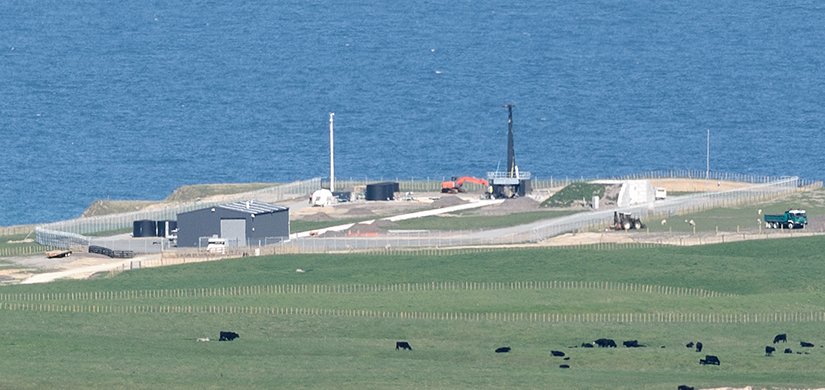
A Rocket Lab Electron rocket has launched a satellite for the U.S. Space Force as part of the Victus Haze responsive space exercise, a mission designed to test how quickly the United States can get new orbital assets into space when a crisis demands it. The mission pairs the Rocket Lab spacecraft with a True Anomaly vehicle in orbit to demonstrate rapid threat characterization and rendezvous operations.
The launch marks a significant milestone in the Pentagon's long-running effort to prove that national security satellites don't have to take years to reach orbit. In an era when adversaries are developing their own counterspace capabilities, the ability to rapidly deploy, replace, or augment space-based assets could prove as strategically critical as the satellites themselves.
The Responsive Space Imperative
For decades, the U.S. military's approach to space has followed a deliberate cadence: design a satellite over several years, build it over several more, then schedule a launch months or years in advance. The result has been some of the most capable spacecraft ever flown — exquisitely engineered, enormously expensive, and profoundly difficult to replace if something goes wrong.
That model worked well enough when space was a largely uncontested domain. But as more nations develop the ability to threaten orbital assets — whether through anti-satellite weapons, electronic warfare, or close-proximity maneuvering — the calculus has shifted. A satellite constellation that takes a decade to replenish after a loss is a strategic vulnerability, not just an engineering challenge.
Responsive space is the Pentagon's answer to that vulnerability. The concept is deceptively simple: maintain the ability to launch a satellite on short notice, potentially within days rather than months, to fill a gap in orbital coverage or respond to a developing threat. The execution, however, is anything but simple. It requires not just rockets that can be prepared quickly, but satellites that can be built, tested, and integrated on compressed timelines, ground systems that can support rapid launch campaigns, and a regulatory framework that can accommodate the urgency.
The Victus Haze exercise tests that entire chain, from satellite readiness through launch execution, under conditions designed to simulate the pressure of a real operational scenario. By pairing the Rocket Lab launch with a True Anomaly vehicle already in orbit, the exercise goes beyond simply proving rapid launch — it demonstrates the ability to characterize potential threats and conduct rendezvous operations on compressed timelines. Using Rocket Lab's Electron — a small launch vehicle with a track record of frequent flights — the Space Force is leveraging the kind of commercially developed capability that responsive space advocates have long argued is essential to making the concept work at scale.
A Growing National Security Launch Cadence
The Victus Haze launch does not exist in isolation. It arrives amid a broader acceleration in national security space activity, as the U.S. military and intelligence community ramp up their use of commercial launch services to place assets in orbit.
SpaceX, for instance, recently launched intelligence-gathering satellites for the National Reconnaissance Office aboard a Falcon 9 rocket, part of what has become an increasingly rapid tempo of NRO missions. The NRO, which operates the nation's fleet of spy satellites, has been expanding its constellation as part of a broader effort to build a more resilient and proliferated space architecture.
The pattern is unmistakable: where national security space launches were once rare, headline-grabbing events, they are becoming routine — almost mundane. That normalization is itself a strategic objective. The more frequently the U.S. can launch, the harder it becomes for an adversary to predict, track, or plan around new orbital deployments.
This increasing cadence also reflects a philosophical shift in how the Pentagon thinks about space assets. Rather than relying on a small number of exquisitely capable satellites, the trend is toward larger constellations of smaller, less expensive spacecraft that can be replaced or augmented more easily. That approach demands a launch infrastructure capable of high-tempo operations — exactly the kind of capability that exercises like Victus Haze are designed to validate.
Small Rockets, Big Implications
Rocket Lab's role in the Victus Haze exercise underscores a dynamic that has been reshaping national security space for the better part of a decade: the rise of small launch vehicles as serious instruments of military space power.
The Electron rocket is not in the same payload class as SpaceX's Falcon 9. It is a small rocket designed to deliver modest payloads to orbit. But that size is precisely what makes it valuable for responsive space missions. Small rockets can be manufactured more quickly, prepared for launch on shorter timelines, and operated from a wider range of launch sites. When the mission is to get a specific capability into a specific orbit as fast as possible, a small dedicated launch vehicle can be the optimal tool.
The tradeoff is payload capacity — an Electron cannot carry the massive, multi-ton satellites that dominate the traditional national security space manifest. But as satellite technology continues to miniaturize and as the military embraces more distributed architectures, the relevance of small launch vehicles to national security continues to grow.
Rocket Lab's selection for the Victus Haze mission suggests that the Space Force sees small launch not as a niche capability, but as an integral component of its responsive space strategy. The company's ability to maintain a relatively high launch tempo and its experience with dedicated missions — where a single customer's payload is the sole occupant of the rocket — align well with the operational demands of rapid-response scenarios.
Why It Matters
The Victus Haze exercise matters because it moves responsive space from theory to demonstrated capability. It is one thing to argue that the United States should be able to launch satellites on short notice in a crisis; it is quite another to actually do it, end to end, with real hardware on a real rocket.
The strategic implications extend well beyond the immediate exercise. Every successful responsive space demonstration sends a signal to potential adversaries: destroying or disabling a U.S. satellite may not create the lasting capability gap that an attacker would hope for, because a replacement could be in orbit far sooner than traditional timelines would suggest. That kind of deterrence — the ability to rapidly reconstitute space capabilities — could prove as important as the defensive and offensive counterspace measures that tend to dominate public discussion.
Paired with the expanding national security launch tempo exemplified by recent NRO missions aboard SpaceX's Falcon 9, the Victus Haze launch points toward a future in which U.S. military space operations are faster, more flexible, and more resilient than at any point in the space age. Whether that vision can scale from successful exercises to genuine operational readiness remains the central question — but with each launch, the answer becomes a little clearer.
