
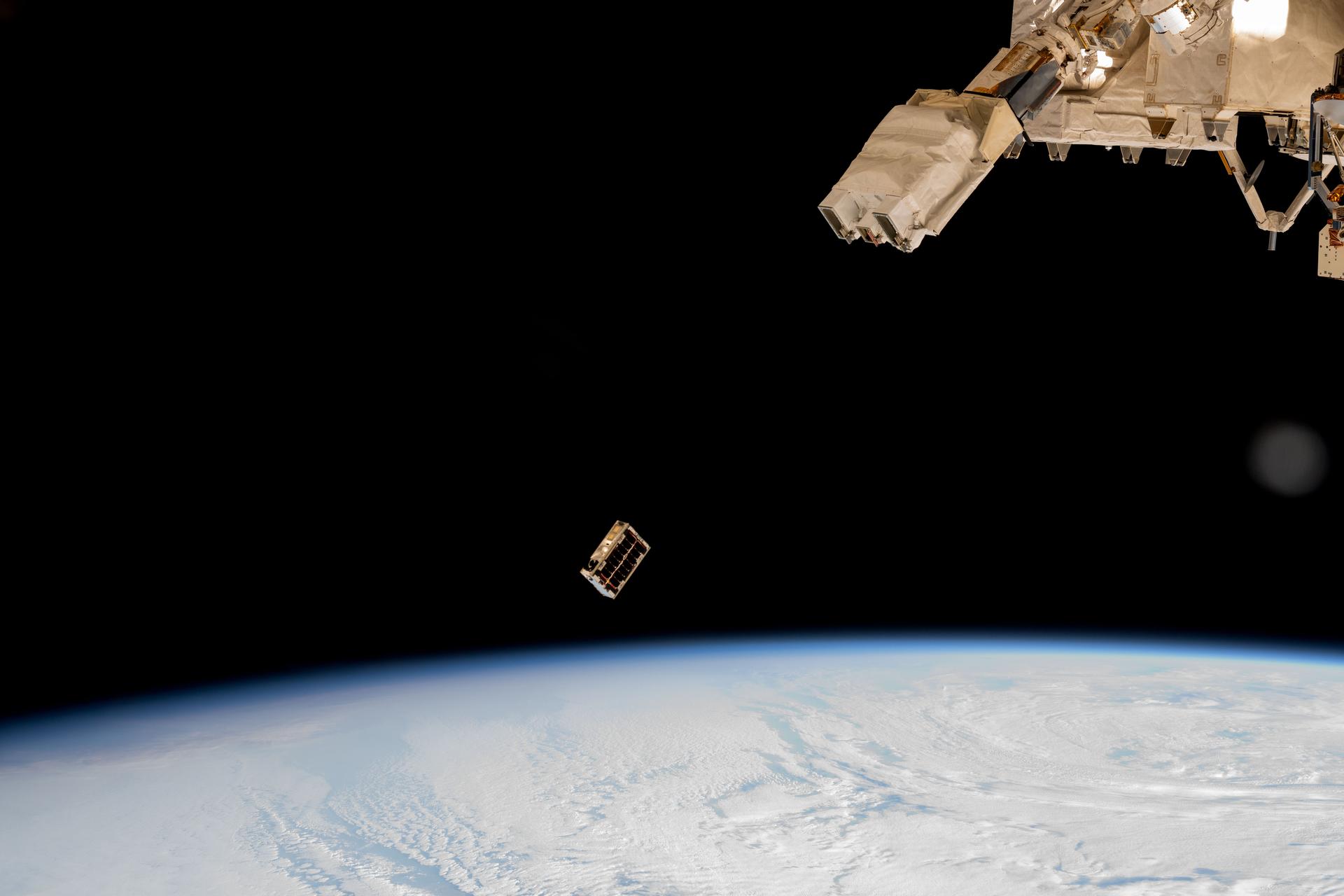
On July 14, 2026, an autonomous spacecraft chased down another spacecraft that was actively trying to get away from it — and it did so on a timeline that would have been unthinkable for orbital operations just a few years ago. The event was the latest milestone in VICTUS HAZE, the U.S. Space Force's Tactically Responsive Space (TacRS) demonstration, and it marked what the companies involved describe as the first space-to-space pursuit of an actively evading target.
The chaser was Jackal-0004, an autonomous spacecraft built by Colorado-based True Anomaly. The target was Puma, a small maneuvering satellite built and operated by Rocket Lab specifically to serve as the "non-cooperative" prey in this exercise. Both are working for the same customer — Space Systems Command — which designed VICTUS HAZE to test how fast the U.S. military can launch, task, and operate spacecraft in a crisis, and how well an autonomous system can track and close on a target that doesn't want to be caught.
How the Chase Unfolded
The sequence started with speed, as TacRS demonstrations are built to do. According to Space Systems Command's official release, Rocket Lab launched Puma less than 17 hours after receiving the notice to launch — a record for responsive launch. Once on orbit, Puma began behaving unpredictably by design, maneuvering to make itself harder to find and follow.
Jackal had already proven it could find Puma under pressure. Earlier in the campaign, per Tech Times' reporting on the July milestone, Jackal-0004 located and characterized Puma from roughly 2,000 km away using only its onboard sensors, closed the distance, and performed circumnavigation maneuvers to image the target from multiple angles — all in 61 hours, beating Space Systems Command's 72-hour deadline by 11 hours. That earlier "uncooperative rendezvous" was framed as the first real-world validation of the Pentagon's TacRS framework.
The July 14 tasking raised the difficulty considerably. Rather than simply finding and characterizing a target, Jackal had to actively pursue one that was maneuvering to evade it. Via Satellite's coverage of the event describes Puma maneuvering evasively while Jackal performed pursuit maneuvers, using True Anomaly's Mosaic ground and command system alongside an onboard algorithm called Multi-Object Detection and Tracking (MODT) to keep eyes on the moving target. The company characterizes the whole exercise as "uncooperative rendezvous proximity operations."
The numbers involved are the real story. Payload Space, which spoke with True Anomaly about the mission, reported that once Space Systems Command issued the tasking on July 14, Jackal's systems produced a validated mission plan in under 30 minutes. The spacecraft then executed a 23-minute ingress and burn sequence, closing to roughly 10 km of Puma — within a planned 10-20 km guidance window — while capturing multi-aspect imagery through a series of spiraling maneuvers around the target.
That's a decision-to-intercept timeline measured in tens of minutes for a maneuver that, historically, satellite operators have planned over days or weeks, with extensive ground-based calculation and human sign-off at every step.
Not Without Friction
The mission wasn't flawless. Payload Space reported that Jackal experienced higher-than-normal thermal loads during the pursuit — a reminder that compressing days of planning into minutes puts new kinds of stress on a spacecraft's subsystems, not just its software. True Anomaly COO Sarah Walter told Payload Space the company had confidence going in: "We understood that Jackal was capable for this next phase," she said, but didn't minimize that the exercise was pushing the spacecraft into new territory.
Why It Matters
VICTUS HAZE sits at the center of a real shift in how the Pentagon thinks about space as a warfighting domain. The Tactically Responsive Space program exists because the U.S. military's traditional satellite acquisition and launch timelines — years from contract to orbit — are useless if an adversary can threaten or destroy American satellites faster than replacements can be built and launched. VICTUS HAZE was designed to compress that timeline at every stage: launch on short notice, then operate autonomously and quickly once on orbit.
The Puma-Jackal chase adds a specific and pointed capability to that story: proximity operations against a target that is trying to avoid being caught. Space Systems Command's stated goal for the mission was to demonstrate space domain awareness and dynamic on-orbit engagement — language that maps directly onto the military's growing concern about adversary satellites shadowing, inspecting, or threatening U.S. spacecraft, and the need for a response that doesn't require days of human-in-the-loop planning.
It also matters for what it says about the commercial space sector's role in national security. Jackal is not a government-built satellite; it's a product from a venture-backed startup, tasked and flown against another commercial company's spacecraft, on a timeline set by the Space Force. If autonomous mission planning in under 30 minutes and rendezvous within an hour or so of tasking holds up under further testing, it changes the calculus for how quickly the U.S. could respond to an on-orbit threat — and how much of that response could be handled by algorithms rather than ground controllers watching telemetry scroll by. The thermal stress noted during the July run is a useful corrective, though: autonomy that moves this fast still has to survive the physical consequences of moving that fast.
Sources
- US Space Force demonstrates responsive launch for VICTUS HAZE mission, begins on-orbit operations — Space Systems Command Newsroom
- True Anomaly Chases an Evading Target — Payload Space
- True Anomaly Details 'Space Pursuit' in Victus Haze Mission — Via Satellite
- Space Force Validates First Autonomous Commercial Orbital Intercept in 61 Hours — Tech Times
