
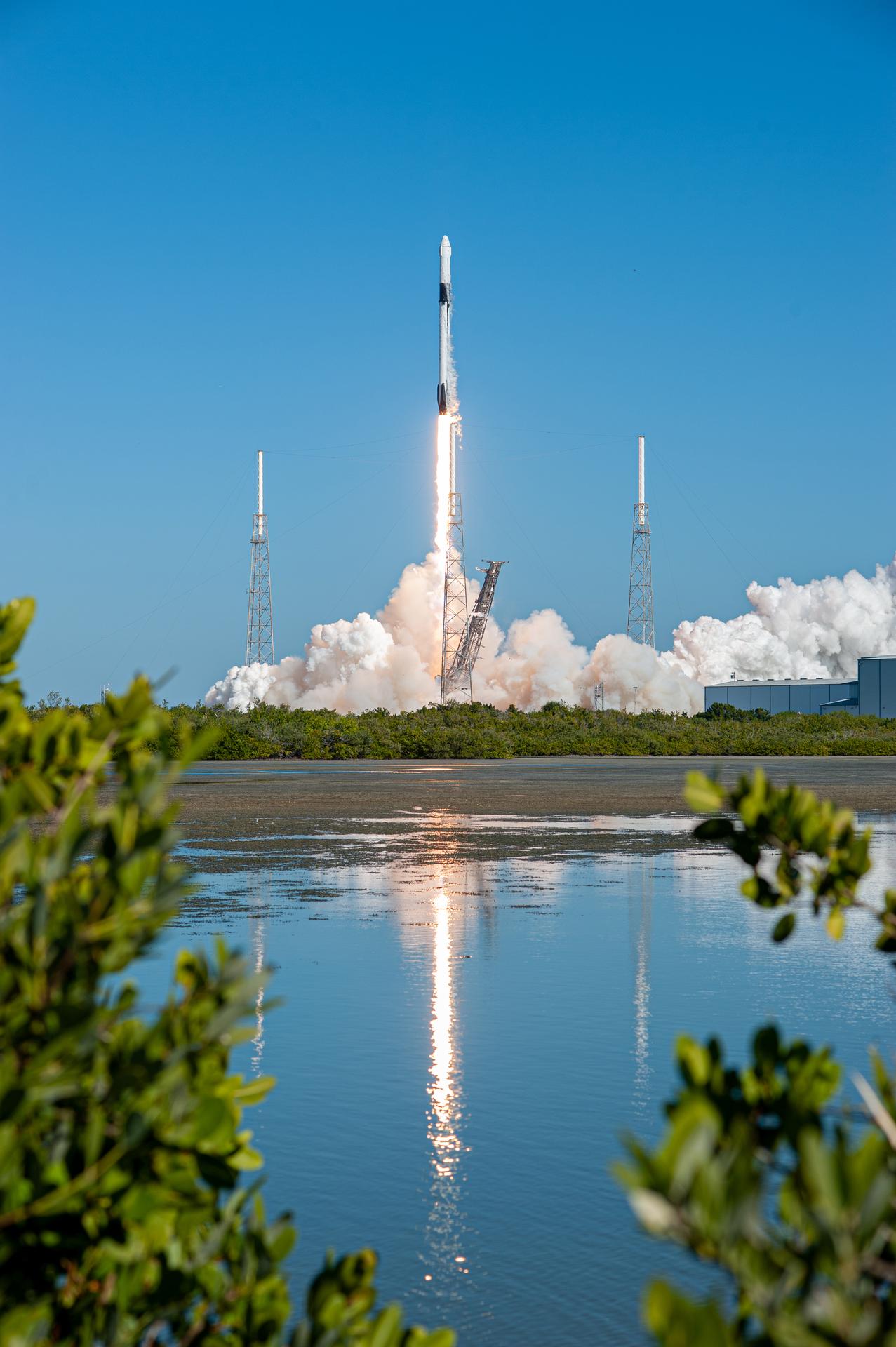
In the pre-dawn dark over Florida's Space Coast, a Falcon 9 rocket lit up Cape Canaveral Space Force Station one more time early Thursday, carrying a payload that, officially, does not exist in any detail the public is allowed to know. Liftoff from Space Launch Complex 40 came at 3:10 a.m. EDT on July 30, inside a launch window that had opened at 2:37 a.m. and would have closed at 3:21 a.m. Forecasters had put the odds of cooperative weather at 70 percent, and the rocket beat the clock with room to spare.
The mission is designated NROL-95, the naming convention the National Reconnaissance Office uses for its satellites — a numbering scheme deliberately stripped of any hint about what's actually riding inside the payload fairing. It's the fourth NRO launch of 2026 and the third NROL mission flown under the National Security Space Launch (NSSL) Phase 2 contract, part of a task order SpaceX was awarded back in August 2024.
A Booster With a Résumé
If the payload is a mystery, the rocket underneath it is an open book. Falcon 9 booster B1096 flew its seventh mission on the NROL-95 launch, a flight history that reads like a cross-section of the entire national space enterprise: NASA's IMAP heliophysics mission, a CRS-34 cargo run to the International Space Station, the first Kuiper broadband satellites, the NROL-77 reconnaissance mission, a GPS III-9 navigation satellite, and a batch of Starlink 6-87 satellites for SpaceX's own constellation.
After separating from the second stage, B1096 flew itself back to Cape Canaveral and touched down at Landing Zone 2 — the 18th landing at that particular pad and SpaceX's 642nd successful booster landing overall. What was once a headline-grabbing novelty is now routine enough that it barely gets a mention beyond the number ticking upward.
What's Actually Up There?
The NRO's official mission page offers essentially nothing about the satellite's capabilities. What it does offer is a patch: a ferret, chosen to represent "agility and resilience," paired with the tongue-in-cheek motto "We are the Champions." Beyond that, the agency states plainly that it declined to disclose payload specifics, citing national security.
That leaves outside observers to do what they always do with NRO launches — infer. Outside speculation around NROL-95 has centered on the possibility that it carries a next-generation Naval Ocean Surveillance System (NOSS) satellite, part of a lineage of NRO spacecraft historically tasked with tracking ships at sea by intercepting their radar emissions and radio transmissions rather than photographing them directly. That identification has not been confirmed by the NRO or by either of the news outlets that covered this launch. NOSS satellites traditionally work in clusters, using the time difference between signals arriving at multiple spacecraft to triangulate a vessel's position — a technique that has made them a quiet but persistent tool for monitoring naval movements around the globe.
The launch itself was described as a partnership between the NRO and the Space Force's Space Systems Command, reflecting how thoroughly reconnaissance launches now sit at the intersection of the intelligence community and the military space enterprise.
Why It Matters
Ocean surveillance satellites don't generate the same public fascination as imaging spacecraft that can, in theory, read a license plate from orbit. But if the NOSS identification holds up, NROL-95 slots into one of the more strategically consequential parts of America's space-based intelligence architecture: the ability to know where an adversary's ships are, continuously and without needing to send a plane or a destroyer to go look.
That capability matters more now than it has in decades. Naval competition with China in the Pacific and Russian fleet movements in the Atlantic and Arctic have put persistent maritime domain awareness back near the top of Pentagon priorities. A satellite that can passively locate ships by their own electronic emissions — with no warning to the vessel being tracked — is a tool built specifically for that kind of standoff monitoring, if the speculation about this mission's payload proves accurate.
The launch also underscores how central SpaceX has become to the government's most sensitive missions. A rocket booster now routinely flies national security payloads on its seventh trip to orbit, a level of reuse that would have been unthinkable for a classified NRO mission a decade ago, when expendable rockets were the unquestioned standard for anything the intelligence community wanted in space. The NSSL Phase 2 contract structure that produced this task order was designed explicitly to bring that kind of commercial cadence — and commercial pricing — into the national security launch business, and NROL-95 is another data point showing the arrangement working as intended.
The Pattern Continues
NROL-95 is unlikely to be the last mystery payload SpaceX lofts for the NRO this year. It's the fourth such launch in 2026 alone, part of an accelerating cadence as the agency continues building out its next-generation constellations across imaging, signals intelligence, and — if the speculation around this mission is accurate — maritime tracking. The specifics will stay classified, probably for years, if not indefinitely. The ferret patch and the "We are the Champions" motto are, for now, as close to an official statement as the public is going to get.
