
Beachgoers at Forrest Beach, a quiet stretch of coastline near Townsville in North Queensland, got an unusual surprise this weekend: six silver, large metal spheres scattered across the sand. Local authorities cordoned off the area, and Queensland Fire Department crews in hazmat gear spent hours carefully securing the objects — five packed into containment drums, with the sixth requiring on-site rendering-safe procedures. By July 6, the Australian Space Agency (ASA) had an explanation: the spheres are almost certainly pressure vessels from a foreign rocket body that recently fell back to Earth.
"The recovered objects appear to be pressure vessels from a space launch vehicle," the agency said in a statement, adding that they are "consistent with debris from a foreign rocket body that recently re-entered the atmosphere from orbit." Police confirmed there was no danger to the local community, but the exclusion zone and the presence of hazmat teams underscored a real concern: even though the spheres showed no obvious scorching or burn marks from their fiery return through the atmosphere, they can still carry leftover rocket fuel.
What exactly washed up?
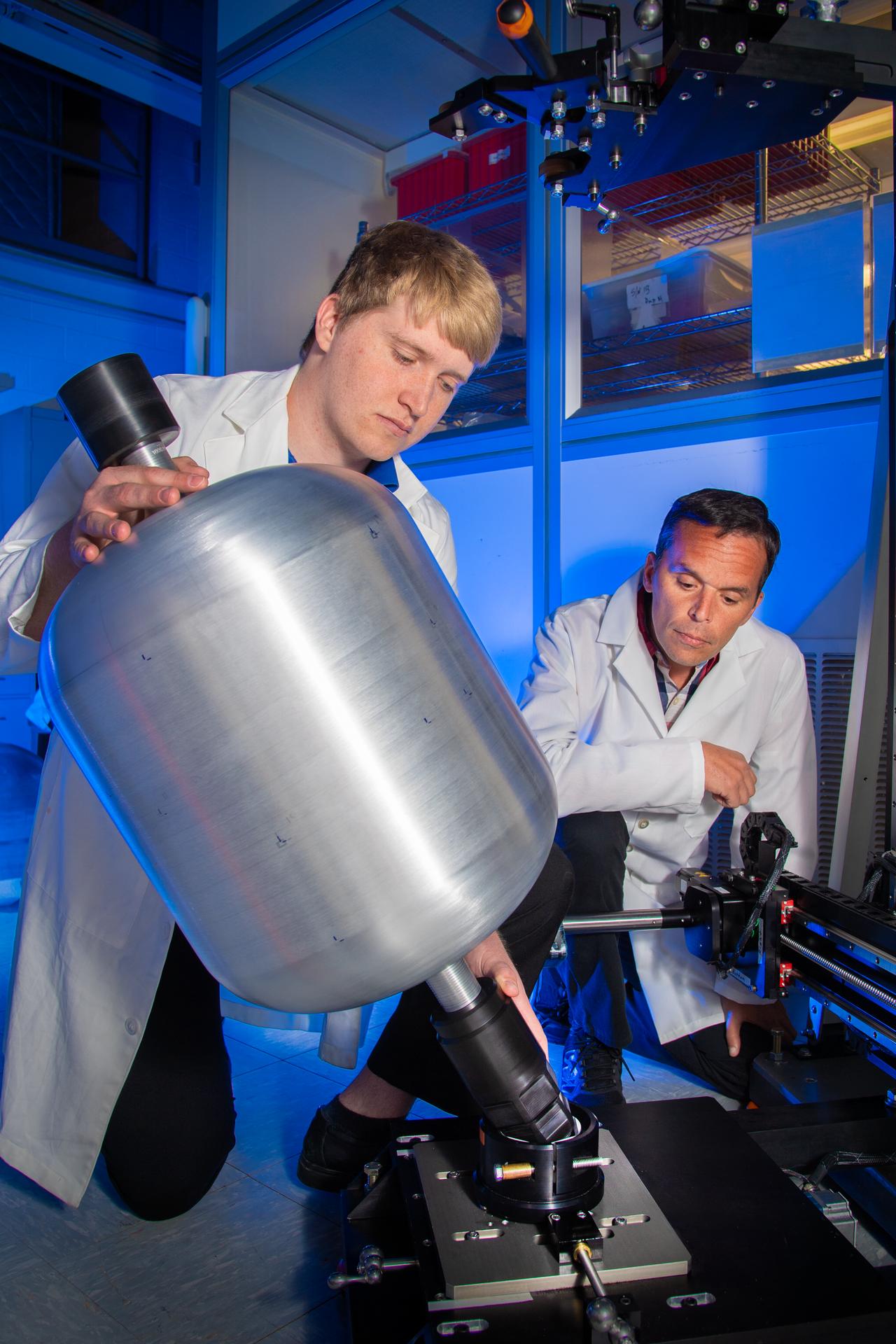
The objects are widely believed to be composite overwrapped pressure vessels, or COPVs — the tanks rockets use to store pressurized gas or propellant, often wound with a composite overwrap around a metal liner. Space archaeologist Alice Gorman of Flinders University examined descriptions of the Forrest Beach find and said the spheres "look to be consistent with what you find as part of a fuel system," speculating they could be titanium fuel vessels potentially still holding residual hydrazine — a toxic, corrosive propellant used widely in upper-stage rocket engines. Gorman raised the possibility that the debris originated from a Russian Fregat upper stage, though that remains speculation pending confirmation.
The ASA has not yet named the launch vehicle or the country responsible. In its statement, the agency said it is "continuing to engage with international counterparts" to identify both the specific rocket and the launching state — a process that typically involves cross-referencing reentry timing and trajectory data against tracked objects in orbital catalogs.
Why do these tanks survive reentry at all?
It might seem strange that a chunk of metal falling through the atmosphere at orbital velocity — generating temperatures easily hot enough to destroy most materials — would land on a beach mostly intact. But pressure vessels are a well-documented exception. NASA's Engineering and Safety Center describes composite overwrapped pressure vessels as robust containers built from a metal liner — often aluminum, steel, Inconel, or titanium — wrapped in a structural composite overwrap engineered to hold propellants and pressurized gas under extreme loads. Experts including Gorman have pointed to the titanium alloys typically used in these tanks, which have unusually high melting points, giving spherical pressure vessels a much better chance of reaching the ground in one piece than, say, a thin aluminum panel.
An ASA spokesperson added a second reason spheres like these tend to be found on beaches rather than farmland or forest: buoyancy. "Pressure vessels can be buoyant if there is no fuel in them, so they are likely to wash ashore," the spokesperson said — meaning an empty tank that splashes down at sea doesn't necessarily sink, and ocean currents can carry it a long way before it finally beaches.
A pattern, not an anomaly
This is far from an isolated event. Similar tanks have turned up on Australian and other shores before — including another pressure vessel discovery in 2023 and a piece of a SpaceX Dragon trunk found in New South Wales in 2022. Australia's own history with fallen space hardware goes back decades, to fragments of NASA's Skylab space station scattering across Western Australia's outback in 1979. Space archaeologist Gorman also noted a sobering piece of context: roughly 30,000 pieces of debris are currently tracked in orbit around Earth, a number that has only grown as launch activity accelerates.
That trend was echoed directly by Gorman, who put it bluntly: "We are going to see more of this — more rockets means more space junk." With commercial and national launch cadences climbing worldwide, unplanned reentries of spent rocket stages and their component hardware are becoming a more routine, if still unpredictable, feature of life along the world's coastlines.
What should you do if you find one?
Authorities were unambiguous on this point. Queensland Fire Department's guidance: "If you come across suspicious items in this area, do not touch them. Move away from the location and immediately call the Triple Zero (000) emergency number." The hazard isn't hypothetical — pressure vessels can retain residual propellant such as hydrazine, which is toxic and can cause serious injury on contact or if inhaled. Even a tank that appears empty and inert should be treated as potentially hazardous until cleared by trained personnel, which is exactly why the sixth sphere at Forrest Beach required specialized handling rather than simply being picked up and bagged.
Why It Matters
The Forrest Beach spheres are a small, contained incident — no injuries, no property damage, a beach reopened within days. But they're a tangible reminder that the consequences of a crowded orbital environment don't stay in orbit. As launch providers around the world fly more rockets, more stages and components are coming back down, and current reentry practices don't guarantee those objects burn up completely or land somewhere uninhabited. For ordinary beachgoers, that means space debris is shifting from an abstract statistic — 30,000 tracked objects — into something that can occasionally, if rarely, wash up at their feet. For space agencies, it's another argument for tighter international coordination on identifying and tracking reentering debris, and for designing future rocket stages with disposal and reentry survivability in mind from the start.
Sources
- Unidentified metal spheres found on Australian beach are 'debris from a foreign rocket body', space agency says - Space.com
- 'Space balls': Mysterious debris found on Australian beaches could contain toxic rocket fuel - The Irish Times
- Space debris on Queensland beach: 'space balls' washed ashore, do not touch - Euronews
- Deceptively Complex: Composite Overwrapped Pressure Vessels (COPV) Remain a Challenge for Engineers to Unravel - NASA
