
NASA is looking for a few people willing to give up a year of their lives to go nowhere. On July 1, 2026, the agency opened a call for volunteers to crew a new ground analog at Johnson Space Center in Houston — a roughly yearlong simulated mission that, for the first time, stitches two of NASA's existing habitat programs into a single continuous campaign meant to mimic the arc of a crewed trip to the Moon and Mars.
The headline change is structural. Until now, NASA has run its analogs as separate experiences. The Human Exploration Research Analog, or HERA, has served as a cramped stand-in for a spacecraft, while the Crew Health and Performance Exploration Analog, CHAPEA, has played the role of a planetary base. The new mission — the Moon and Mars Exploration Analog — combines them. Crews will start in the "spacecraft," simulate the long transit out, then transition into the "base" for surface operations before, presumably, doing it all again on the way home.
That integration is the point. NASA calls it the first ground analog to combine multiple parts of a Moon-or-Mars mission profile into one campaign, rather than testing the pieces in isolation. Real deep-space missions do not come in neat, separately funded chapters; the transit, the surface stay, and the return are one unbroken experience for the crew, with fatigue, isolation, and interpersonal friction accumulating across all of it. Running the phases back to back is a closer approximation of that reality than running them apart.
What the mission actually involves
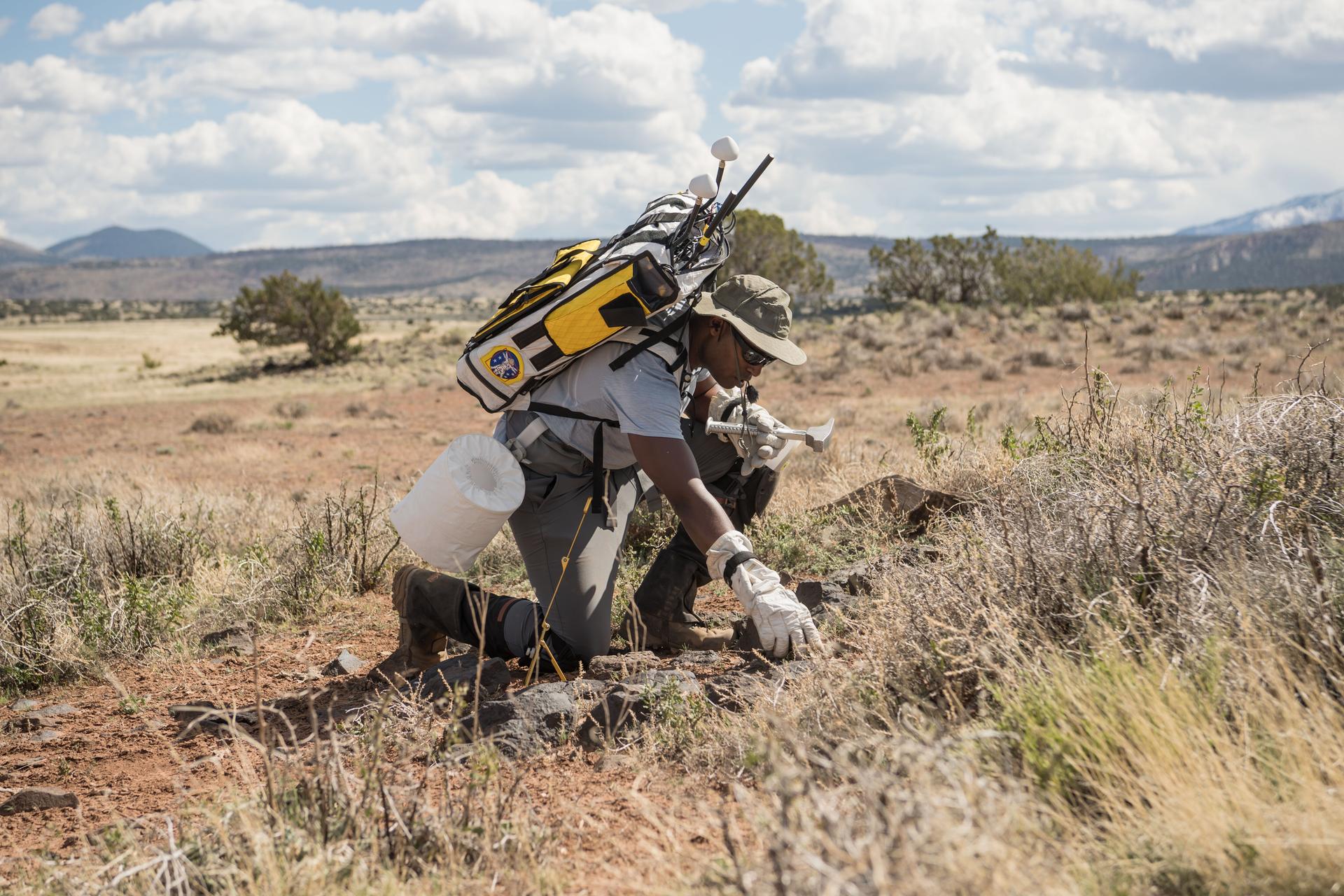
Volunteers will live and work inside isolated, confined habitats designed to simulate the months-long flights to and from a planetary surface, plus the surface operations in between. On the "surface," the work gets more tactile: NASA says participants will carry out mock Mars walks and rover traverses, the kind of extravehicular and mobility tasks that a real crew would perform once it arrived.
The mission is scheduled to start no earlier than August 2027 and to run for approximately one year. Everything takes place at Johnson Space Center. Throughout, the crew operates under conditions NASA expects during actual crewed Moon and Mars missions — which, in an analog context, is code for restricted communications, limited resources, a fixed and windowless environment, and a schedule that does not care how anyone is feeling on a given day.
This is not a lark you sign up for on a whim. NASA requires candidates to meet physical and educational criteria, submit to a multi-day selection process, and pass the agency's physical and psychological assessments. Applications go through the analog studies portal at analogstudies.jsc.nasa.gov/mmea.
Why NASA runs fake missions at all
If the destination is imaginary, why bother? Because the hardest problems in long-duration spaceflight are not all rocket problems. A crew bound for Mars will spend the better part of a year in transit each way, followed by an extended surface stay, largely cut off from real-time help. How people hold up under that — physically, cognitively, and socially — is something you cannot fully model on a spreadsheet. You have to watch real humans do it.
Analogs let NASA collect that data cheaply and safely on Earth, without risking a crew or burning a launch. They are part of the agency's broader preparation for extended stays on the Moon and, eventually, the first crewed mission to Mars. By merging HERA and CHAPEA, NASA gets to study the handoffs between mission phases — the moment a crew shifts from the tedium of transit to the physical demands of surface work, and back again — instead of pretending those transitions happen in a vacuum between separate studies.
Why It Matters
A crewed Mars mission is still years away, and the technical obstacles — propulsion, life support, radiation, landing heavy payloads — get most of the attention. But the human factors are just as capable of ending a mission, and they are far harder to bolt on late. An integrated yearlong analog is NASA acknowledging that you cannot certify a crew for Mars by testing them in fragments. If the agency is serious about sustained lunar presence and a first Mars crew, it needs ground-truth data on how ordinary, screened, healthy people cope with the full-length, full-arc experience of going and coming back. This mission is an attempt to generate exactly that — and the fact that the call is open now, for a start no earlier than August 2027, is a small but concrete signal of how NASA is sequencing its human-exploration groundwork.
For prospective volunteers, the deal is blunt: a year of confinement, mock spacewalks, simulated rover drives, and a battery of assessments, all in service of missions they will never personally fly. For NASA, it is a rehearsal it can afford to get wrong on Earth so it does not get wrong on Mars.
