
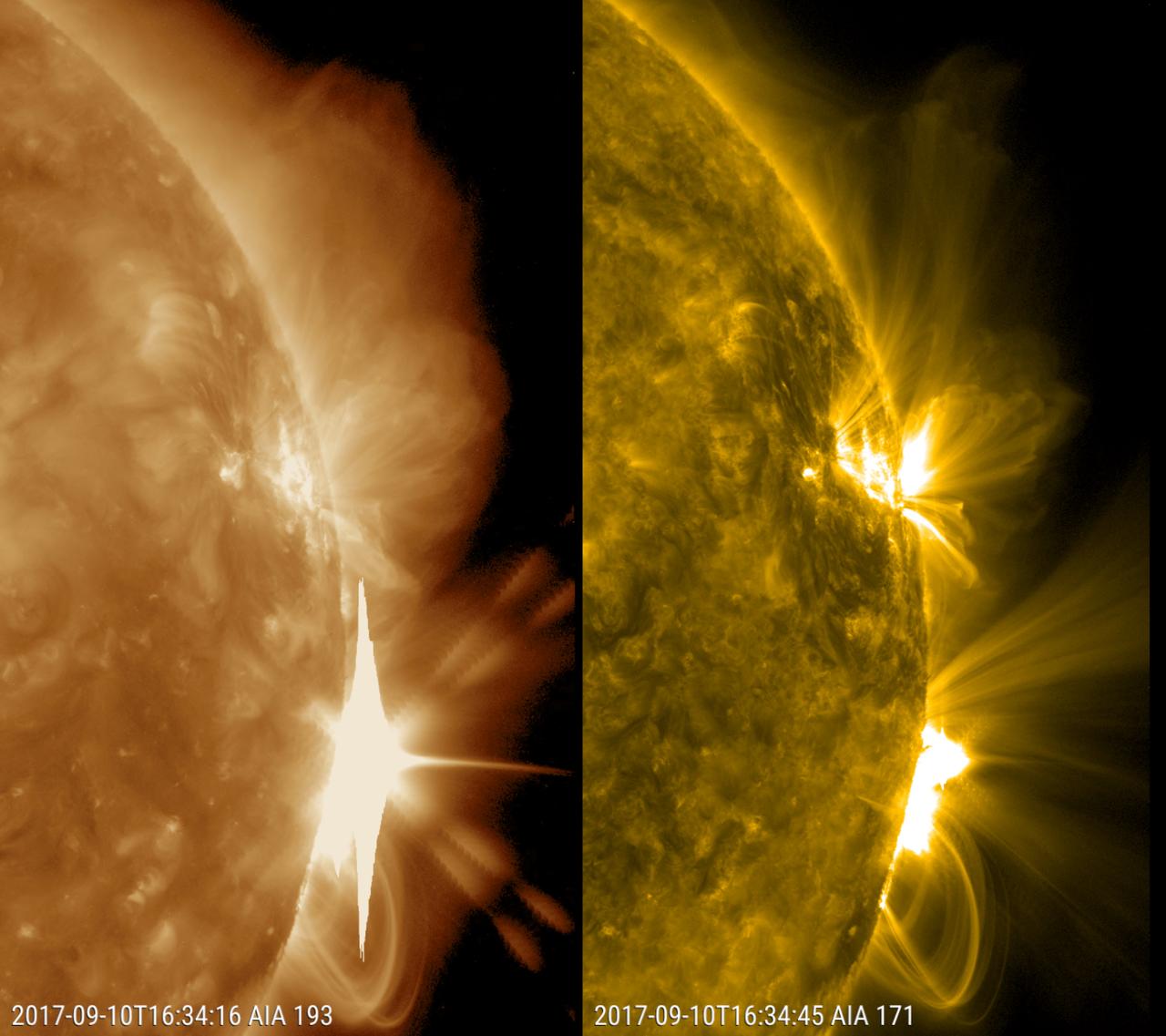
The House Science, Space, and Technology Committee had scheduled a full committee hearing for the morning of July 1, 2026, in Room 2318 of the Rayburn House Office Building, to press NASA and NOAA officials on just how much the country still doesn't know about the Sun's ability to disrupt daily life on Earth. The hearing never gaveled in. On June 30, the committee announced the session was postponed after the House altered its floor voting schedule and would not be in session the following day. No new date had been set as of this writing.
The postponement didn't make the topic any less pointed. Days earlier, on June 23, 2026, NOAA had already issued a public alert warning of a large sunspot group rotating into Earth-facing position, with a G3 geomagnetic storm watch in effect before the hearing was even scheduled to start. The question the committee intended to ask — whether America's space weather forecasting and research infrastructure can keep pace with an active Sun — remained a live, unresolved one even without witnesses in the room.
Why a hearing, and why now
Solar Cycle 25 — the current roughly 11-year cycle of the Sun's magnetic activity — has been running hotter than many forecasters initially predicted, and 2026 is landing squarely in its active window. That matters to Congress for reasons that have nothing to do with astrophysics for its own sake: geomagnetic storms driven by solar eruptions can degrade GPS accuracy, scramble high-frequency radio communications used by aviation and shipping, and, in severe cases, induce currents in long-distance power transmission lines that damage transformers and trigger blackouts.
The hearing, titled "Weathering the Solar Storm: Advancing America's Space Weather Capabilities," was set to draw testimony from four witnesses sitting at the intersection of research and real-world forecasting: Dr. Joseph Westlake, director of NASA's Heliophysics Division; Ken Graham, director of the National Weather Service at NOAA; Dr. Geoffrey Crowley, co-founder of the American Commercial Space Weather Association; and Dr. Ian J. Cohen, group supervisor for solar and space physics at Johns Hopkins Applied Physics Laboratory.
Space policy trackers had flagged the hearing well before its scheduled date. Spacepolicyonline.com's weekly roundup of space policy news listed the hearing alongside two other major items expected during the week of June 28 to July 4, 2026 — House floor consideration of the FY2027 NDAA and a Pegasus XL launch meant to reboost NASA's Swift Observatory. That the hearing was pulled from the schedule at the last minute, even as NOAA's Space Weather Prediction Center was actively managing a live storm watch, underscored how much of the government's space weather response runs on a separate clock from Congress's own oversight calendar.
What the witnesses were prepared to bring to the table
The witness list, had the hearing proceeded, split roughly along institutional lines. Westlake, representing NASA's Heliophysics Division, speaks for the agency that builds and flies the spacecraft — from solar observatories to magnetospheric missions — that detect eruptions on the Sun and track how they propagate through interplanetary space. Graham, as director of the National Weather Service, oversees NOAA's operational side, including the Space Weather Prediction Center, the U.S. government's official forecasting and alerting authority for geomagnetic storms, solar radiation storms, and radio blackouts.
The other two invited witnesses represented perspectives outside the federal bureaucracy. Crowley, co-founder of the American Commercial Space Weather Association, was positioned to give voice to the private-sector forecasting and data companies that have grown up around the space weather problem — firms that argue they can supplement, and sometimes outpace, government capability if given the right data-sharing arrangements and contracts. Cohen, from Johns Hopkins Applied Physics Laboratory's solar and space physics group, was set to bring an applied-research vantage point, the kind of institution that builds instruments flown on NASA missions and translates raw heliophysics data into usable warnings.
Taken together, the witness list reflects a debate that has simmered in space weather policy circles for years: how much of the nation's forecasting infrastructure should live inside government agencies, how much should be outsourced or supplemented by commercial providers, and whether current satellite and ground-based monitoring assets are aging out faster than replacements are coming online. The postponement means that debate will have to wait for a rescheduled date to play out in public testimony.
Why It Matters
Space weather isn't an abstract scientific curiosity to the committee that scheduled this hearing — it's an infrastructure vulnerability with a dollar sign attached. Geomagnetic storms of the kind NOAA was already watching for in late June can induce ground currents strong enough to trip transformers on the high-voltage transmission lines that keep regional power grids stable. The same storms distort the ionosphere in ways that degrade GPS precision used by agriculture, aviation, and financial trading systems, and they can knock out high-frequency radio links that airlines and militaries rely on for polar routes and remote operations.
That NOAA had already posted a public storm watch days before the committee was even scheduled to gavel in is a reminder that Solar Cycle 25's active phase isn't a future risk lawmakers can debate at leisure — it's a present operational reality NOAA forecasters were managing in real time. The postponement of the hearing itself, triggered by nothing more dramatic than a change in the House's voting calendar, is its own small case study in how oversight of fast-moving technical risks can get bumped by the ordinary friction of legislative scheduling. For a country whose grid operators, GPS-dependent industries, and satellite operators all sit exposed to whatever the Sun does next, the underlying question Congress still needs to ask — whether NASA's research pipeline and NOAA's forecasting operations are resourced and modernized enough to keep pace with an active solar cycle — remains open until lawmakers and witnesses actually get into the room.
