
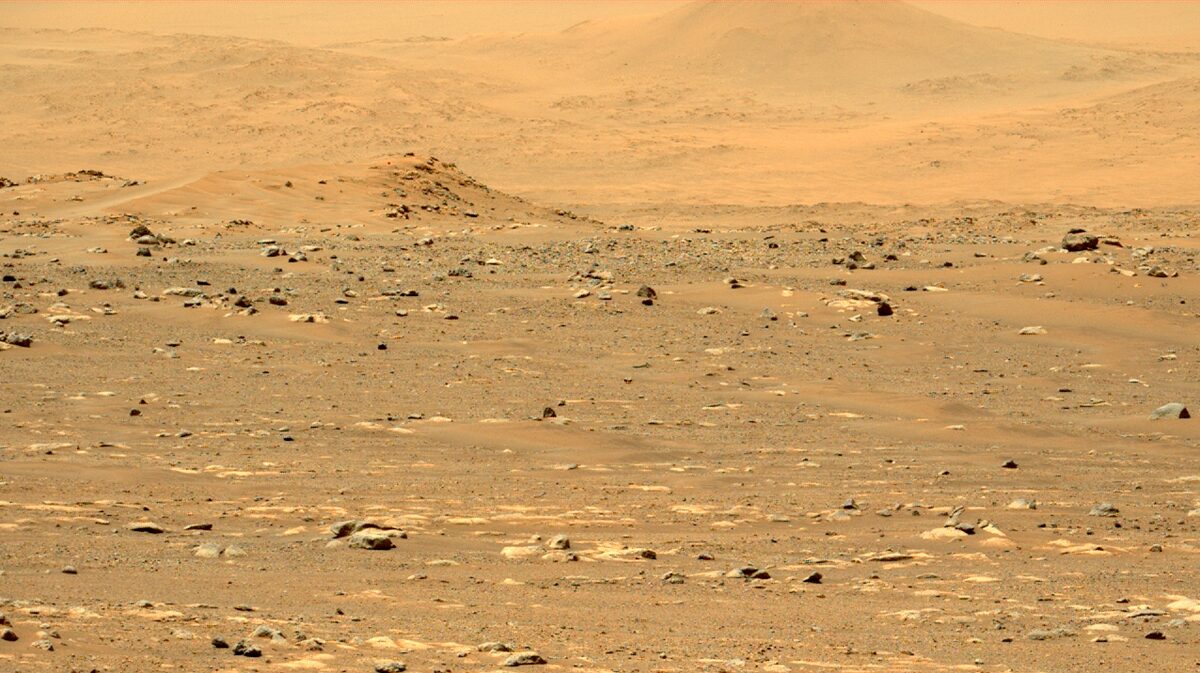
The river that once poured into Jezero crater is long gone, but it left behind the most scientifically valuable real estate on Mars: a 3.5-billion-year-old river delta, frozen in place, preserving whatever chemistry was happening at the boundary between a lake and its watershed at a time when Mars might have been warm, wet, and possibly alive. NASA's Perseverance rover has been working through this deposit since 2022, and what it is finding is either the most exciting set of candidate biosignatures ever collected on another world, or a remarkable example of how geology can impersonate biology so convincingly that only a geochemistry laboratory on Earth will settle the question.
The mission's nominal science goal was to identify and cache rock samples from diverse geological units in Jezero for eventual return to Earth. What Perseverance has done in practice is rewrite the chapter on Martian habitability. The crater floor contains olivine-rich igneous rocks that have been extensively altered by liquid water — serpentinization chemistry that, on Earth, supports chemolithotrophic microbes. The delta contains sedimentary rocks with carbonates, sulfates, and fine-grained silica — exactly the mineral assemblage that, on Earth, is associated with lakes that harbor microbial mats and preserve their traces for geological time. And the SHERLOC Raman spectrometer aboard the rover has detected organic molecules in multiple samples, including complex aromatic compounds.
Cheyava Falls
In July 2024, Perseverance drilled into a rock outcrop named Cheyava Falls, in the upper fan of the Jezero delta. The abraded surface revealed something that immediately drew the full attention of the science team: irregular spots, pale-ringed and reddish-dark at center, roughly half a centimeter across, distributed across the rock surface in a pattern that looked, in the words of one scientist, like a leopard skin. SHERLOC found elevated organic matter associated with the spots. The PIXL X-ray spectrometer found iron-phosphate minerals in and around them — minerals that, on Earth, form in association with microbial activity in carbonate-rich hydrothermal environments.
The team is careful in its language, and appropriately so. The leopard spots could be explained by non-biological processes: chemical gradients during diagenesis, fluid flow through fractures, mineral segregation during carbonate precipitation. The organic molecules could have arrived as meteoritic carbon rather than forming in situ. The iron minerals could reflect abiotic redox chemistry. No single observation at Cheyava Falls demands a biological explanation. But the combination of multiple independent lines of evidence in one rock — organics, iron redox, structured morphology, carbonate-hosted chemistry — represents the most compelling set of candidate biosignatures ever found on another planet.
Why the samples need to come home
The instruments on Perseverance are extraordinary for a rover, but they are fundamentally limited by the constraints of remote chemistry. SHERLOC identifies molecular bond types by Raman spectroscopy but cannot resolve molecular structure at the level required to distinguish abiotic organics from biogenic ones. PIXL maps elemental composition with submillimeter resolution but cannot isotopically fractionate sulfur or carbon — the most reliable biosignature tests available in Earth laboratories. The carbon isotope ratio of organic matter (13C/12C) reliably distinguishes biologically fractionated carbon from abiotic sources across all studied Earth environments. That measurement requires a laboratory mass spectrometer.
The Mars Sample Return architecture — the fetch rover, the ascent vehicle, the Earth-return orbiter — is the most complex interplanetary mission ever designed, and it is currently under significant budget pressure. But the scientific logic is unchanged: the samples in Perseverance's cache represent 43 sealed tubes containing materials that cannot be answered with current orbital or landed capabilities. Cheyava Falls core material is among them.
There is no guarantee that the answer will be yes. Mars could have been habitable and never inhabited — a planet that built all the chemical infrastructure for life without life ever starting. That would be a profound result in its own right. But if the answer is yes, if the leopard spots and the organics and the iron redox record a biology that existed 3.5 billion years ago, the implications reach well beyond Mars: to the prevalence of life in the galaxy, to the chemistry of the early solar system, to every future mission sent anywhere that liquid water once existed. These questions are exactly why the samples need to come home.
