
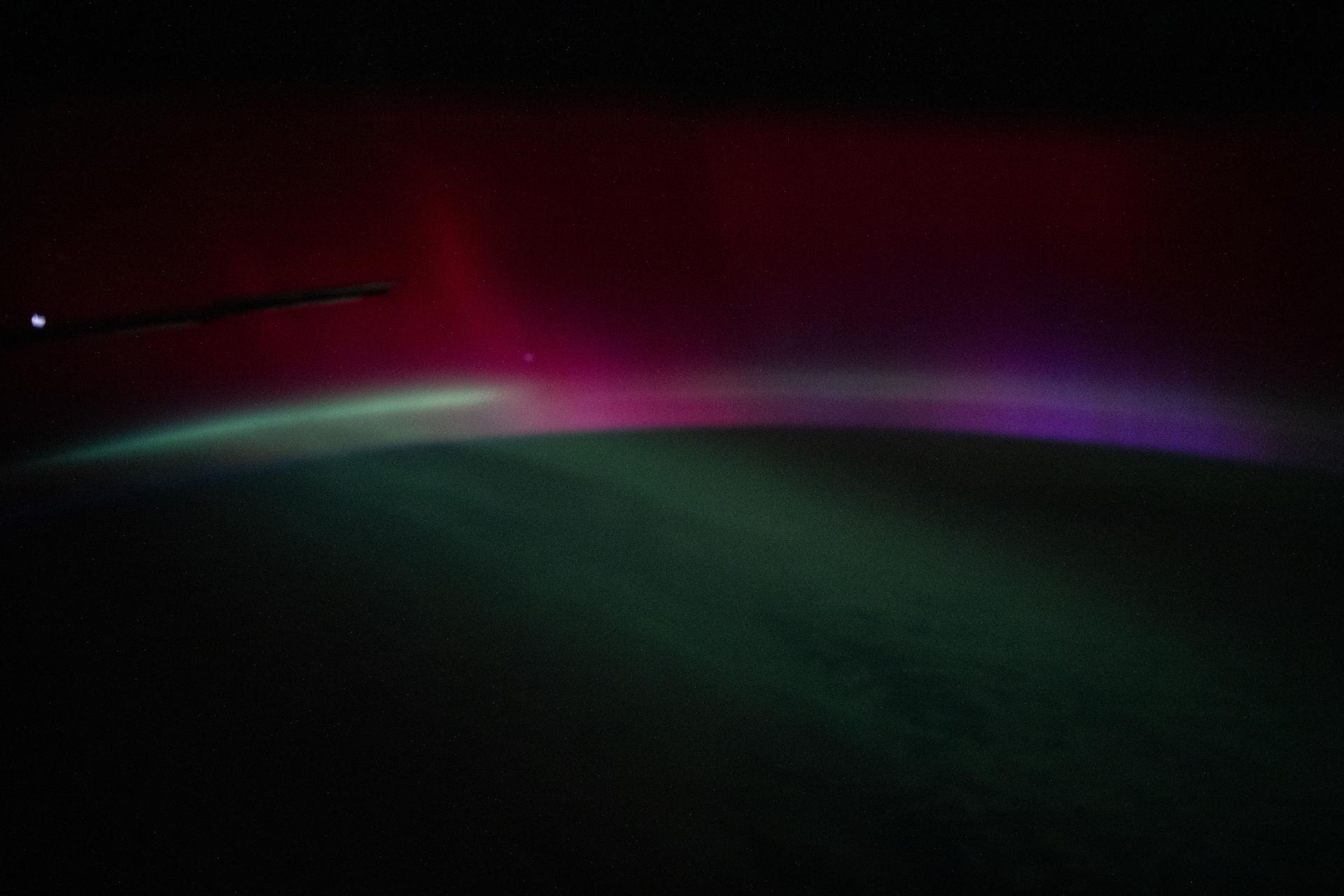
Skywatchers at mid and high latitudes have a reason to check the forecast twice this week. On Sept. 23, 2026, at 1230 UTC, NOAA's Space Weather Prediction Center (SWPC) issued a three-day outlook calling for G1 (minor) geomagnetic storm conditions on Sept. 24, with the greatest expected three-hour Kp index reaching 5.33 — enough to nudge the aurora oval down from its usual polar perch. The trigger isn't a flare or a coronal mass ejection. It's something more mundane and more reliable: a fast stream of solar wind pouring out of a hole in the sun's corona, arriving one day after the autumnal equinox.
That timing is not a coincidence forecasters take lightly. Auroras are historically more likely to appear around the equinoxes, when Earth's rotational tilt lines up in a way that makes the planet's magnetic field more receptive to the solar wind's push. Combine that seasonal edge with an incoming high-speed stream, and SWPC's modest G1 rating — the lowest rung on NOAA's five-step geomagnetic storm scale — starts to look more interesting than the label suggests.
What's actually happening on the sun
Coronal holes are cooler, less dense patches in the sun's outer atmosphere where the magnetic field opens up and lets solar wind escape in a steady, fast-moving stream rather than the slower background flow. When one of these streams rotates into Earth's path, it doesn't arrive with the drama of a coronal mass ejection — there's no towering plasma cloud, no dramatic launch to track across a coronagraph image. It just shows up, compresses the magnetosphere, and rattles the geomagnetic field enough to light up the sky at high latitudes.
SWPC's Sept. 23 forecast pairs that coronal-hole high-speed-stream (CH HSS) effect with a slight chance of R1-R2 radio blackouts through Sept. 25, and no S1-or-greater solar radiation storms are expected. In other words: modest space weather, but space weather nonetheless, and enough to be worth watching for anyone north of the mid-latitudes with a clear night.
EarthSky's solar update, published the same day by C. Alex Young, Armando Caussade, and Raúl Cortés, echoes the G1 alert and notes the stream's effects could extend through Sept. 24-25. As of that report, Kp had held near zero — a reminder that SWPC's numbers are a forecast, not a live reading, and that geomagnetic activity can still under- or over-deliver relative to the outlook once the stream actually connects with Earth's field.
A sunspot that refused to stay quiet
The other thread running through this week's space weather is sunspot region AR4534, which forecasters have flagged as the region most likely to produce stronger flares. Its recent history explains why it's drawing attention. The sun went completely spotless on Sept. 18-19, 2026 — its first spotless day since Feb. 24, 2026 — and AR4534 was among the regions that broke that quiet stretch when it emerged near disk center shortly after.
According to reporting from Nature World News, sourced to EarthSky's daily solar reports and NOAA SWPC, AR4534 didn't waste time developing complexity. It built a beta-delta magnetic configuration — the kind of tangled, high-energy structure that tends to precede stronger flares — before settling back down to a simpler beta configuration. Even in its quieter state, it has kept producing: a B6.5 flare at 23:57 UTC on Sept. 21, a B6.6 at 03:09 UTC on Sept. 22, and, per EarthSky, a C2.4 flare at 17:20 UTC on Sept. 22, the strongest flare recorded in the 24 hours before that report. None of these are large by flare standards — B- and C-class events sit at the low end of NOAA's scale — but the region's rapid magnetic evolution earned it a forecast for a slight chance of M-class activity going forward.
For context on how busy the sun's Earth-facing disk actually is right now: EarthSky counted eight numbered active regions visible as of Sept. 23, including newly designated AR4538 through AR4540. Despite that activity, no Earth-directed coronal mass ejections had been detected, which is why the storm forecast rests entirely on the coronal-hole wind stream rather than an eruptive event.
Why It Matters
A G1 storm is the mildest category NOAA tracks, and on its own it wouldn't normally make news — minor geomagnetic disturbances happen dozens of times a year. What makes this one worth flagging is the convergence of three ordinary but reinforcing factors: a coronal hole stream arriving on schedule, a seasonal geometry that favors aurora visibility, and an active region that's already shown it can produce flares on short notice. None of these individually guarantees a light show, and SWPC's own numbers show Kp readings can sit near zero even after a storm watch is issued. But for observers at higher latitudes, a G1 watch timed to the equinox is about as good an excuse as the current solar cycle offers to step outside after dark and look north. It's also a useful reminder of how NOAA's forecasting actually works day to day: most space weather isn't dramatic flares captured in coronagraph footage, it's quieter structural features like coronal holes that show up reliably, get modeled days in advance, and shape whether an ordinary Wednesday night sky does something unusual.
