
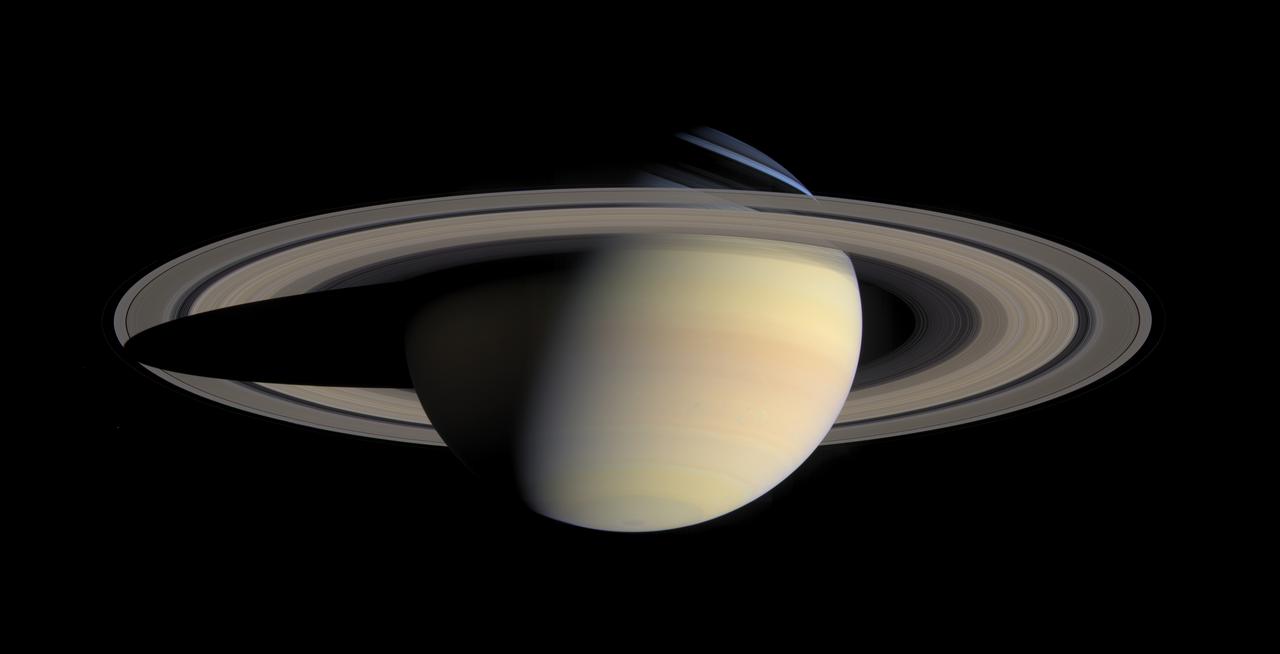
The coming weeks offer a lopsided pair of observing targets. One planet you can find without any equipment. The other sits about five times fainter than the dimmest stars visible under dark skies. Both reach opposition within nine days of each other: Neptune on the night of Sept. 25-26, and Saturn on Oct. 4. According to Star Walk, opposition is the best time to observe a planet, so this is the window for both.
This is a forward-looking observing guide, not a breaking event. Nothing here has happened yet, and all the timings below come from the sources listed at the end.
Neptune first: the hard target
Neptune's opposition falls at about 01:28 GMT on Sept. 26, per Star Walk. That is 21:28 EDT on Sept. 25. EarthSky gives the moment as 2 UTC on Sept. 26, or 9 p.m. CDT on Sept. 25. The two sources round the time slightly differently, but they agree on the evening of Sept. 25 for North American observers. Star Walk also lists this as Neptune's closest approach of 2026.
The numbers explain why this is a job for optics. EarthSky puts Neptune at magnitude +7.8. NASA's September skywatching guide rounds that to "about magnitude 8." We use +7.8 here, attributed to EarthSky and Star Walk. Either way, the planet is well beyond naked-eye reach. EarthSky says it needs good binoculars or a telescope. It is 28.9 astronomical units away, which EarthSky translates as 240 light-minutes. Its disk spans just 2.4 arcseconds.
Neptune sits in Pisces. If you want to see it as a disk rather than a point of light, EarthSky says to plan on about 200x magnification. With a medium telescope you may also pick out Triton, Neptune's moon. Realistically, though, a first Neptune sighting for most observers will be a faint point identified by its position against a star chart. Bring a chart and confirm the field the night before, because a planet this dim is easy to lose among the background stars.
The Harvest Moon sets the scene
NASA's guide points to the same evening for a helpful landmark. On Sept. 26, the Harvest Moon, Saturn and Neptune form what NASA calls "a wide triangle in the sky." Moonlight will likely make a faint target like Neptune harder to spot on that particular night, but the triangle gives you a way to orient yourself. Find the Moon, find naked-eye Saturn, and Neptune lies in that same general part of the sky.
If moonlight is a problem, note EarthSky's point that Neptune remains visible in good binoculars or a telescope through February 2027. There is no rush to catch it on opposition night itself. The planet will not vanish from the evening sky when the Moon moves on.
Saturn: the easy one
Saturn's opposition arrives on Oct. 4 at 12:21 GMT (08:21 EDT), according to Star Walk. EarthSky gives about 12 UTC, or 7 a.m. CDT. Because that moment falls in the morning hours for North America, you will not be looking at the planet at that exact instant. EarthSky says Saturn is in an excellent place to observe from late August through mid-October, so the nights around Oct. 4 are all good ones.
The figures are far friendlier than Neptune's. Saturn shines at magnitude 0.3, the brightest it gets in 2026, per EarthSky. It sits in Cetus, 8.43 AU away, about 784 million miles (1.26 billion km). Its disk is 19.7 arcseconds across, roughly eight times Neptune's. NASA and Star Walk both describe it as visible to the naked eye. Star Walk adds that a small 4-inch telescope should show the rings, and that Titan, Saturn's largest moon, is visible in a telescope.
What the rings are doing
The rings are the main attraction, and they are in an unusual phase. EarthSky reports a ring tilt of -7.5 degrees south relative to viewers on Earth. Earth passed through the ring plane in March 2025, an event EarthSky says happens every 13 to 15 years. That means the rings are being seen at a shallow angle this year, a much thinner presentation than a wide-open ring system. Even so, a small telescope will show them.
Why It Matters
Oppositions are calendar anchors for casual observers. They tell you when a planet is at its best for the year, and this pair is unusually useful for a few reasons.
First, Neptune is one of the hardest planets to observe, and opposition is the most favorable time to try. Getting a confirmed look at the most distant major planet, even as a dim point, is a small milestone many amateur observers never attempt. The Sept. 26 date, with its Moon-Saturn-Neptune triangle, gives you a reference for finding it.
Second, the two planets work as a pair. Saturn is a bright, naked-eye anchor and a good telescope target that rewards even modest equipment. Neptune is the stretch goal. Observers can use the easy target to build confidence and practice star-hopping, then move to the harder one. Because Saturn sits near Neptune in the triangle NASA describes, one evening's observing can cover both.
Third, the rings offer a real, if slow, astronomical story. A ring-plane crossing that recurs every 13 to 15 years is not something you can revisit next month. Watching the rings' tilt change in the years after the March 2025 crossing gives a sense of the longer rhythms of the outer solar system.
Planning your nights
- Sept. 22: The equinox, when NASA notes day and night are close to equal.
- Sept. 25-26: Neptune at opposition (about 01:28 to 02 UTC on Sept. 26). The Harvest Moon, Saturn and Neptune form a wide triangle on Sept. 26.
- Oct. 4: Saturn at opposition, 12:21 GMT. Observe in the evenings around this date.
NASA also lists a few nearer-term events. Sept. 14-20, the Moon guides observers to Antares and the Teapot, with the center of the Milky Way in that direction under an especially dark sky. Venus peaks on Sept. 18 in its evening appearance, and Sept. 19 is International Observe the Moon Night. This guide focuses on the outer planets.
For Neptune, bring binoculars or a telescope, a chart, and patience. For Saturn, bring your eyes first and a small telescope second.
