
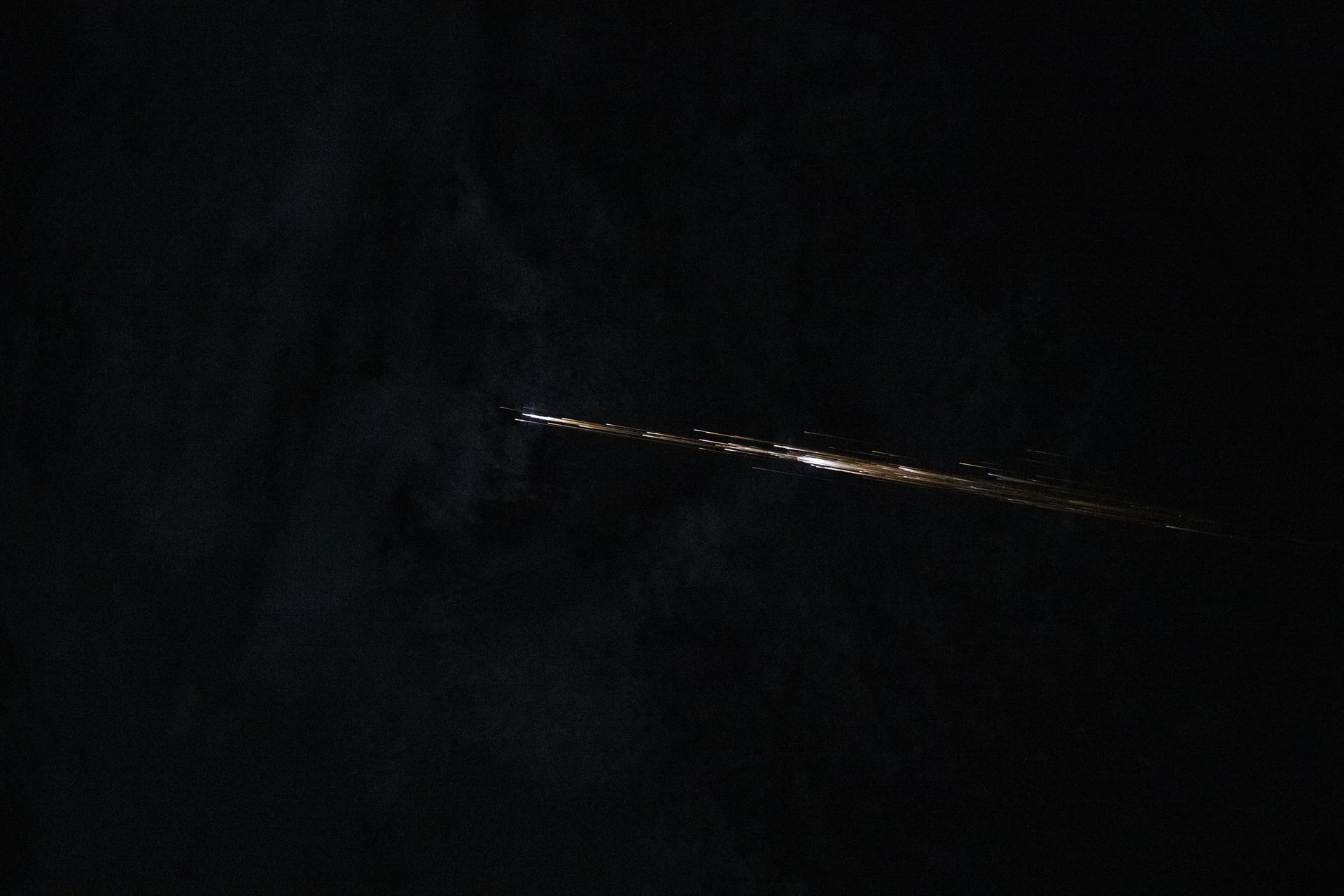
Sometime around October 5, a satellite that stopped working decades ago came apart again. Meteor 2-7, a Soviet spacecraft launched in 1981, shed what LeoLabs described as "tens of fragments." The company picked up the debris as it passed over its tracking site in Western Australia. The satellite orbits at about 855 kilometers (530 miles). According to Space.com, Jim Shell said that is the altitude where debris density is at its highest.
This was not Meteor 2-7's first breakup. The spacecraft also fragmented in March 2004. The new event came a few weeks after the European Space Agency released its annual assessment of the orbital environment. That report, published September 14, carries a worrying message. In it, the agency says low Earth orbit is on a path toward runaway growth in objects and collisions unless operators change how they work.
What ESA's report actually says
The ESA Space Environment Report 2026 covers data through the end of 2025, and 2025 was a very busy year. ESA counts more than 300 launches and more than 4,000 new payloads placed in orbit. Averaged over the year, that is about ten payloads launched per day. More than three intact objects reentered the atmosphere per day.
The report has three headline findings.
A new casualty-risk metric. Most debris reports focus on what happens in orbit. This edition also measures risk on the ground, with a new metric for the casualty risk posed by objects that reenter. With several intact objects coming down every day, the question of what survives reentry, and where it lands, is no longer a niche concern.
Projections that do not improve with a shorter horizon. ESA's long-term models show runaway growth in both the number of objects and the number of collisions. The agency also shortened the projection horizon from 200 years to 100 years, and the runaway growth still appears. Long-range models often get blamed for exaggerating risk by compounding small effects over centuries. Here, the bad result holds even on the shorter timescale.
A health index that dropped sharply in a single year. ESA's Space Environment Health Index, its overall measure of orbital sustainability, got worse by an order of magnitude during 2025.
The report's conclusions are direct. ESA says active debris removal is required, meaning some of the junk already in orbit must be physically taken out. It also points to the transition from a 25-year to a 5-year low Earth orbit disposal target as a positive shift toward shorter orbital lifetimes. Under that target, satellites are removed from orbit much sooner after their missions end, rather than being left to decay slowly over a quarter century.
Counting what's up there
On October 16, EarthSky revisited the state of LEO, using figures from OrbitalRadar as of October 2026. The numbers:
- More than 31,000 tracked objects in low Earth orbit
- More than 18,600 payloads
- More than 15,800 working satellites
- More than 10,000 Starlink satellites
Two things stand out. First, roughly 2,800 of the payloads counted are not working. Second, a single constellation accounts for most of the working satellites. EarthSky's coverage included an interview with space hazards expert Jonathan McDowell and noted that LeoLabs had detected the October 5 breakup near Meteor 2-7.
A longer-term comparison reported by Space.com gives a sense of the trend. ESA tracked about 16,000 pieces of debris in 2005. In 2026 it tracks more than 44,000. That is nearly a threefold increase in about two decades.
Not an isolated event
Space.com's headline called the Meteor 2-7 breakup "part of a worrying trend," and the recent record supports that. The new fragmentation followed three others:
- the breakup of USA 32 in September 2026
- the fragmentation of a Chinese rocket body in late August 2026
- a Starlink fragmentation just over four months earlier
These events involve different countries, different decades, and different kinds of hardware: an old military satellite, a spent upper stage, and a modern broadband spacecraft. What they share is that each one added new pieces to an environment ESA already describes as increasingly crowded.
A breakup at 855 km is especially troublesome. According to Shell's comments to Space.com, this is the band where debris spatial density is highest. Each new fragment raises the chance of another collision, and each collision makes more fragments. ESA's runaway-growth projections model exactly that feedback loop.
Meteor 2-7 has now broken apart twice, decades after it stopped operating. It shows that a dead satellite can keep causing problems long after it has stopped working.
Why It Matters
ESA's report and the recent run of breakups point to the same conclusion. ESA says the adoption of debris-mitigation measures is rising but needs to be faster, more consistent and more reliable, and the remaining options are getting more demanding.
The move from a 25-year to a 5-year disposal target affects how satellites are operated, since they must be taken out of orbit sooner after their missions end. ESA's call for active debris removal goes further. It says that preventing new debris is no longer enough and that active debris removal must become part of the solution. Meteor 2-7 is an inactive satellite in a crowded altitude band that has broken up again, which is the kind of object such removal would target.
The new casualty-risk metric widens the issue beyond satellite operators. With more than three intact objects reentering per day, the debris problem also reaches the ground, though ESA stresses the probability of a casualty remains low compared with many everyday risks. An order-of-magnitude worsening of the Health Index in one year shows how quickly the long-term picture can change.
For everyone who depends on LEO, from weather forecasting to broadband to astronomy, the message is that the capacity of low Earth orbit is finite. ESA calls the orbital environment a finite resource, and its own projections show collisions and object counts growing in a runaway effect.
