
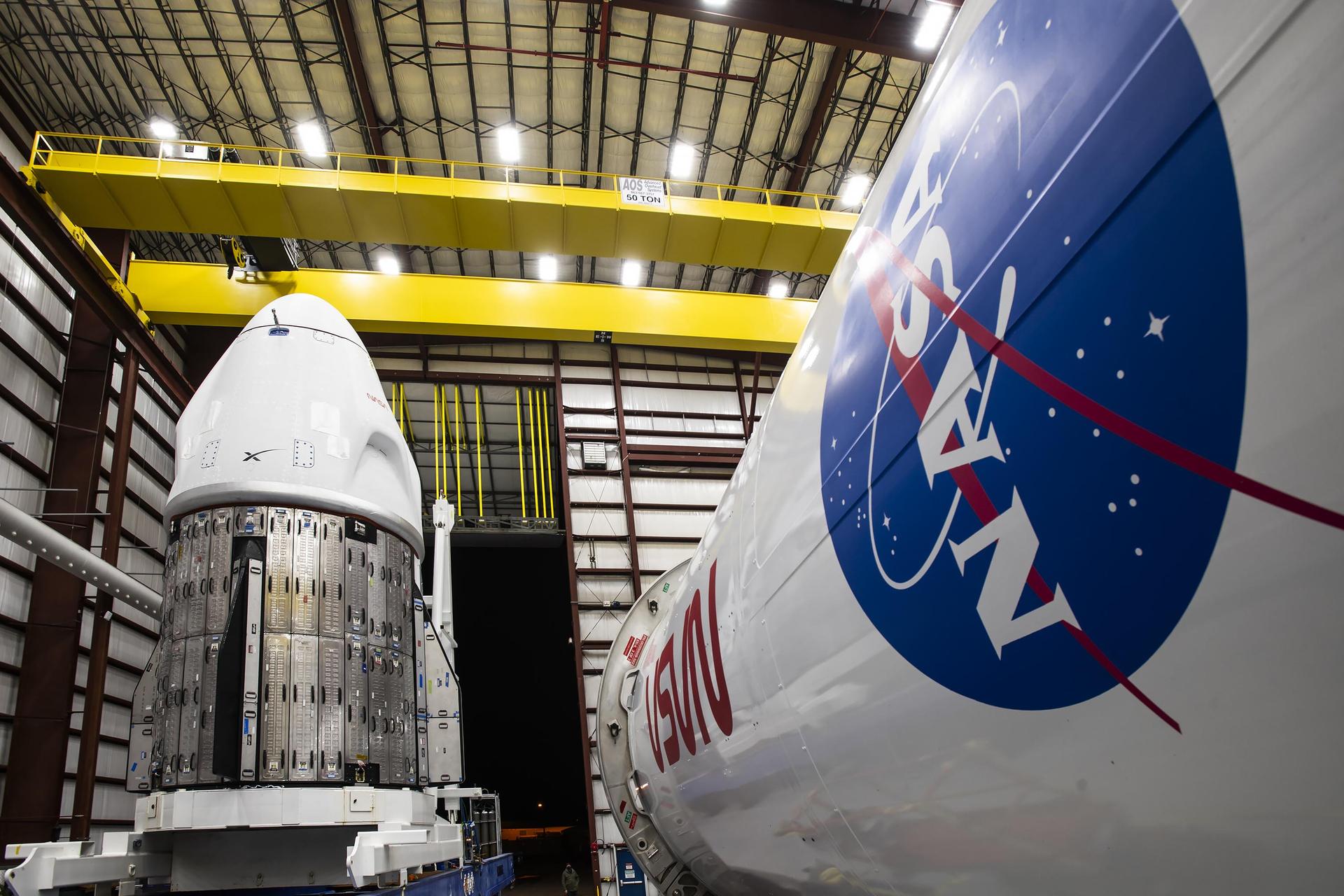
NASA has bought three more crew rotation flights from SpaceX. On Sept. 18, 2026, the agency announced a modification to SpaceX's Commercial Crew Transportation Capability (CCtCap) contract covering Crew-15, Crew-16 and Crew-17. The modification is worth $946 million, lifts SpaceX to 17 total missions under the contract, and pushes the total CCtCap value to $5.92 billion.
The award is not a surprise. NASA had issued a notice of intent in May 2026, and the agency's Sept. 18 announcement is the formal follow-through. But it does lock in a specific picture of how astronauts will reach the International Space Station through 2030, and it says something about how NASA describes that access.
What NASA Actually Bought
The contract is a firm-fixed-price, indefinite-delivery/indefinite-quantity (IDIQ) vehicle, and the modification adds three missions to it. According to NASA, the $946 million covers the whole service chain rather than just a launch: ground operations, launch, in-orbit operations, return and recovery, cargo transportation, and lifeboat capability while the spacecraft is docked to the station.
That last item is easy to overlook. A crew Dragon docked to the ISS is not just a ride that is parked; the lifeboat capability means it also serves as the station's emergency return option while it is there. The contract pays for that standby role as well as for the trip up and back.
The period of performance runs through 2030. NASA lists mission readiness dates in 2027 and 2028 for the three new flights. Dragon and Falcon 9 carry up to four astronauts per mission.
The Numbers, Laid Out
- Modification value: $946 million for Crew-15, Crew-16 and Crew-17.
- Total SpaceX missions under CCtCap: 17.
- Total CCtCap value for SpaceX: $5.92 billion.
- Period of performance: through 2030.
- Mission readiness dates: 2027 and 2028.
- Contract type: firm-fixed-price, IDIQ.
Those figures are consistent across NASA's announcement and the secondary coverage we reviewed. We are deliberately not quoting a per-seat price. None of the 2026 sources we reviewed gives one, and any figure floating around from earlier awards should not be read across to this one.
Where This Sits in the Commercial Crew Story
Commercial Crew is now more than a decade old. NASA awarded CCtCap contracts to Boeing and SpaceX in 2014, and SpaceX received crew certification in November 2020. The contract has since grown by successive modifications, and this one is the latest.
The station is not idle in the meantime. Crew-12 is currently in orbit, docked at the ISS. The three flights just ordered carry later mission numbers than Crew-12, with readiness dates in 2027 and 2028.
Why It Matters
The practical significance is continuity. Crew rotation depends on a steady supply of crew vehicles, and an order like this one puts Crew-15 through Crew-17 under contract ahead of their 2027 and 2028 readiness dates, inside a performance period that runs through 2030.
The second point is the framing NASA chose. The agency says the award keeps ISS access with "two unique commercial crew industry partners." Boeing was one of the two original 2014 awardees. The wording matters because it presents this purchase as part of a two-partner arrangement and not simply as a bet on one company. The award itself, though, is entirely SpaceX's, and it takes the company's total to 17 missions and $5.92 billion. One investor-focused outlet read the deal as underscoring NASA's continued reliance on Dragon through 2030, which is a fair description of the practical result even if it is not NASA's own phrasing.
The third point is that the deal is not a closed door. NASA's announcement says the modification does not preclude the agency from seeking future contract modifications for additional transportation services, as needed, and The News International reports the same. In other words, NASA is leaving itself room to adjust its crew transportation purchases as circumstances change.
Common Questions
Is this a new contract? No. It is a modification to the existing CCtCap contract, which dates to the 2014 awards.
Did NASA signal this in advance? Yes. A notice of intent was issued in May 2026.
Does it cover only launch? No. It includes ground, launch, in-orbit, return and recovery operations, cargo transportation, and lifeboat capability while docked to the ISS.
Could NASA add more later? NASA's announcement says the modification does not preclude future contract modifications for additional transportation services, as needed.
When do the new flights happen? NASA lists mission readiness dates in 2027 and 2028, within a performance period that runs through 2030.
What to Watch
NASA's announcement gives readiness dates, not launch dates, and the difference matters. Readiness dates are not launch dates, and no specific launch dates have been announced for the three new flights. The near-term marker is Crew-12, which is in orbit now. Whether NASA uses the contract's flexibility to add more flights, and how it continues to describe its two commercial crew partners, will show how the arrangement plays out in practice.
Sources
- NASA Awards SpaceX Three Crew Flights to Space Station (NASA)
- SpaceX secures three new NASA crew flights: What to know (The News International)
- NASA Expands SpaceX (SPCX) Contract by $946M for Three Additional Missions (GuruFocus)
- SpaceX Lands 3 Additional NASA Crew Missions Under $946M Contract Modification (Stocktwits)
