
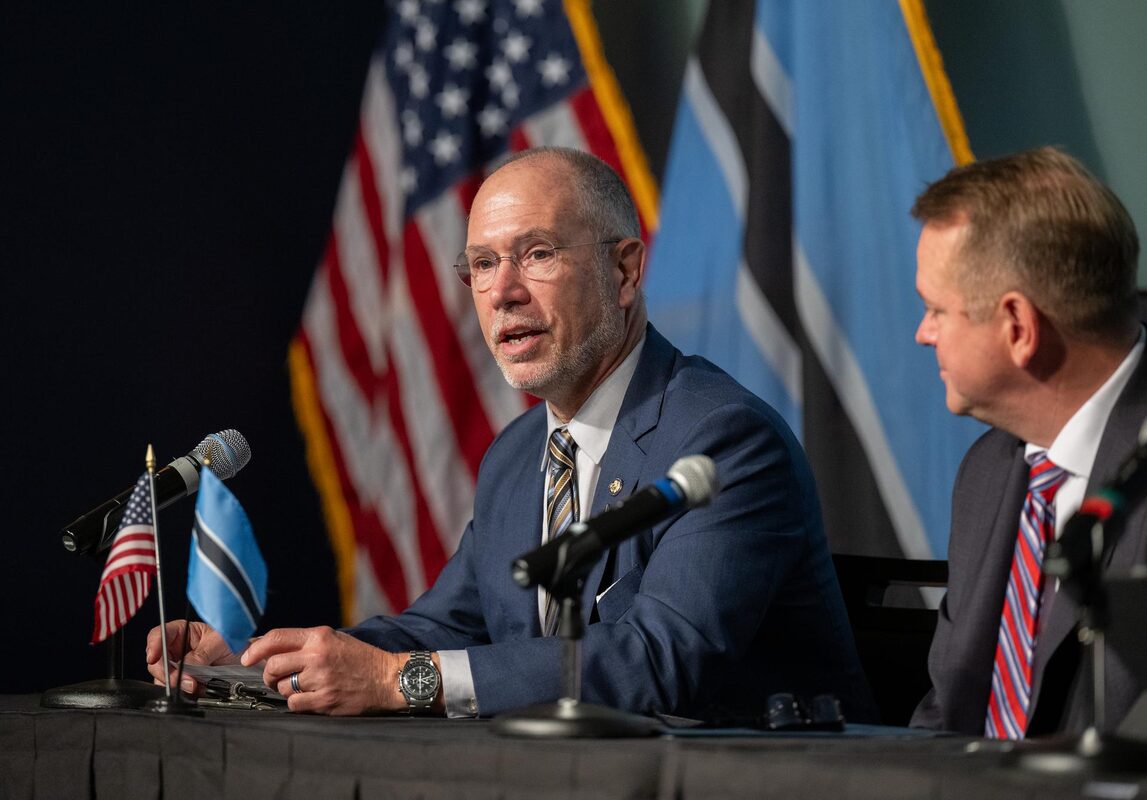
Vietnam did not sign the Artemis Accords at a space agency or a diplomatic summit. It signed them on the margins of a digital technology conference. On October 28, Minister of Science and Technology Vu Hai Quan signed the document at Vietnam International Digital Week (VIDW) in Ha Long, Quang Ninh province, and Vietnam became the 78th nation to join the framework.
US Ambassador Jennifer Wicks attended the ceremony. According to Tuoi Tre News, Quan received the Accords from her. NASA Deputy Administrator Matt Anderson addressed the ceremony through recorded remarks. VIDW 2026 runs from October 28 to 30 and has drawn about 500 domestic and foreign delegates. Holding the signing there placed space policy alongside the digital economy and national technology strategy, rather than in the realm of prestige diplomacy.
What Vietnam actually signed up for
NASA and the US State Department established the Artemis Accords in 2020 together with seven other founding nations. The Accords are a set of shared principles for civil space activity, not a treaty with an enforcement body. The State Department statement, relayed by Vietnam Government News, said Vietnam is joining a coalition dedicated to the safe, transparent and responsible exploration and use of space.
Signing does not commit Vietnam to fund a lunar lander or send astronauts anywhere. It is a political statement about which norms a country intends to follow as it builds its space activities, and about which partners it expects to work with. Seventy-eight signatories after six years shows how widely the framework has spread. It also means that each new name tells you more about the signatory's own priorities than about the Accords.
Vietnam's stated priorities
Quan was fairly specific about what Vietnam wants from space. Tuoi Tre News reported that he described space science and technology as a strategic sector for the country. He said Vietnam prioritises self-reliance in space technology and data, and he named concrete uses: resource management, environmental protection, climate change response and disaster prevention and control. He also said Vietnam aims to gradually develop a space economy ecosystem and improve its governance capacity for space activities.
That list is mostly about Earth, not the Moon, and it fits the hardware Vietnam is building. NASA's announcement notes that Vietnam is developing domestic satellite capabilities through the LOTUSat program, focusing on Earth observation, weather monitoring and disaster response, and that it inaugurated a National Space Center in Hanoi. Satellites that watch the ground align naturally with the applications Quan highlighted. The stress on "self-reliance in data" is worth noticing too. Countries that depend on imagery from foreign operators have reason to want their own sensors in orbit.
A relationship that already has a science track
The signing builds on scientific cooperation that already exists. NASA says it partnered earlier this year with the Vietnamese-German University to support the Soil Moisture Active Passive (SMAP) mission, which measures surface-soil water worldwide. That kind of collaboration sits close to the climate and disaster work Quan described.
Taken together, the record looks like a steady build-up rather than a sudden pivot: a university research partnership, a new national space center, a domestic Earth-observation satellite program, and now a formal commitment to a US-led set of space norms.
Why It Matters
Washington is presenting the signing mainly in terms of the bilateral relationship. The State Department statement says the move extends the US-Vietnam Comprehensive Strategic Partnership into a new frontier. It describes that partnership as built on more than 30 years of cooperation across defense, economic ties, law enforcement, war legacy issues and technology. Adding space to that list matters symbolically. It puts orbital activity alongside the most sensitive parts of the relationship and not just in the scientific-exchange column.
For Vietnam, the practical value probably lies in access and alignment. A country building its Earth-observation capability gains from closer ties to established space agencies, data-sharing partnerships like the SMAP collaboration, and a seat in a coalition that is shaping how civil space activity is governed. Quan's comments suggest Hanoi wants partnership and self-reliance together. It wants to work with others while building the domestic capacity to collect and control its own space data.
For the Accords, every new signatory adds weight to the claim that the framework is becoming the default set of norms for civil space. Vietnam joining says less about lunar ambitions than about how countries now view space. Increasingly it is infrastructure for the economy and the climate, and a strategic sector to plan for alongside digital technology. That is exactly where Vietnam chose to put its signature.
