
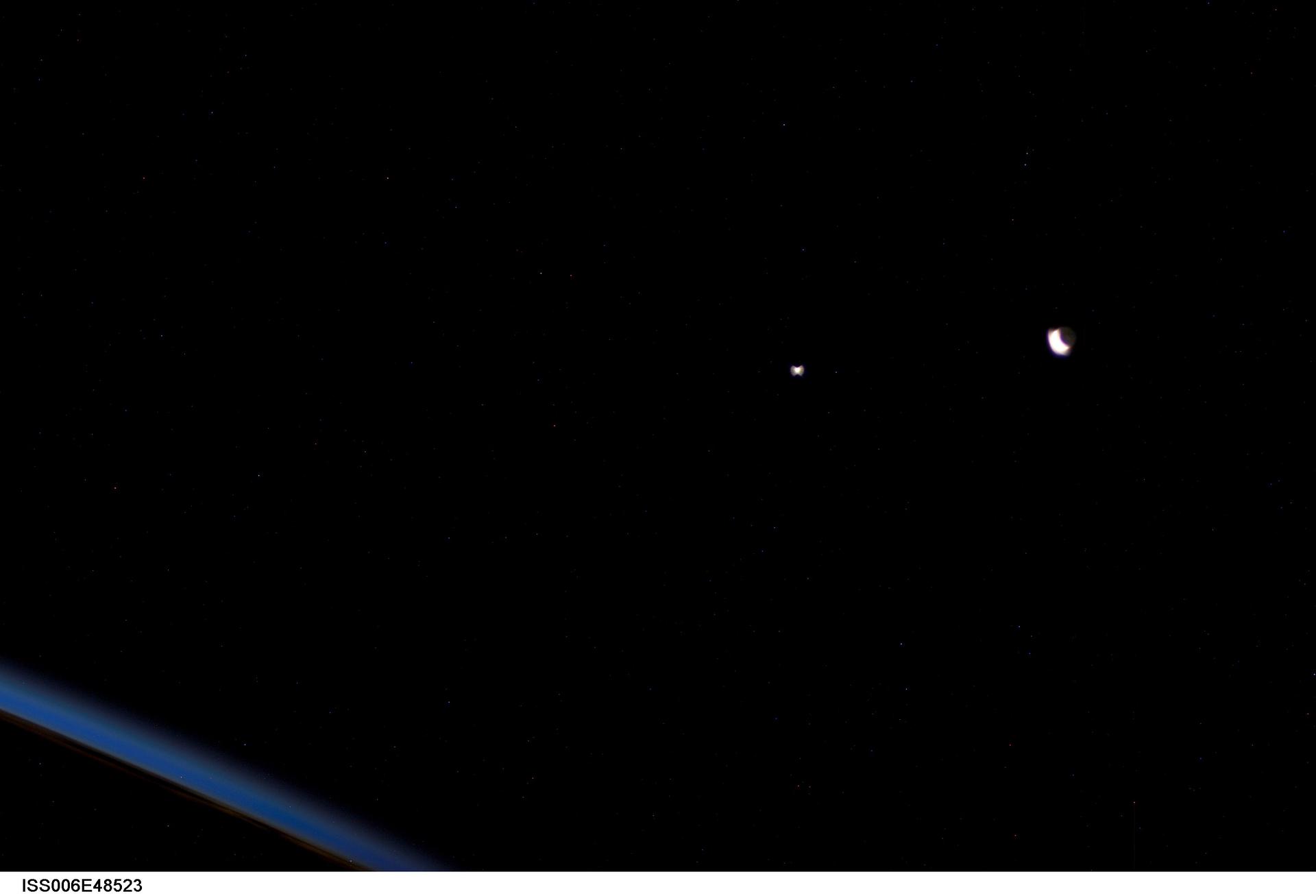
September doesn't have a single showpiece event so much as a running conversation between the Moon and the rest of the solar system. Nearly every week this month, the Moon parks itself next to something worth pointing a phone camera or a pair of binoculars at — Mars, Jupiter, Venus, Saturn, Neptune — while the background stars quietly swing the sky toward one of its best-known landmarks: the Sagittarius Teapot, aimed straight at the center of the Milky Way. NASA's monthly "What's Up" guide, released in early September, lays out the whole itinerary.
None of it requires a telescope to enjoy, and most of it doesn't even require getting up early. That's the appeal of a lunar-conjunction month: the Moon does the work of telling you where to look.
The month, event by event
The action starts almost immediately. On September 1, the Aurigid meteor shower peaks, though "peaks" is doing a lot of work here — NASA and outside forecasters put the rate at roughly six meteors an hour under ideal conditions, and a waning gibbous Moon will wash out all but the brightest streaks. It's a shower for the patient and the already-awake, not one worth setting an alarm for.
The Moon then goes on tour. It sits near Mars on September 6 and near Jupiter on September 8, both easy naked-eye conjunctions in the pre-dawn or evening sky depending on your location. It goes dark for New Moon on September 10 in the Americas (September 11 for observers in Europe, Africa, and Asia) — the month's best window for anything that needs a truly black sky, meteor showers and faint deep-sky objects included. A few days later, on September 14, the thin crescent Moon pairs up with Venus.
Mid-month belongs to Scorpius and Sagittarius. The Moon passes near Antares, the red supergiant marking the scorpion's heart, and then near the Sagittarius Teapot — an asterism whose "spout" and rising "steam" of stars happen to point directly at the galactic center. Under a dark sky, away from city lights, that steam is really the dense star clouds of the Milky Way's core, one of the better naked-eye arguments for driving out of town on a clear night.
Venus has been climbing the evening sky for weeks, and on September 18 it reaches peak evening brilliance — the point in its orbit where its brightness as seen from Earth is at a maximum, combining how much of its disk is illuminated with how close it is to us. It's already the brightest thing in the sky besides the Sun and Moon; on the 18th, it's about as good as it gets.
The seasons turn on September 22, the September equinox and the start of astronomical fall in the Northern Hemisphere (and spring in the Southern). Day and night split roughly evenly, and the nights only get longer from here — good news for anyone trying to squeeze in observing time after work.
Neptune has its moment on September 25–26, reaching opposition — the point where Earth sits directly between it and the Sun, putting the ice giant at its closest and brightest for the year. "Brightest" is relative for a planet this faint: at around magnitude 8, you'll still need binoculars or a telescope to pick it out.
The month closes with its most photogenic pairing. On September 26, the Harvest Moon — the full moon falling closest to the equinox — rises near both Saturn and Neptune. Saturn is an easy naked-eye companion to the full Moon that night; Neptune, true to form, stays hidden without optical aid.
Why It Matters
NASA's monthly skywatching guides aren't news in the breaking sense — nothing here is unpredicted or unusual for September. But that's the point of the series: it translates orbital mechanics that are already public record (JPL ephemeris data, essentially) into a plain-language calendar that doesn't require an astronomy degree or a subscription planetarium app. A Venus greatest-brilliance date or a Neptune opposition is calculable years in advance; what most people lack is a reminder to step outside on the right night. The recurring emphasis on conjunctions — Moon paired with a planet, a Harvest Moon paired with Saturn and Neptune — also does something subtler: it uses the Moon's fast, obvious movement across the sky as a monthly index for finding fainter, slower-moving neighbors that would otherwise blend into the background stars.
Sources
- What's Up: September 2026 Skywatching Tips from NASA — NASA/JPL
- September skywatching guide: Harvest Moon, bright Venus, fall equinox and more ahead — FOX 35 Orlando
- What's Up: September 2026 Skywatching Tips From NASA — Mirage News (syndicated NASA/JPL release)
