
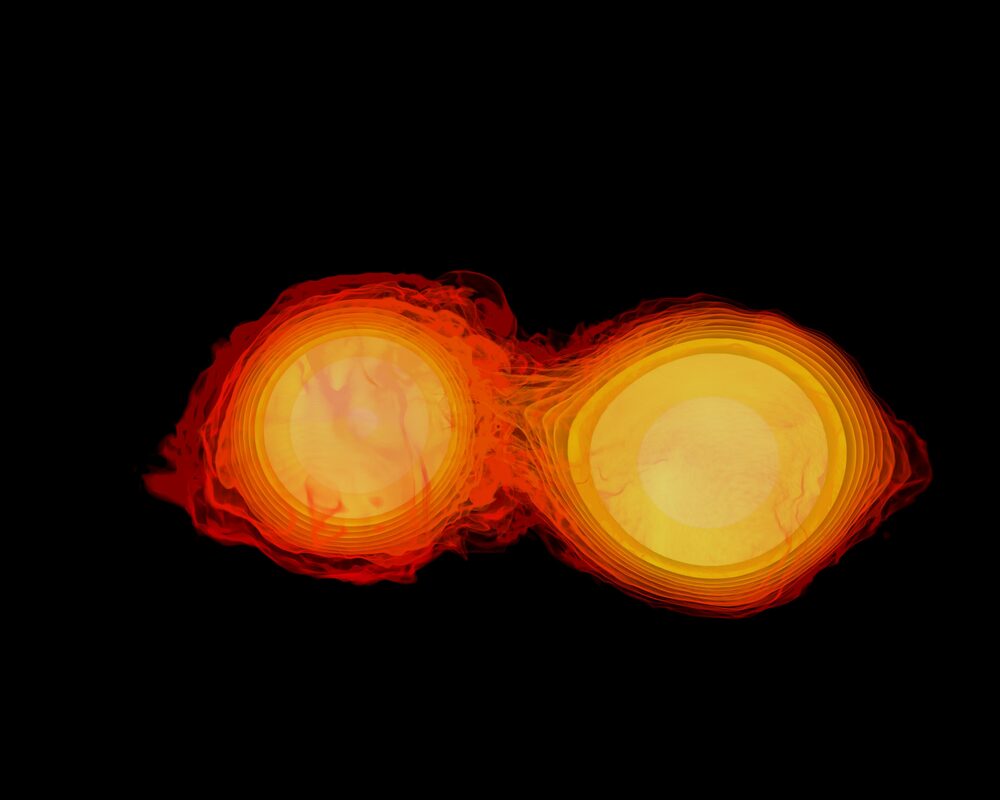
Some of the most important events in astronomy last only a few days, and they can show up almost anywhere in the sky. When two neutron stars collide, or a neutron star merges with a black hole, the explosion can produce a kilonova. That brief glow is where the universe makes much of its gold and platinum. The difficulty is getting a telescope on it before it fades.
On Nov. 24, 2026, NASA published a call for amateur astronomers to help with that problem by joining Kilonova Catcher. The project is a citizen-science network that links backyard observers around the world into a rapid-response team. When an alert goes out, volunteers point their telescopes at the likely location of a new kilonova and record what they see.
A Problem of Coverage, Not Aperture
NASA's announcement puts it plainly: a kilonova fades within days, so astronomers have to find it fast, and no single observatory can watch the whole sky. When a gravitational-wave detector or space telescope sends out an alert, the search has to start quickly.
A widely spread group of amateurs can help fill that gap. The value here comes from numbers and spread, not from any one person's equipment: many observers on several continents, each able to image a field quickly. The project's home page describes the goal as building a worldwide community of telescope operators ready to respond the moment an alert arrives.
The International Astronomical Union's working group on amateur projects describes Kilonova Catcher as a citizen science program developed by the GRANDMA Collaboration that lets any amateur astronomer take part in gravitational-wave research. The IAU listing says the program manages observations first to localize the source and second to characterize its evolution over a few days.
How the Alerts Work
Participation follows a simple loop. According to the project's home page, volunteers receive "Kilonova Capture" alerts, aim their telescopes at the likely kilonova locations, and document the results. The bar to entry is fairly low: the project says no experience is required. NASA notes that volunteers need a telescope with a camera, or access to one, and the project's home page puts the telescope size at 8 inches or larger.
The IAU listing adds one practical requirement that is easy to miss: internet access with a notification tool connected and ready to alert you, by email, Slack or the project website. An observer who learns about an event a day late has missed much of a window that lasts only days. The network depends on people who can respond quickly.
The project also notes that a kilonova is sometimes accompanied by a short gamma-ray burst, and NASA says the network follows up on gamma-ray bursts as well. That gives observers another kind of trigger, beyond gravitational-wave alerts.
What Volunteers Have Contributed So Far
Kilonova Catcher has more than 150 registered members on several continents, according to NASA. The network has contributed to more than 64 official reports shared through NASA's General Coordinates Network, the system scientists use to share discoveries in real time.
Those reports have practical value. Fast, public dispatches are one way the professional community learns where a candidate source stands. An amateur image of a candidate field can add to the light curve of an event, which is how the project describes the contribution of its volunteers.
Contributors also get formal credit. The project says volunteers are credited alongside professional astronomers in peer-reviewed publications and in real-time dispatches, and NASA says volunteers have been named as authors in peer-reviewed research papers. Many citizen-science projects offer participants a thank-you page. This one puts their names on the scientific record.
Who Runs It
NASA's page names two leaders. Cristina Andrade of the Minnesota Institute for Astrophysics is head of operations. Dr. Damien Turpin of the French Alternative Energies and Atomic Energy Commission (CEA) is principal investigator. The two co-lead the project, and its partnership with the GRANDMA collaboration, an international network of professional telescopes and astronomers, means the amateur effort is tied directly to a professional follow-up program rather than running separately from it.
NASA's announcement is illustrated with a Hubble image of the lenticular galaxy NGC 4993, where the kilonova associated with the August 2017 gravitational-wave detection GW170817 was found. It is the kind of event the network is built to catch.
Why It Matters
Kilonovae help answer a basic question: where do heavy elements come from? NASA describes these events as forging much of the universe's gold, platinum and other heavy elements. The project's home page calls them among the most powerful tools for understanding how the heaviest elements formed and how matter behaves under extreme gravity. Because a kilonova fades within days, missing the first days of observation can mean losing information that cannot be recovered.
The time pressure also shows how gravitational-wave astronomy works. A detection on its own tells scientists that a merger happened. Finding the light from that event takes many eyes looking quickly, and that is where coordinated volunteers come in. More than 64 official reports is a real contribution to a field where speed matters.
For amateurs, the appeal is easy to see. Kilonova Catcher offers a defined role in frontier science and a path to credit in peer-reviewed work. NASA also says the network is getting ready to help follow up thousands of new alerts from the Nancy Grace Roman Space Telescope, which suggests the demand for volunteers is growing.
Anyone who owns a telescope with a camera, or can use one, and can respond to an alert quickly now has an open invitation to help catch these events.
