
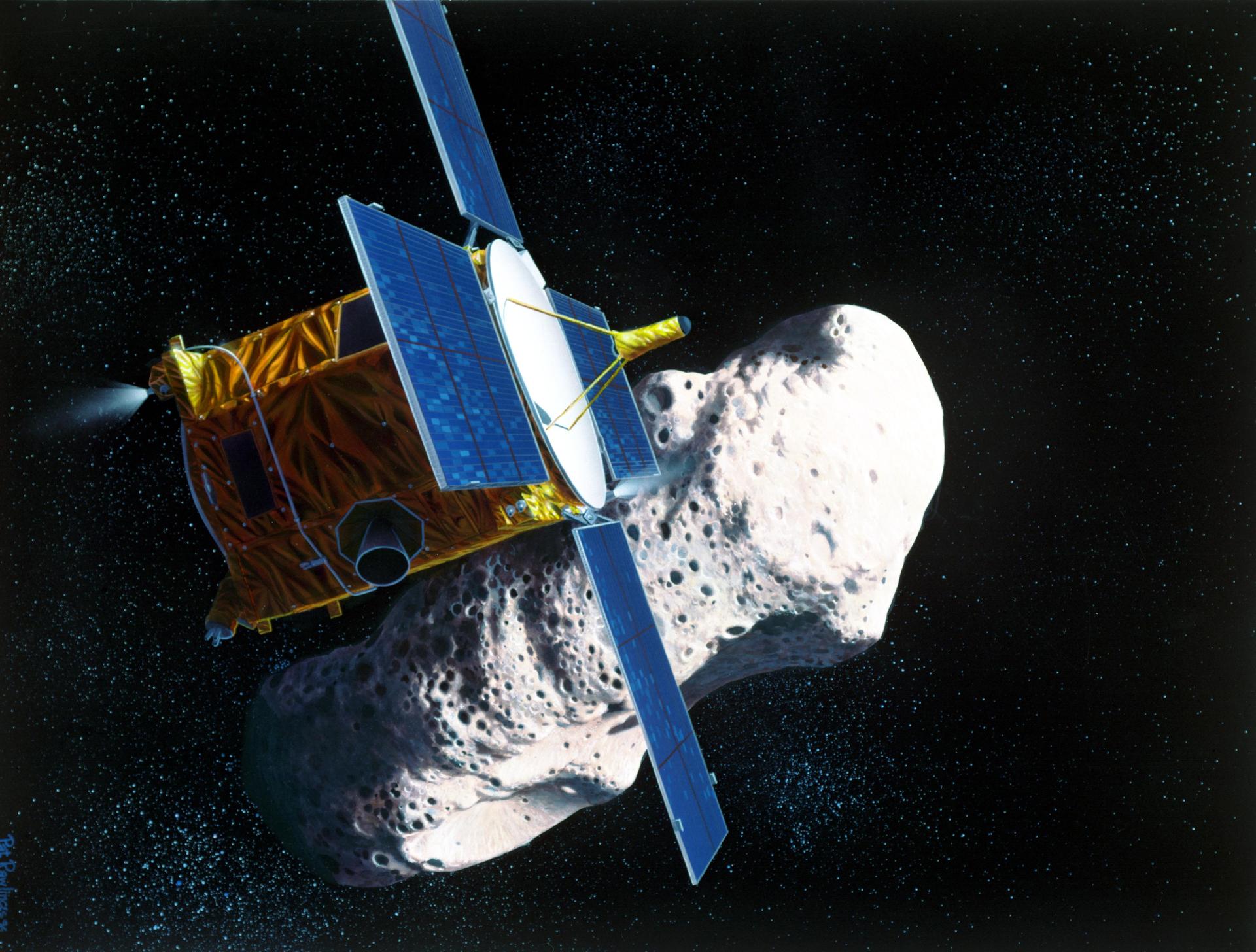
Most spacecraft, no matter how sophisticated their onboard software, are still on a leash. Engineers on the ground watch telemetry, approve maneuvers, and step in when something looks wrong. AstroForge, the California asteroid-mining startup that has already lost two spacecraft in three years, wants to cut that leash entirely.
In a blog post published Tuesday, Sept. 22, 2026, AstroForge CEO Matt Gialich announced that the company's next mission, Autonomy-1, will attempt something no spacecraft has done before: complete its entire mission after separation from the rocket without receiving a single command from Earth. "Autonomy-1 will be the first space mission to complete its entire mission after separation without a single command from the ground," Gialich wrote, adding that the mission will "remove the human operator from the loop."
What Autonomy-1 Actually Is
Autonomy-1 will fly on the debut launch of Stoke Space's Nova Pathfinder rocket, targeted for early 2027 from Space Launch Complex 14 at Cape Canaveral Space Force Station, according to a Stoke Space company blog post also published Sept. 22. The mission itself will operate in Earth orbit — a full-scale demonstration of Solo, not a flight to an asteroid. Nova is designed to be fully reusable — both its Zenith full-flow staged-combustion first-stage engines and its second stage, which uses an actively cooled Andromeda engine and a metallic heat shield meant to survive reentry, are core to Stoke's pitch that the entire rocket, not just the booster, can fly again. Stoke says its development has drawn support from NASA and the U.S. Space Force.
The spacecraft itself will run AstroForge's new autonomy software, called Solo. Per AstroForge's own announcement post, Solo is not a replacement for the spacecraft's flight computer but an "intelligence layer" that sits above the existing deterministic, physics-based flight software — the code that actually points thrusters and manages power stays the same. Solo's job is to make the higher-level calls: sequencing mission phases, deciding how to respond to anomalies, and choosing what to do next, all without waiting for instructions to arrive from Earth. The only traffic flowing homeward, according to AstroForge, will be telemetry — a one-way stream of "here's what happened," never a two-way channel of "here's what to do."
Why Not Just Use Remote Control?
Commanding a spacecraft from Earth sounds straightforward until you consider the distances involved. A round-trip radio signal to an asteroid can take minutes to hours depending on the target, and any single-point failure in the ground link — a dish outage, a scheduling conflict, a garbled command — can leave a mission stuck waiting. AstroForge has already been burned by exactly this kind of fragility: its Odin spacecraft, launched in February 2025 to attempt a flyby of a near-Earth asteroid, lost communications with ground controllers and never completed its objective. An earlier mission, Brokkr-1, launched in 2023 to test refinery technology in orbit, failed when that technology never activated.
Full autonomy is AstroForge's answer to that pattern: if the spacecraft can diagnose and work around its own problems instead of waiting on a ground team, it may survive failures that would otherwise strand it. Before AstroForge trusts Solo with an entire mission, though, the software gets a trial run. It will first fly in "shadow mode" on the company's upcoming DeepSpace-2 mission — present and computing decisions in the background, but not actually in control of the spacecraft. Only on Autonomy-1 does Solo take the controls for real.
Not Entirely Unprecedented — But Different
AstroForge isn't claiming to have invented spacecraft autonomy from scratch. In its announcement, the company points to two acknowledged predecessors: NASA's Deep Space 1 mission, which roughly three decades ago tested an experimental onboard AI system called Remote Agent that could plan and execute activities without step-by-step ground commands, and NASA's OSIRIS-REx mission, which executed its final descent, touchdown and sample collection at the asteroid Bennu completely autonomously.
What AstroForge is claiming is broader: not a single autonomous maneuver or subsystem, but an entire mission, start to finish, with no ground command at all. Whether that claim holds up will depend on Autonomy-1 actually flying and completing its objectives — something AstroForge's own flight history gives reason to treat cautiously.
A Crowded Rocket
Autonomy-1 won't be flying alone. Stoke's manifest for Nova Pathfinder's first flight also includes a NASA Goddard heliophysics instrument called COMPASS, which Autonomy-1 will autonomously support in orbit, and a memorial-spaceflight payload from Celestis called "Infinite Flight." NASA's heliophysics division studies the Sun and its effects on the solar system, and COMPASS represents the agency's institutional stake in the mission's science return — a reminder that even a flight built around a commercial autonomy demonstration is also carrying government science hardware.
For Stoke, the flight is arguably just as consequential as it is for AstroForge: it's the first orbital-class launch for Nova, the test of whether the company's full-reuse architecture actually works. Two ambitious, unproven systems — a fully reusable rocket and a fully autonomous spacecraft — will debut on the same flight.
Why It Matters
Asteroid mining has long promised riches from space rock without ever quite delivering a working business. AstroForge's two prior missions each ended without achieving their core objective, and the company is now betting its next attempt on software that, by design, can't be rescued by a phone call to mission control if something goes sideways. That's a real gamble: autonomy that fails quietly, with no human in the loop to catch it, could compound rather than prevent a mission loss.
But if Solo works as described, it points toward a broader shift the space industry has been inching toward for years — spacecraft that manage themselves through anomalies rather than sitting idle awaiting instructions, a capability that matters enormously for missions to the outer solar system where light-delay makes real-time control impossible anyway. A successful, fully autonomous mission would be a meaningful data point for anyone building probes bound for the asteroid belt or beyond, well past AstroForge's own commercial ambitions. Nova Pathfinder's success or failure carries similar stakes for the launch industry's push toward full reusability. Early 2027 will show whether either bet pays off.
Sources
- 'Without a single command from the ground': Asteroid-mining company to launch world's 1st autonomous space mission in 2027 — Space.com
- Introducing Autonomy-1: The First Autonomous Space Mission, Powered by Solo — AstroForge
- Manifest Update: Nova Pathfinder Flight 1 — Stoke Space
- NASA Heliophysics — NASA
