
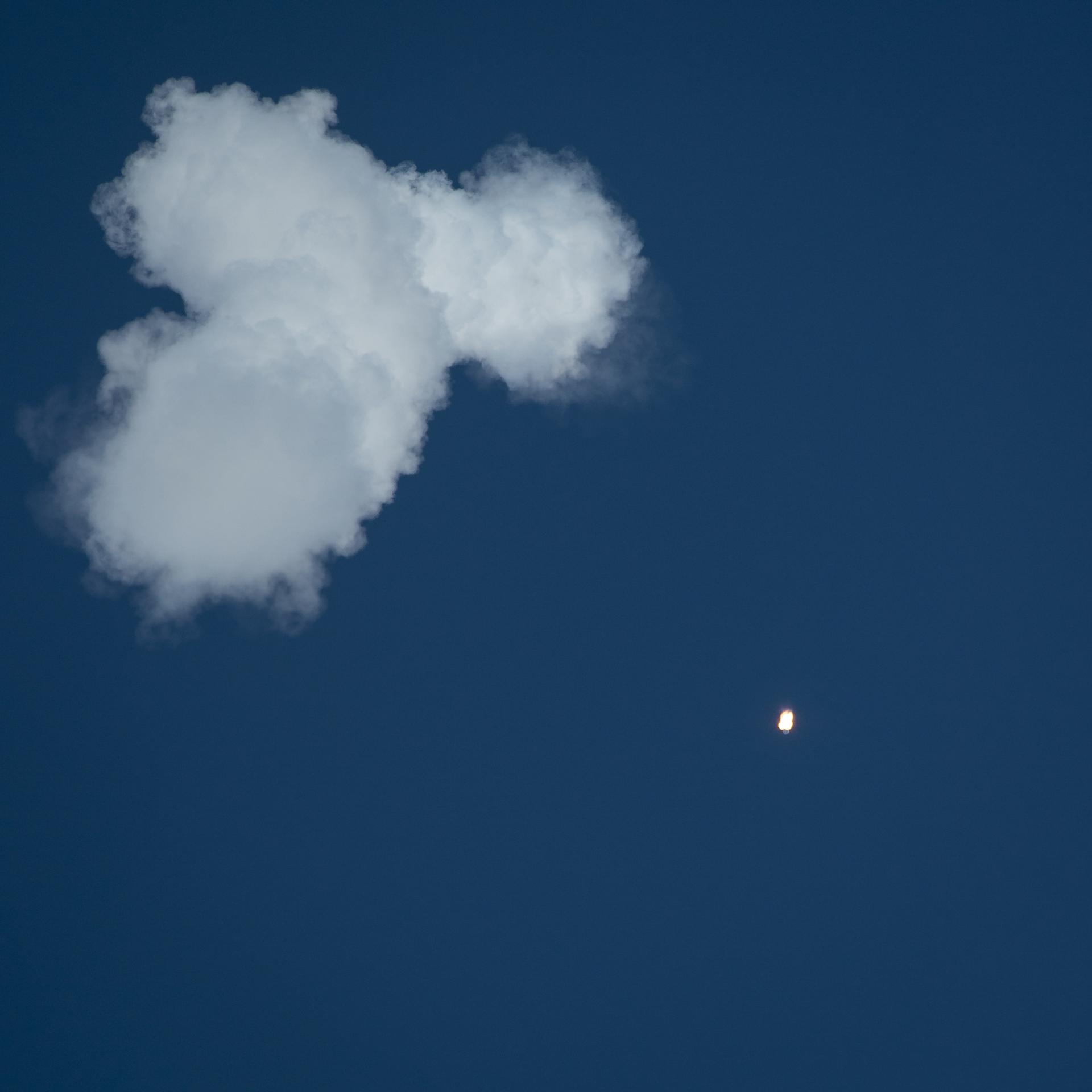
On September 5, a 28-meter rocket built by a German startup did something no vehicle launched from Western European soil had ever done before: it reached orbit.
Isar Aerospace's Spectrum rocket lifted off from Andøya Spaceport on Norway's northern coast, carrying five commercial and educational cubesats along with a single technology-demonstration payload toward a Sun-synchronous orbit. According to ESA, which helped fund the flight, the launch window opened on September 5, and the mission — nicknamed "Onward and Upward" — marked Spectrum's second attempt at reaching space, and its first success.
SpaceNews confirmed the milestone directly: Spectrum reached orbit on its second flight, making it the first orbital launch from Western European soil. That distinction matters because, until now, every European orbital launch had flown from French Guiana, a French overseas territory in South America that hosts the Ariane and Vega launch complex — geographically convenient for equatorial trajectories, but nowhere near the continent itself.
A Rocky Road to the Pad
Spectrum's path to orbit was not a straight one. The vehicle's first flight, in March 2025, ended in a crash near the launch pad shortly after liftoff, according to SpaceNews. That failure set the stage for a lengthy campaign to prepare a second vehicle for another attempt — a campaign that, per NASASpaceflight's reporting, ran into repeated delays over the following months.
NASASpaceflight detailed a string of scrubs on the road to the September 5 launch: a pressurization-valve issue on January 21, a scrub in March driven by a combination of weather, range-safety concerns, and an unexpected rise in engine fuel temperature, and an April scrub triggered by a suspected leak in a composite overwrapped pressure vessel — a type of high-pressure tank used to store gases like helium aboard the rocket. Each of those issues pushed the launch further into 2026 before Isar Aerospace and the Andøya range finally found a clean window in September.
What Is Spectrum?
Spectrum is a two-stage rocket standing 28 meters tall with a 2-meter diameter, powered by a total of 10 engines across its stages, according to ESA's mission description. It's designed to carry payloads of up to 1,000 kilograms to low Earth orbit — placing it in the small-satellite launcher category alongside vehicles like Rocket Lab's Electron, rather than competing with heavy-lift rockets like Ariane 6 or SpaceX's Falcon 9.
For this flight, that capacity was used to loft five cubesats — small standardized satellites commonly built by universities, research groups, and commercial operators — plus one additional payload dedicated to testing new technology in orbit. ESA has not detailed the specific owners or missions of those payloads beyond describing them as commercial and educational.
The Money Behind the Mission
Spectrum's second flight wasn't just a private venture — it was explicitly structured as a qualification flight under ESA's Boost! programme, the agency's initiative supporting commercial space transportation services. ESA's release frames the mission as part of the European Launcher Challenge, an initiative that selected Isar Aerospace alongside four other European launch companies in 2025 and requires each of them to demonstrate orbital capability no later than 2027.
In other words, reaching orbit wasn't just a technical checkbox for Isar Aerospace — it was a qualifying step toward a much larger pot of institutional funding that ESA is using to seed a competitive, non-Ariane launch industry within Europe. ESA Director General Josef Aschbacher and the agency's Director of Space Transportation, Géraldine Naja, were both quoted in the agency's release, underscoring how directly ESA has staked its own messaging to Spectrum's success.
Why It Matters
Europe has never lacked orbital access — Arianespace has flown from French Guiana for decades — but it has lacked the ability to launch from the continent itself. That has mattered strategically as European governments and the EU have pushed for greater "sovereign" access to space, less dependent on any single spaceport, provider, or, implicitly, on non-European launch options like SpaceX that have increasingly carried European payloads.
A successful orbital flight from Andøya changes that calculus in a small but real way. It validates Norway's spaceport as a genuine orbital launch site, not just an aspiration, and it gives ESA's Boost! programme and the European Launcher Challenge a proof point that its funding model — co-funding and contracts tied to demonstrated orbital capability — can actually produce a flying rocket. It also gives Isar Aerospace, one of five European launch companies selected for the European Launcher Challenge, a significant leg up over rivals still working toward their own first orbital attempts.
None of that guarantees Isar Aerospace becomes a durable commercial launch provider — one successful flight, arriving after a crash and three scrubs, is a qualification milestone, not a track record. But for a continent that has spent years watching launch innovation happen mostly in the United States and China, a rocket built in Germany reaching orbit from Norwegian soil is a marker worth noting.
