
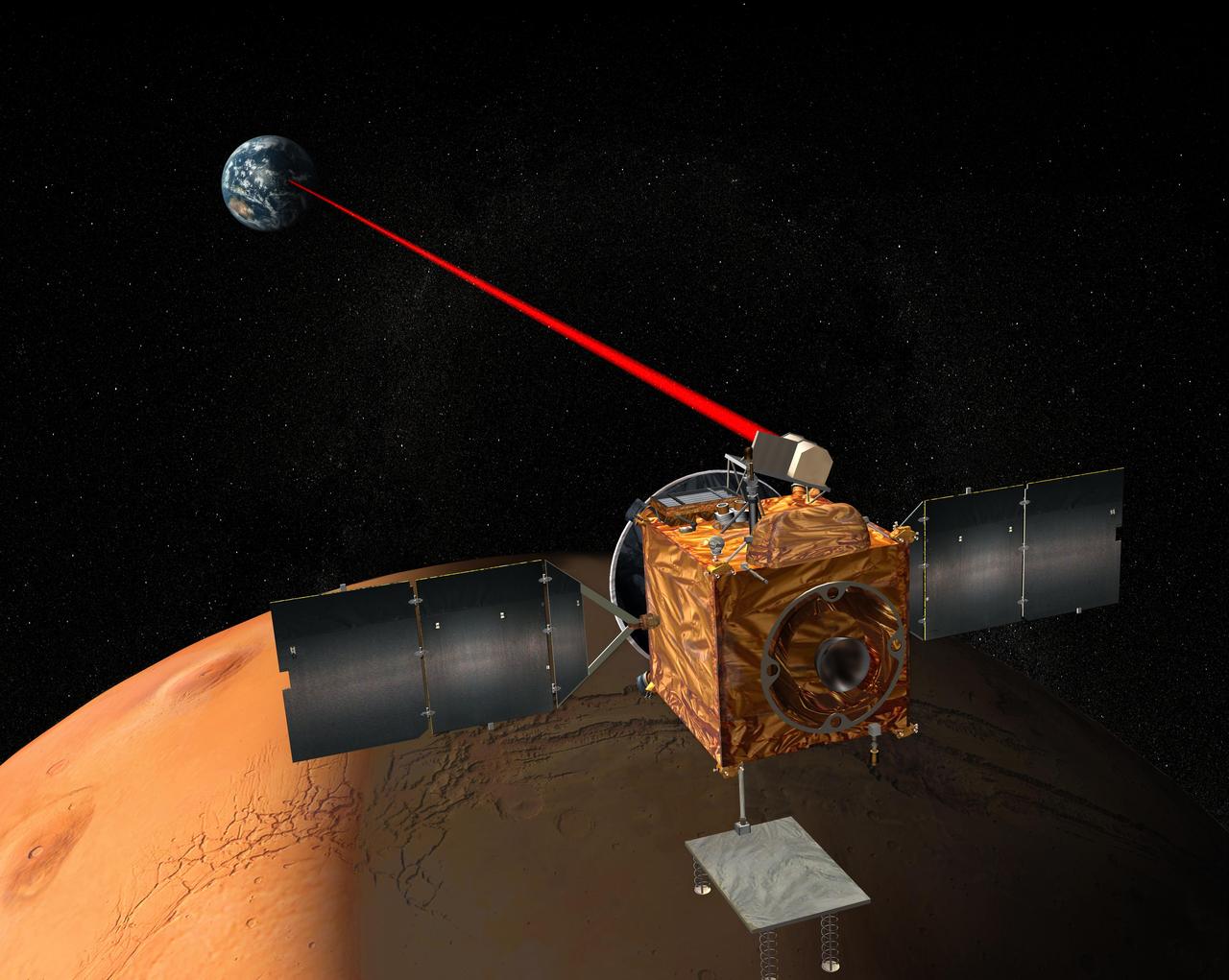
NASA has picked its provider for a badly needed upgrade to the way missions at Mars talk to Earth, and the winner isn't the company most people would have guessed a few years ago. On September 1, the agency announced a firm-fixed-price contract worth roughly $700 million to Blue Origin, Jeff Bezos's rocket and spacecraft company, to design, build, launch, and operate a dedicated Mars Telecommunications Network orbiter. The spacecraft is due for delivery by the end of 2028 and is expected to be operational at Mars by 2030.
The award, managed through NASA's Space Communications and Navigation (SCaN) program, closes out a competition that began with a request for proposals in May 2026. It's a notable win for Blue Origin's growing satellite-platform business, and a notable loss for Rocket Lab, which had publicly campaigned for the same contract.
What NASA Actually Bought
The core of the deal is a single spacecraft built around Blue Origin's Blue Ring platform — a multipurpose bus the company has marketed as a flexible orbital tug and hosting platform. According to details of the award, the Mars-bound version of Blue Ring will be built in Huntsville, Alabama, and will be capable of hauling more than 1,000 kilograms of hardware to Mars orbit, with room left over for a 20-kilogram science or cubesat payload riding along as a secondary passenger.
Once in place at Mars, the orbiter's job is not glamorous but is increasingly urgent: relay data. NASA's fleet of Mars orbiters and rovers currently leans on aging spacecraft — some of them well past their original design lives — to bounce science data, images, and time-critical mission communications back to Earth. A purpose-built telecom relay would take pressure off that patchwork system and, per NASA's statement, represents "a milestone in NASA's strategy to expand communications and navigation services beyond Earth and the Moon."
That framing matters. SCaN's mandate has historically centered on Earth-orbit and lunar communications infrastructure — the kind of backbone NASA has been building out for its lunar exploration efforts. Extending that same service model to Mars, with a fixed-price contract rather than a traditional cost-plus NASA build, signals the agency wants Martian communications infrastructure to work more like a commercial utility than a one-off science mission.
A Quiet Ending to a Public Fight
The most striking part of this story may be what didn't happen: Rocket Lab, which had been vocal about competing for the Mars telecom contract, did not win it, and NASA has not published a source-selection statement explaining why Blue Origin's bid came out on top. That's not unusual for a fixed-price commercial procurement — NASA doesn't always release the detailed rationale it provides for larger cost-plus awards — but it leaves outside observers to guess at what tipped the decision, whether that was price, schedule confidence, the maturity of Blue Ring's design, or something else entirely.
What is clear is the timeline pressure. As SpaceNews reported, Blue Origin now has to get this spacecraft from contract award to launch in "just over two years" to hit the December 2028 delivery deadline, with arrival and operational status at Mars targeted for 2030. That's an aggressive schedule for a spacecraft that has to survive launch, a months-long interplanetary cruise, Mars orbit insertion, and then years of reliable relay service — all under a fixed price that leaves Blue Origin, not NASA, holding the risk of cost overruns.
Why It Matters
Mars exploration has always depended on invisible infrastructure most people never think about: the relay orbiters that let a rover's photos, seismometer readings, or emergency telemetry actually reach mission control. Right now, that job falls largely to an aging fleet of orbiters that have already outlived their original design lives and won't last forever. A dedicated, newly built telecom orbiter addresses a real bottleneck before it becomes a crisis — the kind of unglamorous but essential work that determines whether future landers and rovers can send data home reliably, or whether a critical entry, descent, and landing sequence gets relayed to Earth in near real time.
The contract structure is just as significant as the hardware. By awarding this as a firm-fixed-price commercial service contract rather than building the orbiter in-house, NASA is betting that the same model that made commercial cargo and crew missions to the International Space Station cheaper and faster can work for deep-space infrastructure too. If Blue Origin delivers on schedule and budget, it strengthens the case for NASA to keep outsourcing Mars-support infrastructure — data relays, navigation aids, maybe eventually surface-to-orbit relay networks — to commercial providers rather than funding bespoke government missions for each one. If the 2028 deadline slips, expect renewed scrutiny of whether fixed-price contracts are realistic for missions this technically demanding.
For Blue Origin specifically, this is a meaningful vote of confidence in Blue Ring as a real, sellable spacecraft platform rather than just a concept the company has shown off at conferences. Winning a competitive, high-visibility NASA contract against a rival that campaigned hard for the same award gives Blue Origin a marquee reference mission — assuming the company can actually build and fly it on the clock NASA has set.
