
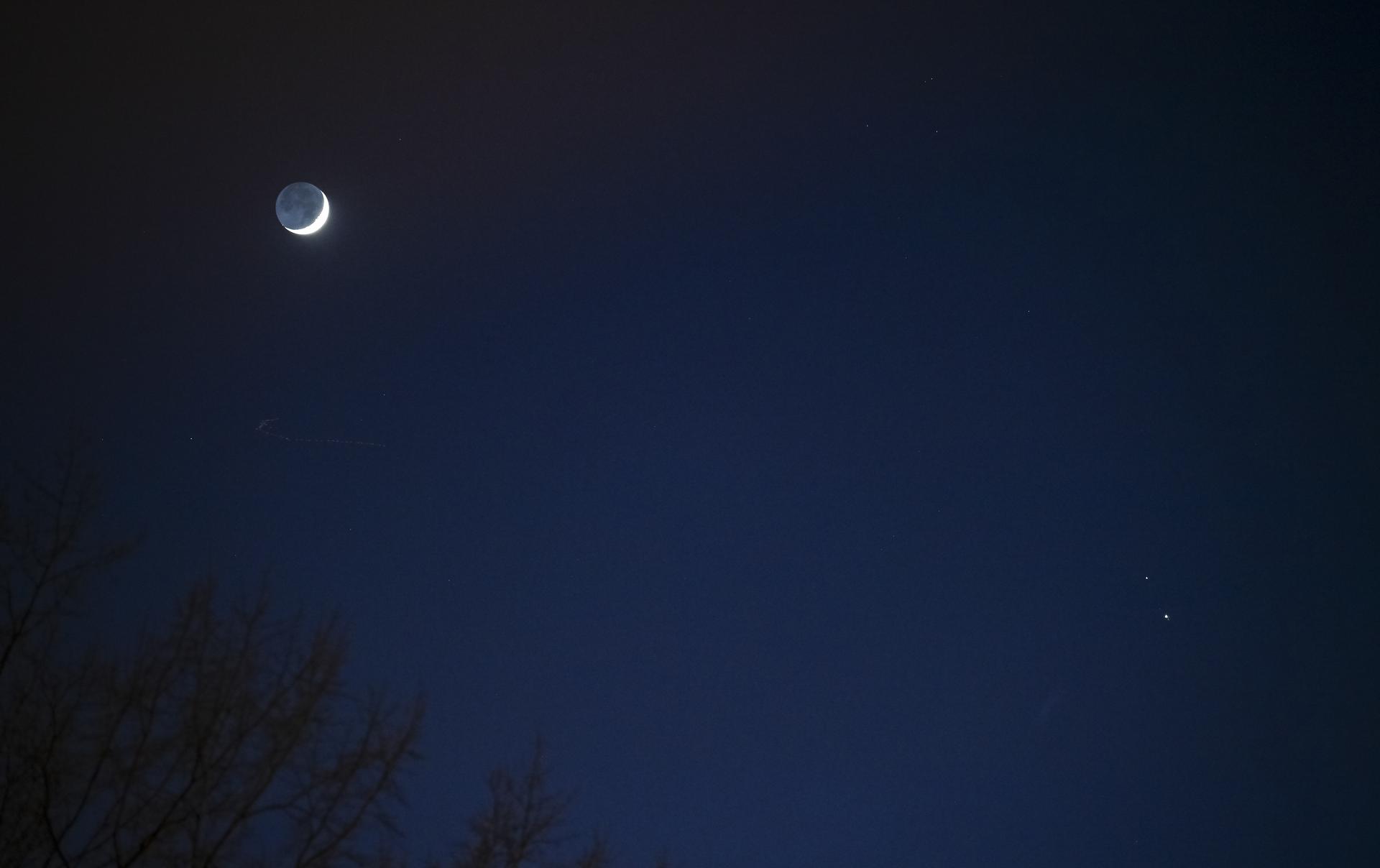
Early risers on Tuesday, Sept. 8 got a preview of what NASA's skywatching office is calling one of the more crowded stretches of the month. Around 3:30 a.m. local daylight time, the Moon — parked in the faint constellation Cancer — climbed above the horizon with Jupiter trailing about 30 minutes behind it, the two objects close enough to share the same patch of sky. According to Astronomy.com's day-by-day sky log, the pairing gave anyone with a small telescope a decent shot at Jupiter's cloud bands and its four brightest moons, assuming they were willing to trade sleep for a look.
That conjunction wasn't a one-off. It's the opening act in a run of events NASA's official "What's Up" guide for September 2026 has been tracking for the month, and National Geographic's own roundup of September sky events lines up with the same schedule. Here's what's still ahead, and why the timing matters for anyone who wants to actually see it.
The Rest of the Month, Night by Night
Sept. 14–20: the Moon points the way to the Teapot. For about a week, the Moon serves as a guide star of sorts, helping observers track down Antares — the red supergiant marking the heart of Scorpius — and the "Teapot," the asterism formed by the brighter stars of Sagittarius. NASA notes that on the darkest nights in this window, the Milky Way's galactic center becomes visible arcing through the same part of the sky, assuming you're away from city lights.
Sept. 18: Venus at its brightest. Venus has been climbing toward this point all season, and NASA pegs Sept. 18 as the night it reaches maximum brightness for its current evening apparition. It won't be subtle — Venus at peak brightness is routinely mistaken for an aircraft landing light or, less charitably, a UFO report waiting to happen.
Sept. 19: International Observe the Moon Night. A globally coordinated public observing event that falls just a day after Venus's peak, giving newcomers two easy targets to find in the same week.
Sept. 22: the autumnal equinox. Day and night split roughly evenly as the Sun crosses the celestial equator, marking the astronomical start of fall in the Northern Hemisphere.
Sept. 26: a Harvest Moon with company. The month closes with the Harvest Moon — the full moon falling nearest the equinox — rising close to Saturn. NASA describes the pairing as forming a wide triangle with Neptune, though Neptune is faint enough that it will take binoculars or a telescope, and a dark sky, to pick it out against the Moon's glare.
Why It Matters
None of these events require special equipment, travel, or luck with the weather forecast beyond the usual — that's the point. A Moon-Jupiter pairing, a planet at peak brightness, an asterism pointing toward the galactic core: these are the kind of naked-eye or small-telescope events that make the night sky legible to someone who has never used a star chart. NASA's monthly guides exist specifically to lower that barrier, translating orbital mechanics into "look here, on this date, around this time." International Observe the Moon Night formalizes that further, turning a single night into a coordinated, worldwide invitation to actually go outside and look up. For amateur astronomers, the value is more concrete: Venus's brightness peak and the Harvest Moon's proximity to Saturn and Neptune are useful markers for calibrating what's visible with a given setup, and conjunctions like the Sept. 8 Moon-Jupiter pass are convenient, predictable windows for testing a new telescope or teaching someone to use one.
Practical Notes for Watching
The Sept. 8 Jupiter conjunction rewarded people willing to be outside before sunrise; the remaining events on this list are evening or all-night affairs, which makes them considerably easier to plan around. Venus, visible low in the evening sky, needs no dark-adapted eyes or special timing beyond checking when it clears the horizon in your location. The Sagittarius Teapot and Antares sit low in the southern sky for Northern Hemisphere observers, so a clear view toward the horizon — away from streetlights — matters more than raw telescope power. For the Sept. 26 Harvest Moon, expect Saturn to be the easier catch of the pair; Neptune, at around magnitude 8, effectively disappears next to a full Moon unless you know exactly where to point.
