
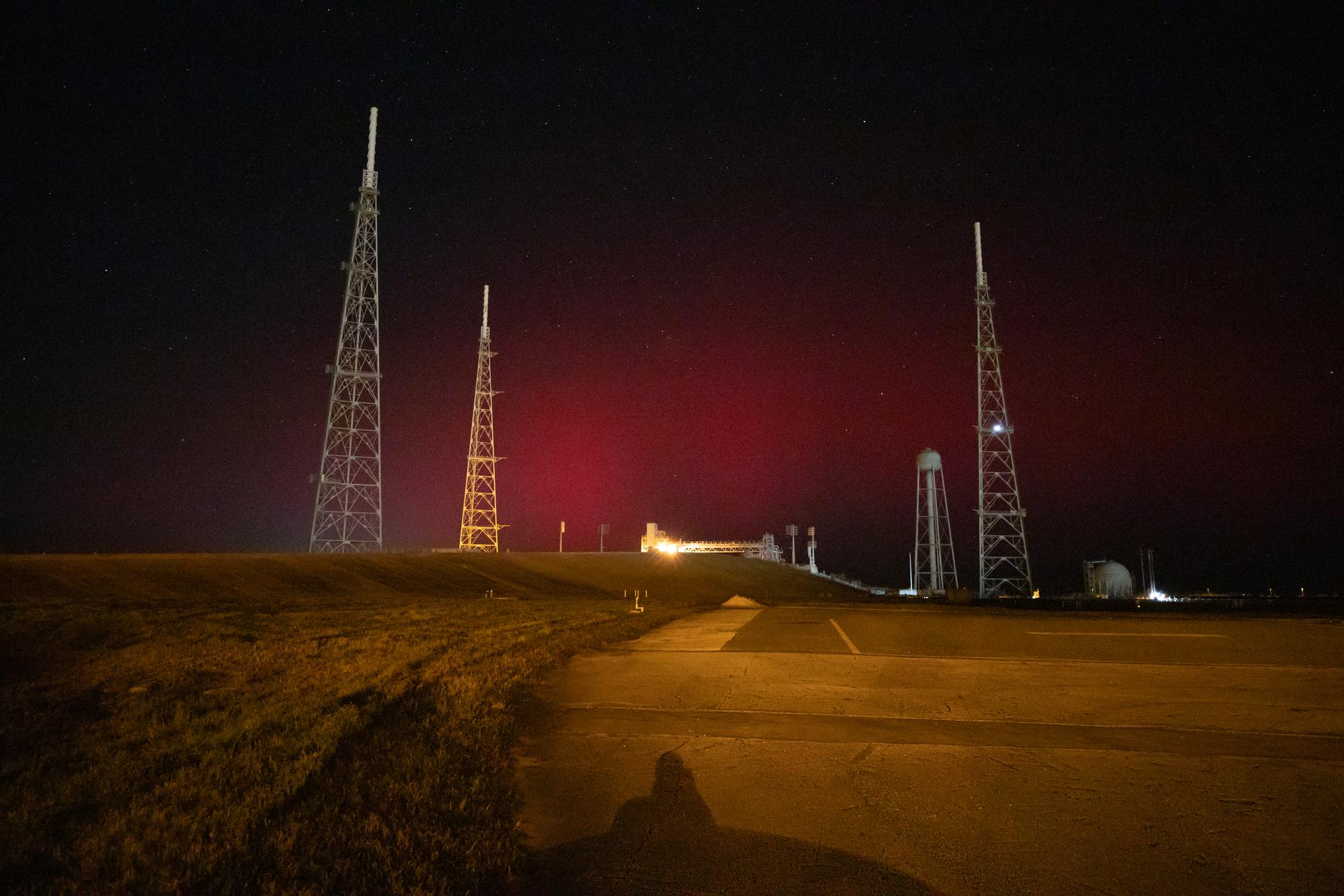
The Sun spent September 5 doing two things at once, and only one of them is headed our way. NOAA's Space Weather Prediction Center (SWPC) spent the day issuing a string of S1-minor radiation storm alerts as proton flux from an active cluster of sunspots spiked well above background levels. Separately, a coronal mass ejection (CME) that erupted from sunspot AR4524 is now being tracked by a NASA forecast model toward an Earth arrival on September 8 — a delivery date that has aurora watchers at mid-to-high latitudes checking the weekend forecast for clear skies.
None of this rises to the level of a major space weather event. But it's an unusually busy few days on the Sun, and it's worth separating what actually happened from what it might mean for anyone hoping to see the northern or southern lights this weekend.
What NOAA Actually Recorded
According to SWPC's live alerts feed, multiple S1-Minor proton event warnings and alerts went out on September 5, 2026. The alerts split into two flux thresholds: several (serials 631, 632, and 368) marked the 10 MeV proton flux crossing above 10 particles per square centimeter per second per steradian (pfu), and others (serials 41, 58, and 123) marked the higher-energy 100 MeV flux crossing above 1 pfu. SWPC ties the underlying activity to Type II and Type IV radio emissions — signatures of shock waves and disturbances moving through the solar corona — that were detected between September 2 and 4. An S1 storm sits at the bottom rung of NOAA's radiation storm scale, which runs from S1 to S5. At this level, the practical effects are minor: some risk to satellite operations and a slightly elevated radiation dose for polar-route flights, nothing that reaches the ground in any noticeable way. It's the kind of event space weather forecasters log routinely rather than one that makes headlines on its own.
The CME Everyone's Actually Watching
The more interesting story, at least for skywatchers, comes from sunspot AR4524, which produced a C9-class solar flare on September 5. C-class flares sit in the middle of the standard flare scale — stronger than the A- and B-class flares below them, but weaker than M- and X-class flares — but this one was strong enough to launch a CME — a billion-ton cloud of magnetized solar plasma — off the Sun's surface. Spaceweather.com reports that a NASA model forecasts this CME will reach Earth on September 8, and that the impact could be strong enough to spark a G1-class geomagnetic storm, the mildest tier on NOAA's geomagnetic storm scale. G1 storms are typically enough to push the aurora down to high geographic latitudes — think the northern tier of the continental United States on a good night, or similar latitudes in the southern hemisphere — without the disruptions to power grids or satellite navigation that come with stronger G-class events. The Sun's overall activity level backs up the sense that this is a livelier-than-average stretch: spaceweather.com put the sunspot number at 72 on September 5, and flagged three additional active regions — AR4525, AR4526, and AR4527 — as posing a threat for M-class flares, a step up in intensity from what AR4524 produced. Solar wind conditions ahead of the CME's arrival were measured at a relatively calm 344.6 kilometers per second with a density of 4.2 protons per cubic centimeter, numbers that are expected to climb once the CME's shock front arrives.
A Second, Unrelated Eruption
Adding to the sense of a busy solar week, EarthSky's Sun news desk — writing on September 5 — described a separate "1-2 punch" of eruptions, with prominences rising from the Sun's eastern limb in rapid succession. According to EarthSky's report, authored by C. Alex Young, Armando Caussade, and Raúl Cortés, those particular CMEs are expected to miss Earth entirely. It's a useful reminder that the Sun's surface can look chaotic on any given day without every eruption being geoeffective — the AR4524 CME earning attention here is doing so specifically because the trajectory models point it at Earth, not because it was the only thing that happened.
Why It Matters
Solar maximum-adjacent activity like this is exactly what makes aurora forecasting a short-notice game: a flare-and-CME sequence identified on September 5 translates into a specific arrival window just three days later, giving skywatchers a real, dated opportunity rather than a vague "aurora season" promise. A G1-class storm won't paint the sky green over Miami, but for viewers in the northern U.S., Canada, Scandinavia, and similar high-latitude bands, it's a legitimate reason to check the forecast and get away from city lights on the night of September 8. The S1 radiation storm alerts, meanwhile, are a smaller-scale but useful signal of how active the current sunspot crop is — with three more regions (AR4525, AR4526, AR4527) flagged for potential M-class flares, this may not be the last CME worth watching this month. For anyone tracking space weather as a hobby rather than a profession, the takeaway is practical: NOAA's alerts feed and CME arrival forecasts are the tools that turn "there was a solar flare" into "here's when to go outside."
